NEW RED LIGHT STOCK IN STORE Dismiss

  • Skip to main content
  • Skip to footer

The Horses Back

Body Talk for Thinking Owners

  • Home
  • Articles
  • BEMER
  • Store
    • Store
    • Shipping
    • Returns
    • Support
  • Equine Healthworks
    • Bodywork for Horses
    • Reviews
    • Leave a Review
  • About & Contact
    • About
    • Contact

Jane @ THB

‘The Size of a Walnut’ – Does Equine Brain Size Matter?

November 5, 2019 by Jane @ THB 7 Comments

There seem to be quite a few social media posts about the equine brain of late – and that’s no bad thing. 

In some ways, the brain is simply the latest part of the equine anatomy to come under the spot light. It’s being subject to statements about welfare, training and psychology – and that’s definitely a good thing (here’s one from Hippologic.)

However, I want to add something to this equine brain discussion. I just happened to run in to it when I went down a research rabbit hole a couple of years back.

We often hear how brain size is not directly linked to an individual’s intelligence. At the same time, a relatively large brain is said to signify intelligence in humans, while that of the horse, popularly said to be the size of a (large) walnut, is said to account for their lack of intelligence.
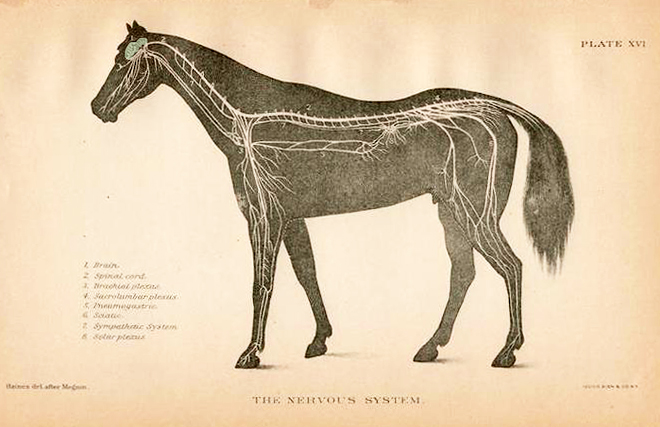
Vintage anatomy print showing relatively small size of equine brain to body size.

This falls down once we look at elephants, which have relatively small brains yet are pretty cluey.

In horses, innovative behaviors without evolutionary basis are often used as a measure of intelligence (read more here about unlatching gates). Leaving behaviour-based measurement methods aside for the moment, let’s ask: how do we figure out if there’s an association between different brain sizes and intelligence levels?

(Note: if you’re a neuroscientist of any description, look away now. What follows is a highly simplistic overview of this incredibly complex subject area.)

© All text copyright of the author, Jane Clothier, www.thehorsesback.com. No reproduction of partial or entire text without permission. Sharing the link back to this page is fine. Please contact me for more information. Thank you!


Measuring Equine Brain Mass and Body Mass 

In zoology, the starting point isn’t about brain size, but brain mass compared with body mass or weight.

Even then, it’s not a matter of separating the brain from the body and then weighing both. The most accurate way of measuring this accounts for several anatomical, physiological factors, including the amount of water in the brain.

The result is a single figure that is called the encephalization quotient (EQ). The EQ for a species is arrived at after researchers have performed the calculation for dozens of animals.
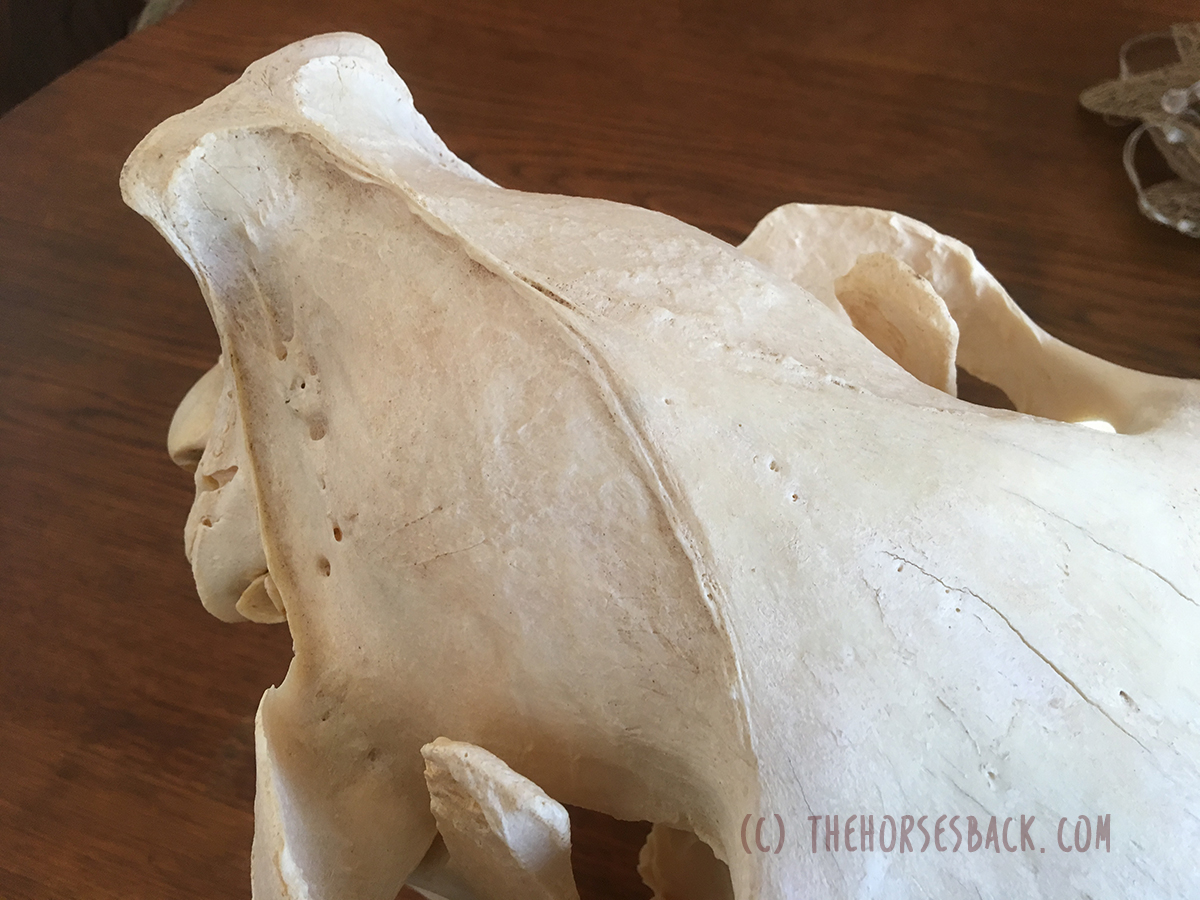
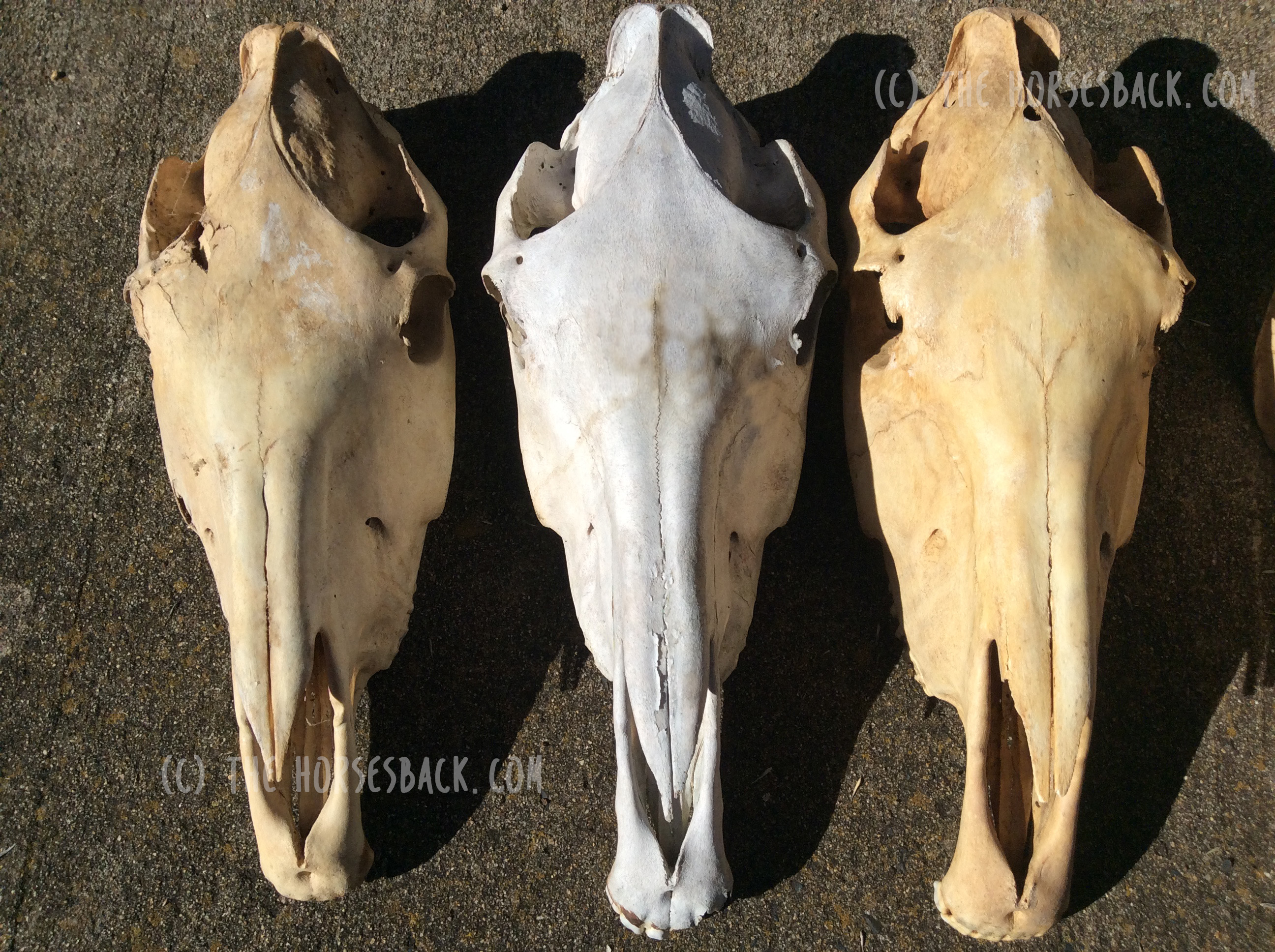
The parietal bones form the domed ‘cranial vault’ of the skull.


So How Does This Look for the Equine Brain?

Only a handful of equine researchers have delved into EQs, as this is mostly an area of zoological neuroanatomy.

In this study by Cozzi et al (2014), the brains of 131 mixed breed adult horses (no ponies) were collected and weighed.[1] Researchers found first that the adult horse’s brain weighs 600 – 700 g. The average brain weight for horses aged 2 years and over was 606 g, while the average bodyweight was 535.22 kg.

This meant the horses in this study had an EQ of 0.78.

Here are the EQs for some of the large mammals: Cow – 0.55, Pig – 0.6, Camel – 0.61, Horse – 0.78, Goat – 0.8, Wolf – 0.9, Domestic Cat – 1.00, African Elephant – 1.67, Gorilla – 1.76, Human – 6.62.

And if you’re really interested, here’s the calculation used in the equine paper. Other scientists use different calculations – there is no standard approach.

EQ = E i / 0.12 P2/3Ea/Ee
 

So, Are Horses Intelligent – or Not?

A larger brain mass compared with body mass is often associated with better cognitive functioning, but that does not mean it causes it.

Brain size is therefore a very general measure for intelligence. What actually matters are the specific areas of the brain and their relative sizes.

The bigger the frontal lobes, the more capable the species is of ‘goal directed’ behaviors – that is, the ability to analyse information and act accordingly, planning ahead. [2]

Here we hit an issue. The frontal lobes are either relatively small in the horse, or non-existent – and this is a matter of contention. Some published veterinary researchers maintain that they do, as shown below.
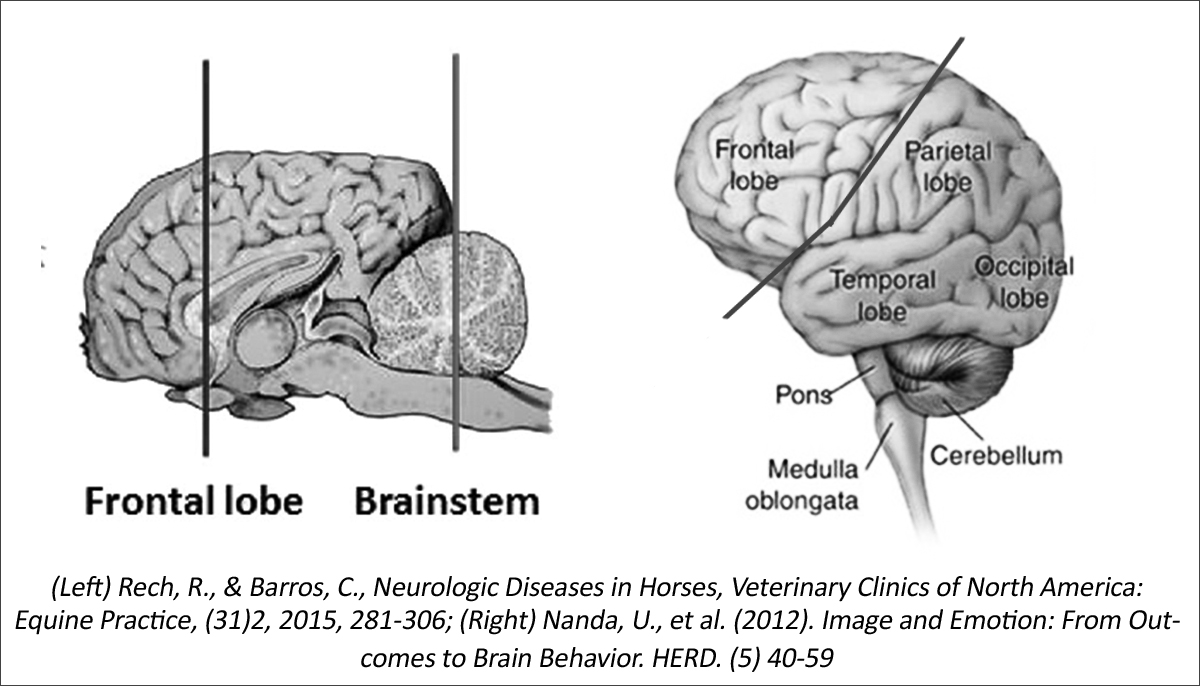
Rough comparison of the frontal lobes of the horse (left) and human brains.

However, researcher and author of Horse Brain, Human Brain Janet Jones PhD writes, “Basic anatomy shows that horses have no frontal lobes and no prefrontal cortex. No qualified PhD trained in neuroscience disputes this anatomy.”[3]

Whichever is true, the take home for both is that the horse is more likely to react in the moment. This is not to say that horses lack intelligence, but that they think and respond differently.


The brain’s fissures are also important. These are the wrinkles and grooves, known as sulci (sunken inwards) and gyri (protrude outwards). They’re standard within species, although the brains of some species have more complex surfaces than others.

Rats, considered to be on the lower end of the intelligence scale of mammals (although rat owners will surely disagree), have smoother brain surfaces than horses. In turn, horses have fewer fissures in their brains than primates.

The area contained within the cranium is the ‘cranial vault’. Its inner surface perfectly matches the outer surface of the brain, as they develop together as the animal grows.  If you could look inside this part of the skull, you would see a perfect mould of the fissures.

More recent research also links the organization of neurons (nerve cells) and synapses in the brain to intelligence.


Surely There’s a Difference Between Breeds?

Different breeds of horses certainly have differences in the shapes of their heads.

However, these differences are slight overall. In a study of TBs, STBs and Arabians, the relative proportions of the ‘neurocranium’ – the area above the frontonasal suture, including the cranium – were reasonably similar between breeds.

It was the lower part of the skull, primarily the nasal bones and the maxilla, that varied most and gave the breeds their different looks [4]. The study did not measure the cranium itself.
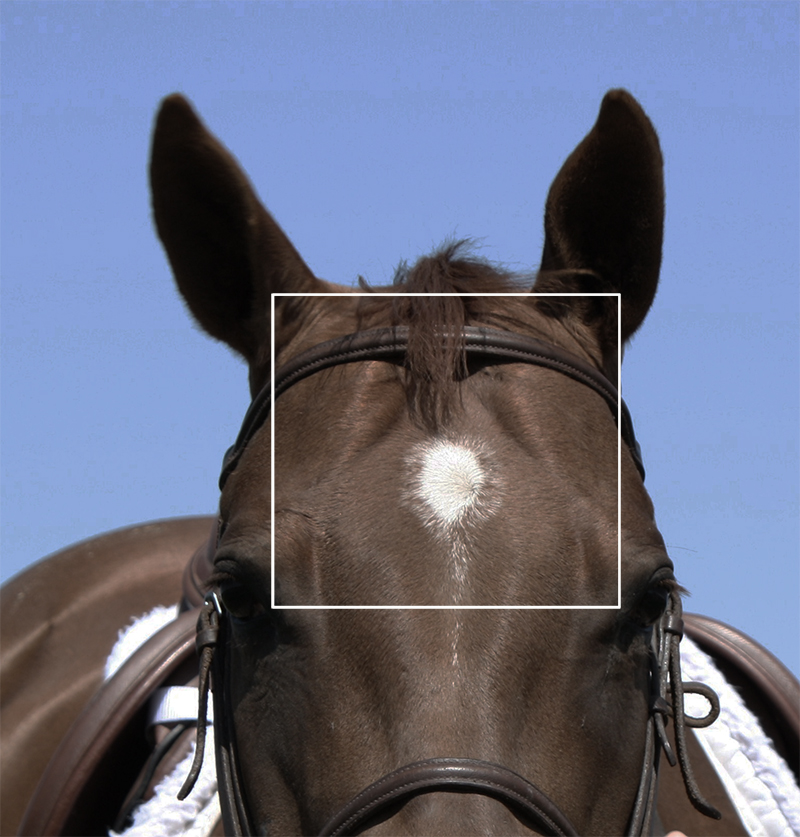
The neurocranium aligns with the ends of the frontonasal suture and includes the temporal and parietal bones, ending at the occiput.

This suggests that while some breeds may look extremely different – take the Welsh Cob and the TB, for instance – the neurocranium may be nearly square in all, at least when viewed from the front.

And even though some breeds may have proportionately larger heads, all (excluding ponies) will have EQs grouped around the average score of 0.78 mentioned earlier.

Small and wide ponies, incidentally, often have quite large parietal domes (or tuberosities, as they should be known), but the jury is out as to whether this makes them more intelligent… The fact is that we don’t know.


A Little More on Equine Brain Size

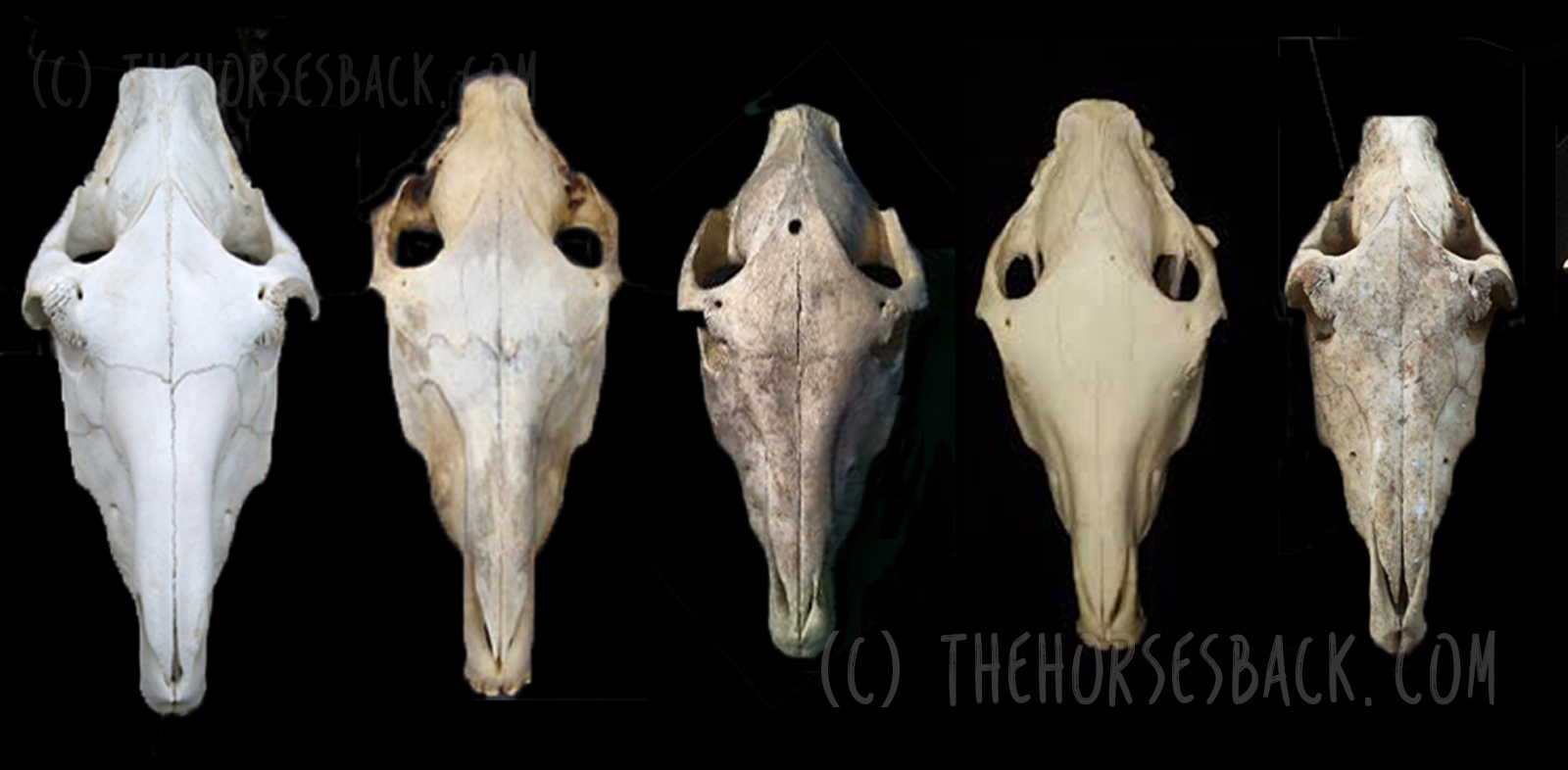
There are a few other differences that aren’t documented. Comparing horse skulls, we can see that some have a cranium that is narrower in relation to overall skull width than others. They also vary in shape: some are very full and round, while others are more teardrop shaped.

You can see this when you look at the spaces to either side of the parietal ‘dome’ and temporal bones, where the coronoid processes (tips) of the mandible protrude behind the zygomatic arch.

This may be due to breed or it may be individual. Our own skulls vary from person to person, with some aspects being just how we are, while others may be more developmental.

We can see this in horses too. Dwarf horses can have domed heads, as can horses that have been born prematurely.

This can affect intelligence – researchers have found that in humans, when the brain is smaller due to development delays, the intelligence can be lower. If it is smaller without any developmental delay, it makes no difference at all. [5]

Interestingly, a new study in humans shows that the longer the time Romanian orphans spent in the institutions as babies, the smaller their total brain volume, with these changes being associated with a lower IQ. You can read more about that study here. [6]

Personally, I would love to know more about this, as I’ve been researching the developmental effects of gestational problems in horses, including the effects of premature birth (my PhD thesis lives here). It’s the same old problem though: once a horse is at the stage where we can examine its skull, its early history is usually lost in the mists of time.

Ultimately, as with humans, what is going to make the most difference to us as horse owners is the individual’s learning experiences at different stages of its life. This is also where equine personality comes in, and the methods of training used, but those are different subject areas altogether.


[1] Cozzi et al., The Brain of the Horse: Weight and Cephalization Quotients, Brain Behav. Evol., 2014; 83:9-16

[2] McGreevy, P., Equine Behavior – A Guide for Veterinarians and Equine Scientists, Elsevier, 2012.

[3] Janet Jones – Horse Brains Facebook page

[4] Evans KE, McGreevy, PD., Conformation of the Equine Skull: a Morphometric Study, Anat. Histol. Embryol., 2006, 35(4): 221-7

[5] de Bie H. et al. Brain Development, Intelligence and Cognitive Outcome in Children Born Small for Gestational Age. Horm Res Paediatr 2010, (73)6-14.

[6] Mackes, NK. et al.,  on behalf of the E. Y. A. F. (2020). Early childhood deprivation is associated with alterations in adult brain structure despite subsequent environmental enrichment. Proceedings of the National Academy of Sciences.
Filed Under: Bodywork Tagged With: Anatomy, equine anatomy, equine brain, equine skull, GA, horse anatomy, horse brain, horse skull

“Scientists Are So Dumb” – Hey, It’s Not Them, Could Be You

August 18, 2019 by Jane @ THB 2 Comments

“DUH!!! Scientists are SOOOOO behind the rest of us!”

I read this today and for once, couldn’t just scroll past and forget. Perhaps it’s because it came from an equine professional and, you know, I’d really be hoping for better from someone who partially depends on scientific knowledge for their business.

You all know how it goes. Every so often, a scientific study is published that confirms new findings – this time, about horses’ emotions – and inevitably, the great wise ones on social media drum out the usual statements about how obvious it’s always been to them, blah-di-dah. For the record, if anyone cares, such comments usually make me have two thoughts:

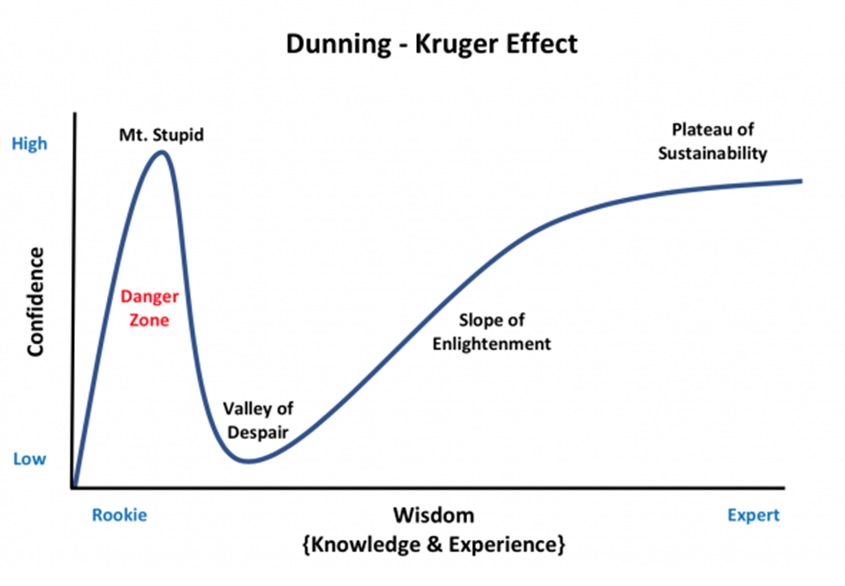
  1. Someone’s climbing high on Mount Stupid (see Dunning Kruger effect, below).
  2. It’s time to unfollow Someone.

The sorry truth is that people who respond in this way are simply putting their own ignorance on display. It’s happening everywhere, of course, but here’s what we see in the equine sector. I’m going to use the May 2018 equine science study on horses reading human facial expressions that’s currently being recirculated (read the journal article here) as illustration.

If you run into an equine science basher, remember:

  • They may well not have read the information they’re sharing. Often they’re not even sharing the study, but someone else’s post and interpretation of the study findings, which may be misworded. They’ve not read that, either.
  • They’ve missed the key points. Yes, they are an expert on their own horse (they believe). Did they happen to notice that this study reported that horses could remember their emotions from photographs? Hmm… it’s unlikely.
  • Plenty of people misinterpret what they’re seeing anyway. In my own area of bodywork, in which I mostly get to meet owners who care and try their best, signs of pain that are obvious to me are frequently missed. I’ll bet every trainer or clinician has an equivalent version.

  • Many people aren’t self aware enough to understand the effect their own presence is having on their horse.  Again, not if what I’ve seen in bodywork sessions is anything to go by (my current clients are lovely, though!).


© All text copyright of the author, Jane Clothier, https://thehorsesback.com. 


Like great food, good equine science is rarely fast.

Here are two major points about equine science.

1. Acquiring scientific evidence is NOT the same thing as having an opinion about your own horse.

2. Science is NOT slow in catching up with your own ‘findings’. Even when you are understanding horses correctly, good science with solid evidence takes time.

Good science can’t be rushed.

There are so many things to slow it down.

Just take Animal Ethics Committees (most developed countries have their own versions of these). All animal studies have to go through a vigorous assessment as to any stress the procedure might cause the horses, how the stress will be recognized, how stress can be minimized, etc, etc. This takes a time and I imagine most horse owners wouldn’t want studies happening without it.

Then there’s setting the study up, locating the horses, lining up the facilities, analyzing results, writing it up, and getting it published (it can take over a year before a submitted article actually appears in a journal).


The quality is in the detail

Then there are the variables. Horses are subject to so many different experiences acquired through every possible variation of management practice, handling, training, riding and tack, not to mention associated injury or illness. All these things can influence results and compromise findings, which makes setting up equine studies rather more complicated on the animal side than, say, those involving sheep.

There are a huge number of factors to consider. So for example when setting up a ‘horse recognizing human emotions’ study,  it must be absolutely clear that:

  • The horse isn’t responding to an expectation of feed, rather than the person.
  • The horse hasn’t had previous experiences that are making it respond in a particular way (such as pain, bad handling, etc).
  • How are the researchers identifying the process of recognition in the horse? Which expressions, facial and otherwise, are the scientists recording?

This is to vastly over-simplify things, but I hope you get the point.


Big studies, small findings

Invariably, it’s often the case that a study can only provide evidence for a couple of apparently simple points.

Equine science studies aren’t “SOOOOO behind”! The researchers are simply taking time to do it properly.


Science costs money and good science costs more money

Research is expensive. Given how complicated studies can be to plan, set up and complete, finding funding can be a hurdle. It’s not simply of behavioral scientists sitting around wondering what to spend their money on next.

Finding money takes more time and that’s if funders want to support the research in the first place.


Why do people ignore the positives?

The bashing comes, I’m sure, from a place of insecurity. People feel that something they’re holding onto is threatened. There’s also the nature of the equine sector: so many people only feel accomplished when they’re pointing to the lack of knowledge of others – we all know it’s endemic. Unfortunately, their critical (but not analytical) eye takes in all comers, including those whose contribution will help them.


It’s also connected with an anti-science view that often comes from those who feel an empathy with horses. It goes along with a whole load of anti-this and anti-that. It gets tiresome after a while and it’s a shame, because it gets in the way of a lot of good information that’s contributing to our collective knowledge.

Now I do understand that certain scientists can be dismissive of many of the subjective experiences we have with our horses. Not everything can be evidenced, not that that means it doesn’t happen – and some things haven’t been evidenced yet. (The best scientists I’ve met acknowledge this and will say, “we don’t know – yet”.)

I’m a complementary therapist with a recent science qualification, so I certainly have a foot on both sides of this particular line. But I really can’t handle this ‘anti’ response from people who should know better, as it totally throws out the baby with the bathwater.

Shouldn’t we be focusing our critical eye on the horse people who don’t acknowledge the significance of horses’ emotions, rather than those who are providing evidence for them?

Shouldn’t we be saying ‘how wonderful that evidence been found for what I believed all along’? Why bash the scientists? Instead of being contemptuous, shouldn’t we be saying ‘thank goodness, life may gradually improve for all horses as evidence is provided for their sentience?’

Because here’s the thing: equine scientists are horse people. They are horse owners, riders and lovers. They’re not remote observers – they ride amongst us! And they care about horses at least as much as you do.

Not all equine science is good science, I’ll agree, yet I’d say it takes a whole lot more analytical engagement to criticize it than “Duh” (that bugged me, can you tell?).

What do you think?

Proops, L., Grounds, K., Smith, A.V., McComb, K., 2018, Animals Remember Previous Facial Expressions that Specific Humans Have Exhibited, Current Biology, 28 (9), https://doi.org/10.1016/j.cub.2018.03.035

Filed Under: Viewpoint Tagged With: equine research, Equine science, GA, natural horsemanship, veterinary science

The Crazy Logic of Saddle Fitting That You Probably Haven’t Thought About

August 12, 2019 by Jane @ THB 8 Comments

There’s a basic premise of saddle fitting that hasn’t occurred to a lot of people. It can’t have done, not if the tack they’re riding in is anything to go by.
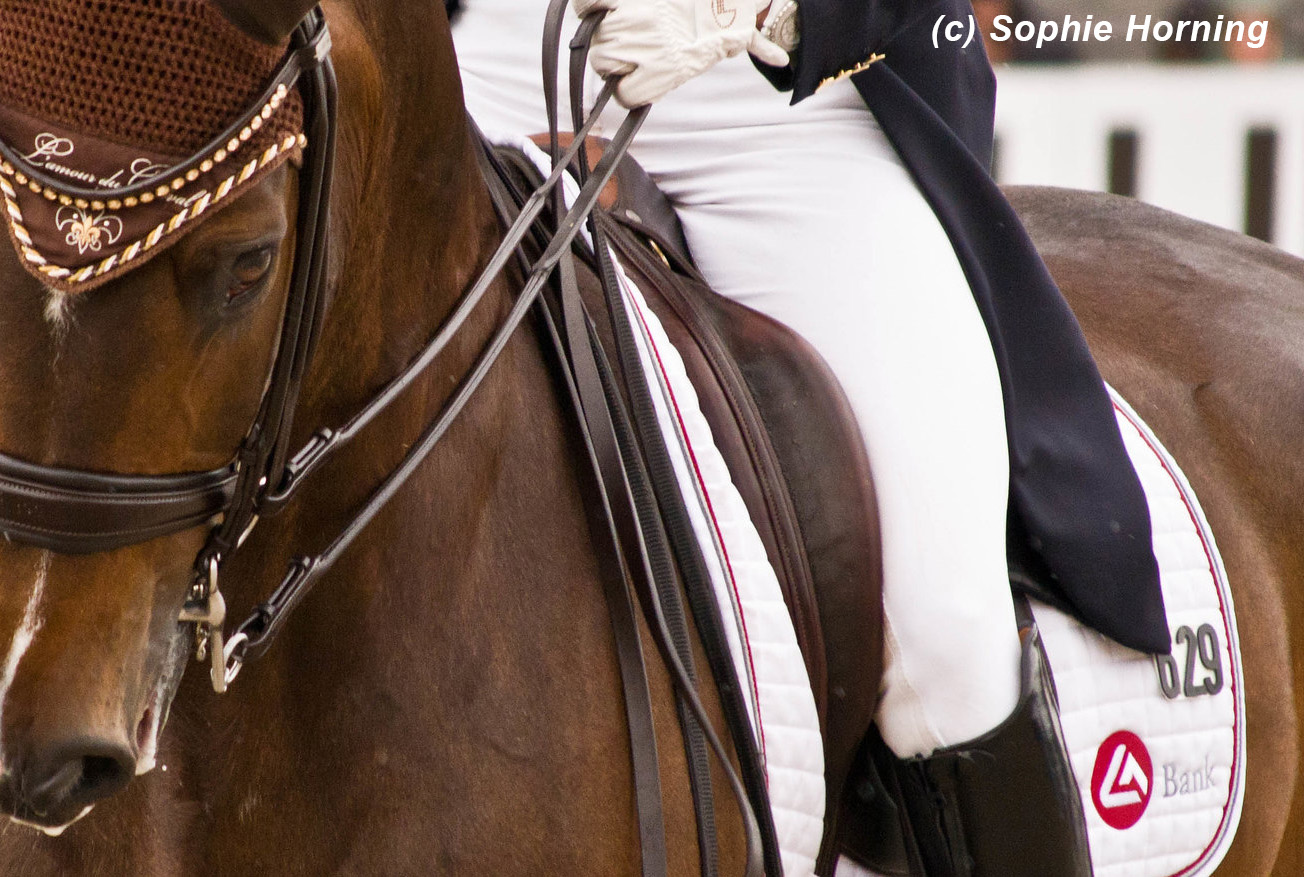
To start, let’s remind ourselves that the horse’s back wasn’t designed to be sat on and it certainly wasn’t designed for saddles. This isn’t to pursue an argument about what is natural for horses or not. Yes we ride them and it’s not natural, ta-de-da.

The reason for this statement is simply to highlight the fact that inserting a relatively static piece of equipment between two living organisms in motion is, at best, always going to be fraught with complexity.
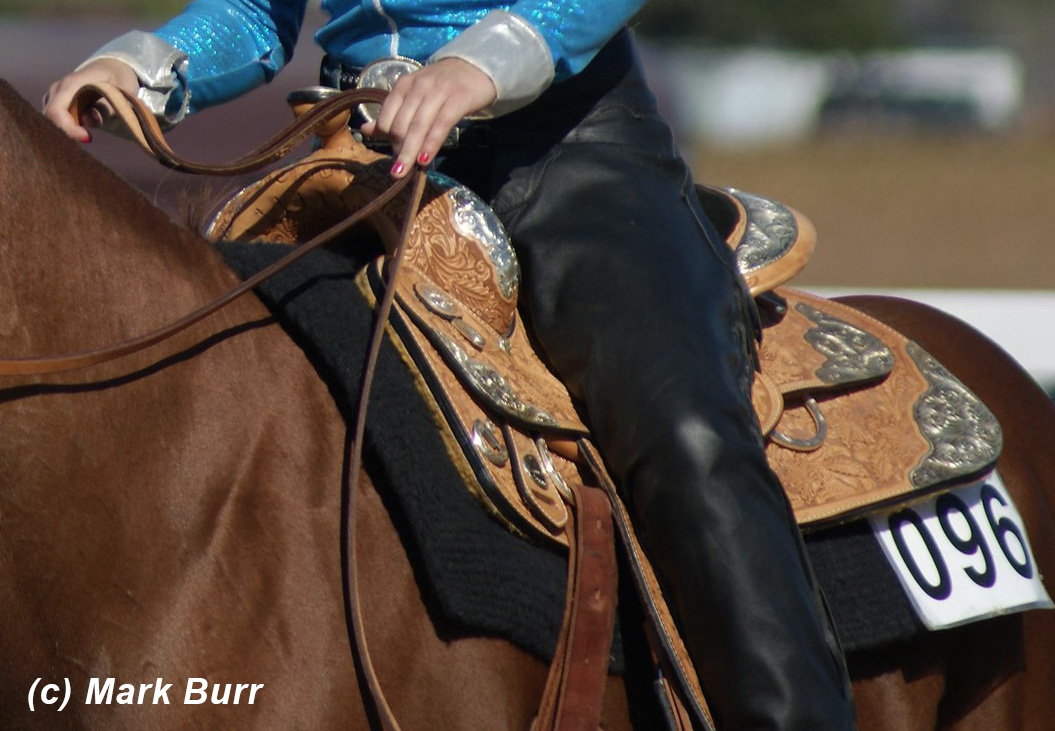
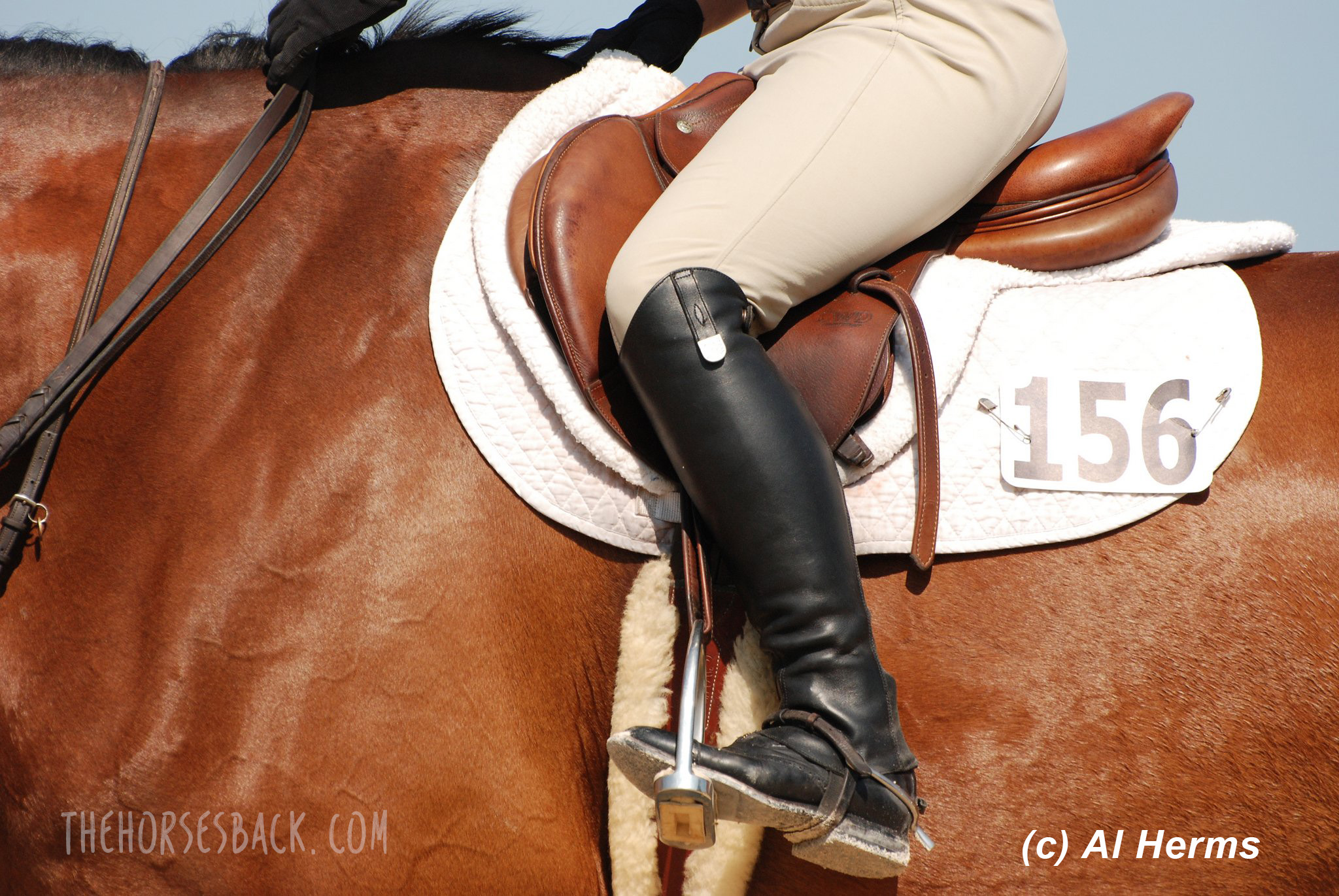
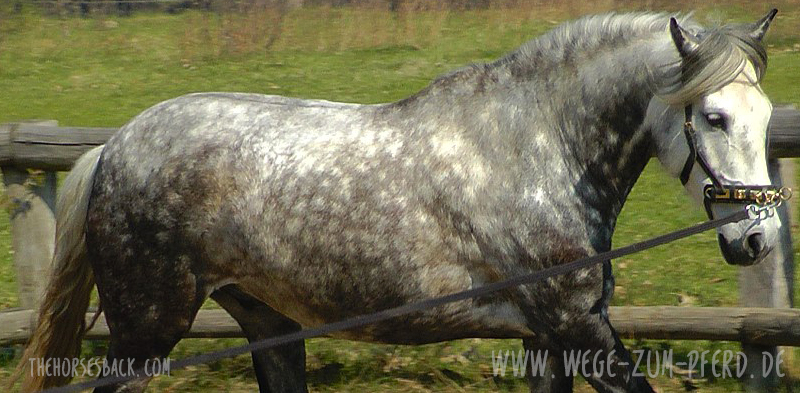
 

We have to acknowledge that when it doesn’t work, it’s usually to the horse’s detriment. Yes, sometimes also the rider, but if the rider’s copping it, the horse is usually getting it too.


One of my favourite statements about saddle fitting

It’s possibly a bit odd to have a fave sentence on this subject, but here’s one that leapt out at me a few years back and is still hanging around.

Ken Lyndon-Dykes, Master Saddler expressed this particular concept so succinctly in his book, Practical Saddle Fitting. Enjoy this – it’s a biggie:

“The best designed, most beautifully crafted saddle made specifically to fit an individual horse will not improve the horse’s ability to perform, benefit his welfare or increase his comfort.”

Say what? Do you feel the impact of that? Maybe you knew it already, but it never hurts to have certain truths reflected back at us as a reminder.

Certainly, having used this quote on a presentation slide in my Saddle Fit Essentials for Horse Owners clinics, I’ve found that these words often pull people up short. There’s usually a moment or two when you can almost hear the implications sinking in.


Let’s take that sentence apart a bit.

“The best saddle will not improve the horse’s ability to perform …” 

Let’s be clear, this is when compared to how the horse performs when free of its saddle and rider. The horse is always going to move better with no restriction or load on its back.

“…benefit his welfare… “

Again, nope, we’re not improving the horse’s welfare, but minimizing and ideally eliminating the negative impact on the horse’s welfare that comes with restriction or pain due to poor saddle fit.

“… or increase his comfort.” 

Same. When did you ever see a horse look more comfortable after you put the saddle on? What we are aiming for is simply neutral, in that the horse is as comfortable with the saddle (and rider) as it is without.


The fact is that saddles are there to assist the rider and beyond that are an exercise in damage limitation to minimize the effect of their own presence. 

And that’s it. There’s the crazy logic, right there.

It’s a paradox, the definition of a parodox being “a seemingly absurd or contradictory statement or proposition which when investigated may prove to be well founded or true.”

Saddles may not make a horse go better, but the well-fitted saddle definitely minimizes the negative effect that a saddle and rider may have in preventing normal action and, at worse, causing discomfort and pain.

Interesting, isn’t it? Yet once we recognize this fundamental truth, the more likely it is that we’re on the road to making wise and sensible choices that increase comfort for our horses and improve performance as a result.

Filed Under: Saddle Fit, Viewpoint Tagged With: GA, horse saddles, saddle fitting

Not Quite Classical… Better Lungeing for the Rest of Us

July 14, 2019 by Jane @ THB 8 Comments

Thinking as a bodyworker, if there were one thing I could change in the training of ridden horses, it would be the way that many people lunge their animals.
I’d be so happy if the standard practice were a simple, gentle and biomechanically correct approach that brings profound improvements to the horse’s back health and readiness for riding.

It’s not a science and it needn’t be. For most people, it’s easy to learn, easy to do and easy to continue with. At even a basic level, it conditions the horse to carry weight and to not only balance itself, but to move effectively while carrying the weight of the rider.

Every rider and horse can benefit from this, no matter the ridden goals or discipline. Horses may just happen to have a back we can sit on, but their bodies are not designed to function in the way that we ask.

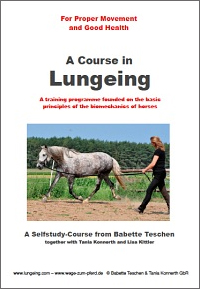
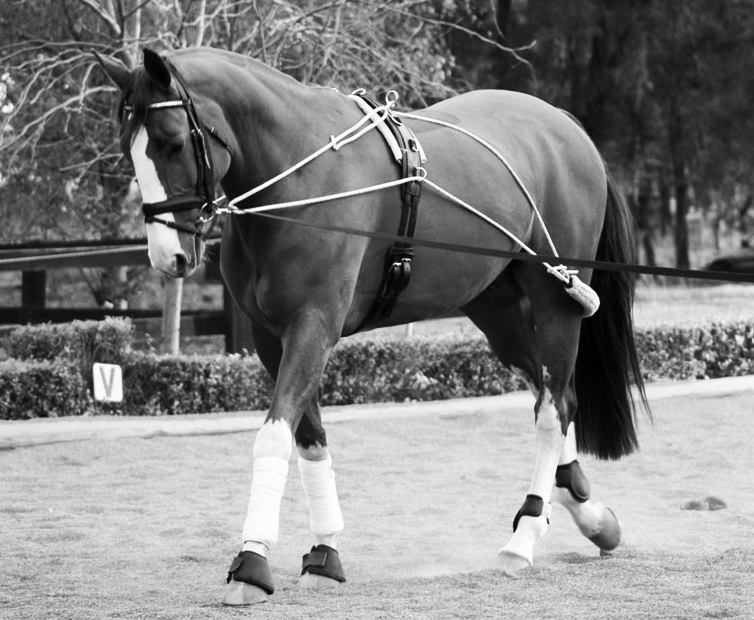
Here is a simple and affordable resource that will help you to do it better: A Course in Lungeing. It’s something I’ve recommended to bodywork clients over the years, with positive results. (It does involve ditching the gadgets and moving with your horse, but you don’t mind that, do you?)
Let’s look at why I believe it’s so good.


© All text copyright of the author, Jane Clothier, https://thehorsesback.com. No reproduction of partial or entire text without permission. Sharing the link back to this page is fine. Please contact me for more information. Thank you!

** Questions, thoughts or comments? Join us at The Horse’s Back Facebook Group. 

What often passes for lungeing

Oddly enough, many people think you don’t have to learn anything in order to lunge a horse.

It does involve ditching the gadgets…

It’s assumed that you just need to buy the right equipment. In all too many cases, it’s then a matter of sending the horse in a circle, achieving as much trotting in as short a time as possible.

There are plenty of goals, including many that don’t have much to do with preparation for biomechanically correct movement while being ridden.

Lungeing to warm up the horse. Lungeing to build topline. To get the horse ‘into an outline’. To make the horse listen. To make the horse understand. To ‘get the buck out’. To get weight off the horse.

It’s also what many people do when they haven’t got time to ride. It’s not good and it’s not the best option for any horse.


It takes time to prepare the horse’s back

Lungeing shouldn’t be part of a rush. It isn’t a ‘hack’, ie. some kind of shortcut or saving of time and effort, adopted to fill the gap between feeding and going to work on days when there aren’t enough hours for riding.

In the last few years, a renewed interest in a more classical, biomechanically correct approach to training has brought simple, in-hand training techniques to wider audiences. Older methods that aimed to prepare horses for ridden careers, which have been overlooked in the great rush to do everything faster, have come back into focus.
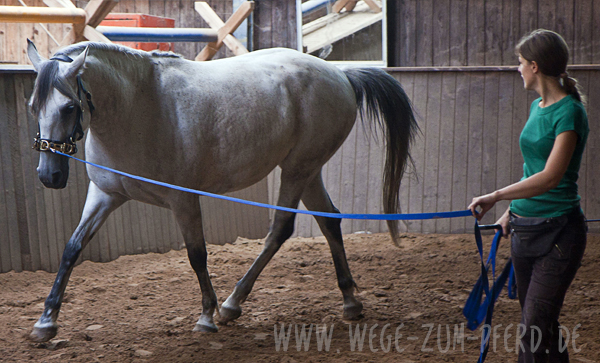
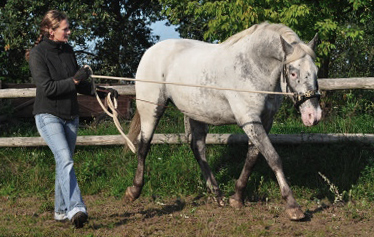
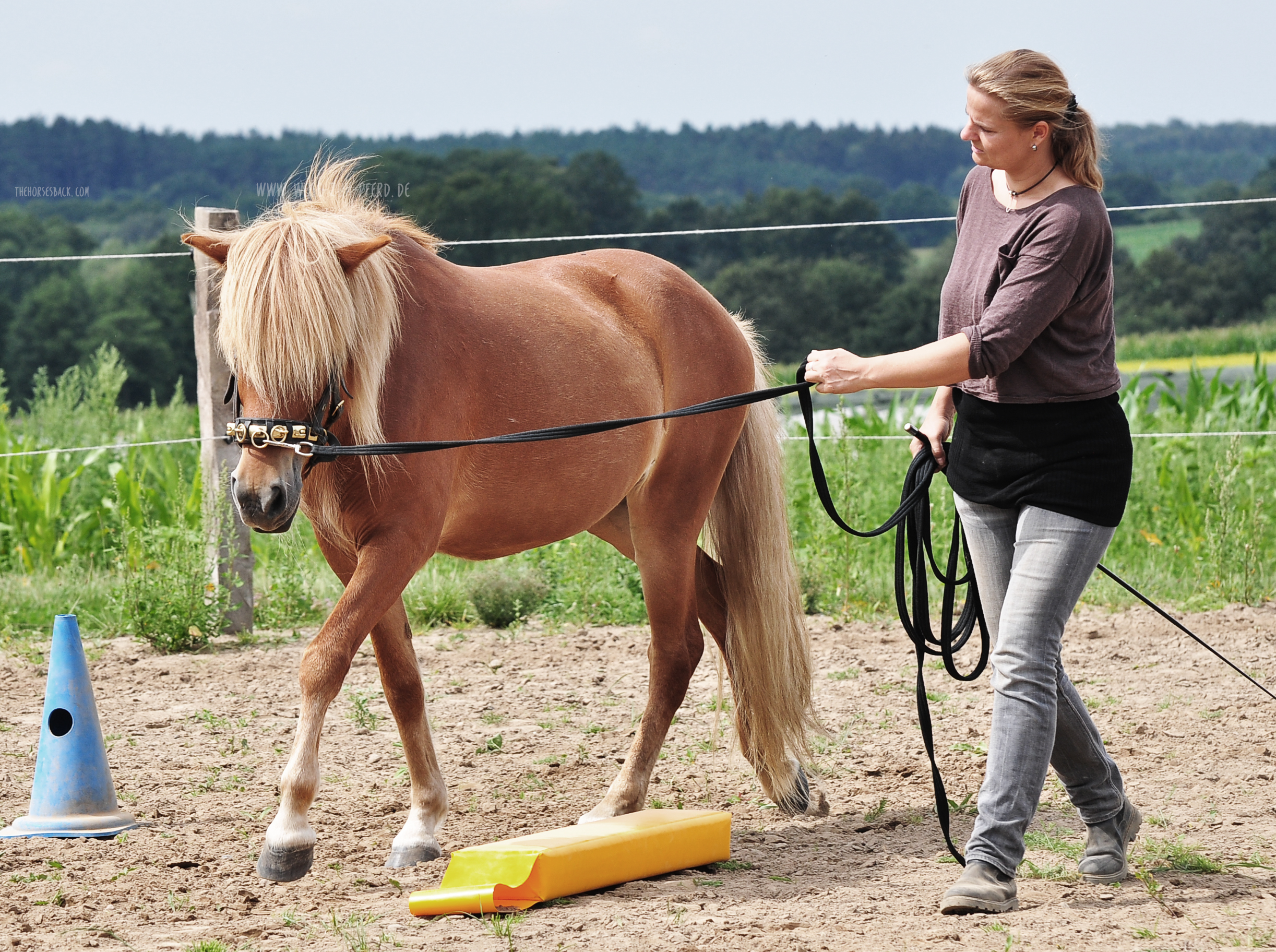
This doesn’t involve sending horses in circles around a largely stationary human. It involves walking with the horse, working with it and shaping it. It’s about educating the horse to move and to carry itself in a way that is then taken forward into ridden work.

Lungeing for ‘everyhorse’

While horses differ enormously in terms of conformation, their needs are basically the same for carrying a rider. This is true no matter what discipline their athletic capabilities and fate destine them for. It is equally true for the trail riding horse.

Pien, Anglo Arabian

Biomechanically correct lungeing prepares the horse to do this. Put very, very simply, this means lungeing so that on a bend, the horse weights inside and outside legs evenly and doesn’t lean in.

Instead, this even weighting means it is able to freely lift up through the base of neck and withers, between the shoulders (i.e. the thoracic sling). Meanwhile, the hindquarters are active and load bearing. The horse moves lightly with elevation and is able to do so freely and at all paces.

Biomechanically correct lungeing helps to develop the back and teach self-carriage, which makes it humane as well as effective.
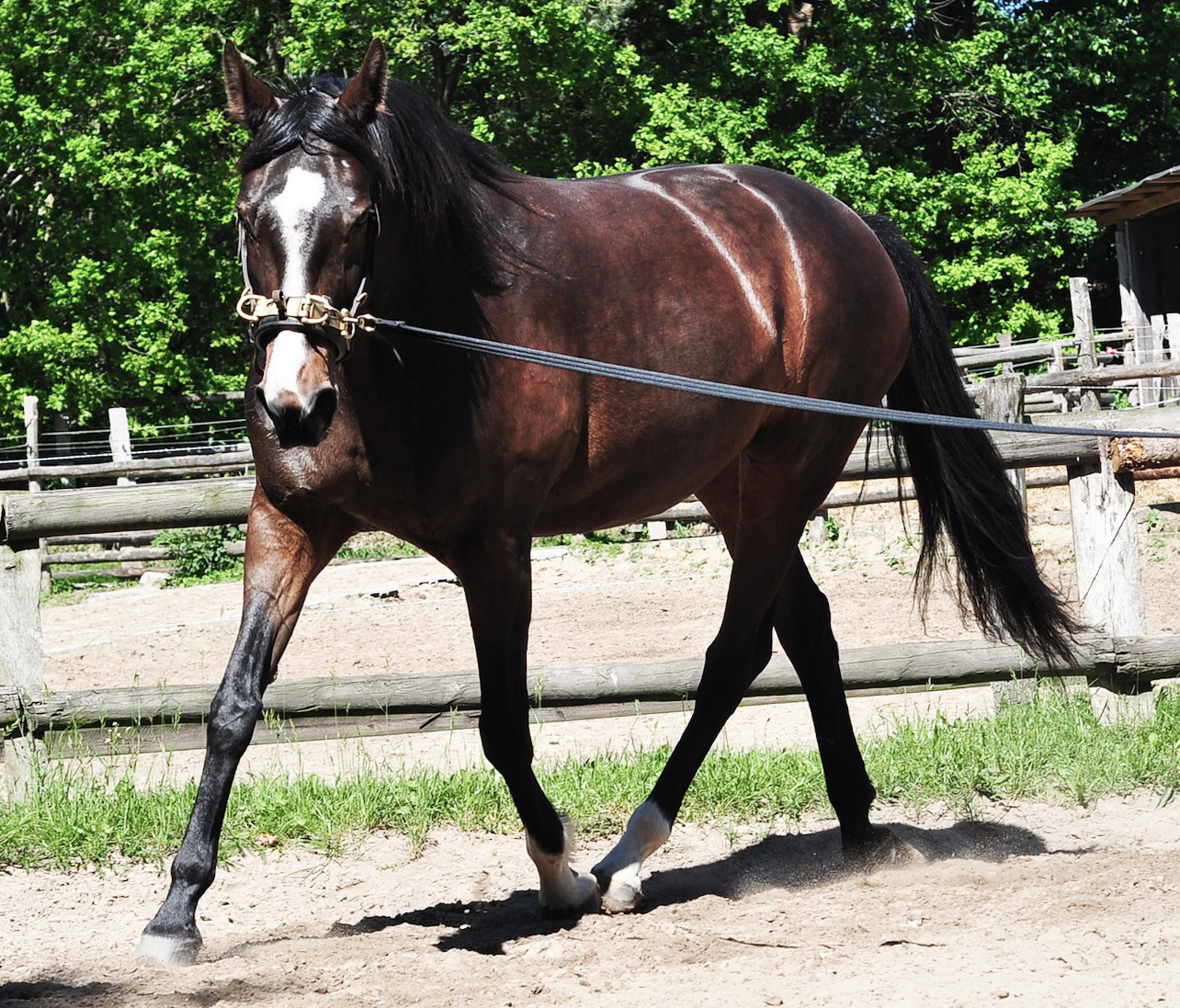
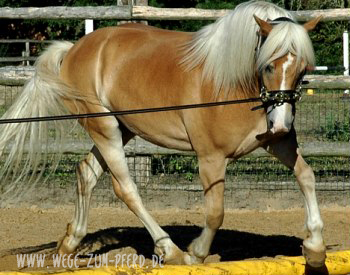
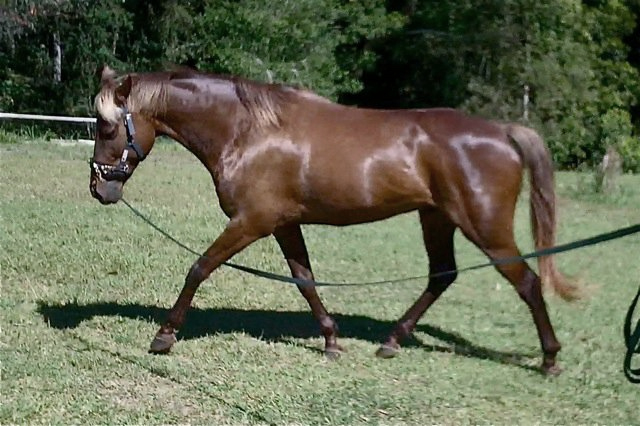
Why would anyone wish for less for their horse?  The wonderful thing is that it’s not hard to do.


Therapeutic benefits of correct lungeing

As a bodyworker, I have repeatedly witnessed the  improvements in horses that were helped to work correctly in this way.

Clients and associates have had success rehabilitating horses, including (and especially) ex-racehorses with serious sacroiliac dysfunction.

Fanta, 12-year-old Westphalian

The strength in their bodies, the suppleness, and the ability to work softly in a magnificent shape without any kind of restriction or force is wonderful to see.

I’ve also noticed how much horses seem to enjoy working in this way, as their body and movements develop and their spirits lift. Pride becomes visible in their movement and attitude.

These horses go on to flow under the saddle. Again: who wouldn’t want that for their horse?

The thing is, once this approach is learned, the improvements come quickly. Dramatic changes can happen through 2-3 short sessions a week. It’s not time consuming at all – and you don’t need to be into dressage to do it.

Which brings us to A Course in Lungeing.


So how do we relearn lungeing?

A Course in Lungeing makes these time-tested approaches available to the owners of any horse, no matter what breed, age or conformation, or ridden discipline.

It’s perfect for people who don’t want to study for qualifications or who can’t afford or manage to attend clinics with classical trainers (you can do this in your paddock).

The course was developed by German horsewoman, Babette Teschen, based on her many years of teaching correct lungeing in workshops in Europe.

Lunging training stood out as being really helpful for my work,” writes Babette Teschen. “In as much as you learn to lunge your horse according to biomechanical principles, you are doing what is best for the health and spirit of your animal partner: you give it the means to fulfill what you want of it in a healthy way.”

What I love is their strong focus on musculoskeletal health, so much so that they’ve included contributions from an equine osteopath and an equine acupuncturist.

More info and to purchase ‘A Course in Lungeing’

What you receive with ‘A Course in Lungeing’

With this training, you can help your horse to learn to bend in a circle instead of falling in, to raise its inner shoulder, and to move with the hindquarters tracking the forelegs (think of a train on the tracks rather than a motorbike on a bend).

Anthony, 5 year old Haflinger

When your horse can do this, it will be able to free up the neck and ‘let go’ from the withers. It can develop rhythm and freedom of pace, with good ground coverage. The horse’s back muscles are freed up to do their work effectively, with its hindquarters taking up the load.


What you’ll receive: 

  • View the first 30 pages of the book for free.
  • 250 pages of instruction material plus videos of various exercises.
  • Extensive basic information of anatomy and biomechanics.
  • Clearly presented exercises that will help you and your horse to master the problem of moving in a circle with ease and enjoyment such as the Cone Slalom, the Stepped Pathway, and many more.
  • Photos and diagrams with explanations and illustrations.
  • A Media Library with videos, and a substantial .pdf by osteopath Maike Knifka on the theme of Physiotherapy and the Lungeing Course, with supporting videos.
  • Acupressure tips from acupuncturist Patrizia Harneit on video.
  • A special on working with horses with extra paces, such as Icelandic horses.
  • Tips for working with older horses and those with health problems.


The book is available as a PDF in English.

More information and to purchase ‘A Course in Lungeing’

Note: this post was published in July 2019, simply because I believe in the approach.

This has resulted in many purchases of the course. I’ve been happy to facilitate that, as it helps so many horses.


Bondi, an Australian Stock Horse whose owner, the late Eva Thaler, introduced me to this course many years ago. 


Filed Under: Bodywork, Viewpoint Tagged With: brachial plexus, classical dressage, classical training, GA, Lungeing, lunging, thoracic sling

All You Need to Know About the New Biological War on Worms

July 7, 2018 by Jane @ THB 48 Comments

Australia has declared a new war on worms – and this time it’s biological.
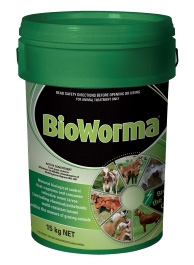
You may already have read about this wonder from Down Under, the “world’s first biological control for grazing animals”, on the equine news sites.

Instead of dosing our horses continually with chemical wormers, we now have the option of fighting parasites by feeding our horses an innovative new product: a supplement containing a fungus that passes through the horse to kill the larvae in manure.

Called BioWorma®, this new supplement can, through continued use as part of a worming strategy, dramatically reduce roundworm larvae in pasture by an average of 84% (across livestock species – the lowest effect recorded has been 50%, the highest over 90%).

Perhaps, like me, you have quite a few questions about exactly what this means for horse health.

Recently, I caught up with Chris Lawlor, CEO of International Animal Health Products, the commercial producer of BioWorma®, at the Australasian Equine Science Symposium 2018. (The other partners included scientists at CSIRO, Australia’s national science agency.)

Between his presentation, our conversation and other reading, I’ve taken the opportunity to get my head around this remarkable new product. 


© All text copyright of the author, Jane Clothier, https://thehorsesback.com. 


What is this biological wormer and how does it work?

Duddingtonia flagrans is a nematophagous fungus that is found in pasture and manure around the world. The term nematophagous is Greek and means ‘worm-eating’.

Good news for horse owners is that once the fungus is resident in a manure pile, it creates a microscopic net that traps, paralyses and consumes the larvae of parasitic worms – and in particular, nematodes.

This means it basically consumes the larvae of large and small roundworms, the gastrointestinal parasites that are amongst the dangerous for our horses.


How do we use this biological wormer?

Duddingtonia flagrans has been added to a protein meal that we can feed as a supplement to horses (vets can obtain it ‘neat’).

It is best used strategically within a rotational paddock system. In practice, this means that you take the following recommended steps:

  1. Deworm your horse or herd with conventional chemical wormers. All horses in the same paddock must be treated, or this process becomes pointless.
  2. Conduct a fecal egg count to see how much your horse is shedding.
  3. Once the egg count is low, move your horse into a fresh paddock just after deworming (yes, I know this isn’t always possible, but please read on – there’s another option).
  4. Give Bioworma in the horses’ feed, so that fresh manure in the new paddock is hosting worm-eating Duddingtonia. Repeat once or twice a year, until roundworm egg counts are negligible.
  5. Continue to use chemical dewormers for tapeworms, bots, neck threadworms, etc.

If you’re not in a position to rotate paddocks but are able to clear manure from your paddocks, then you can:

  1. Deworm your horse or herd with conventional chemical wormers.
  2. Conduct a fecal egg count to see how much your horse is shedding.
  3. Once the egg count is low, give Bioworma in the horses’ feed, just after deworming.
  4. Continue clearing manure from the paddock.
  5. Give Bioworma in the horses’ feed, once or twice a year, until roundworm egg counts are negligible.
  6. Continue to use chemical dewormers for tapeworms, bots, neck threadworms, etc.

Here’s the current research paper that covers the equine trials, in the July 2018 issue of Veterinary Parasitology. It’s Open Access so everyone can read it.


Exactly which parasites are targeted?

Duddingtonia flagrans loves consuming the larvae of the following worms:

  • Large strongyles (large red worms), including Strongylus spp., Triodontophorus spp. and Oesophagodontus spp
  • Small strongyles (small red worms or cyathostomes), including Cyathostomum spp., Cylicocyclus spp. and Cylicostephanus spp
  • Stomach Hair Worm (Trichostrongylus axei)
  • Ascarids (Parascaris equorum)
  • Threadworms (Strongyloides westeri)
  • Pinworms (Oxyuris equi)

It doesn’t have any effect on:

  • Tapeworms, which have an intermediate host – the forage mite, which isn’t on the Duddingtonia menu.
  • The larvae of the botfly (Gasterophilus), which lays its eggs on the horse’s legs or coat.
  • Onchocerca cervicalis (neck threadworms), which are not gastointestinal and are transmited by culicoides flies.

So, you’ll still need to deworm for tapeworms with a praziquantel or pyrantel product, and for bot larvae and neck threadworms with an ivermectin or moxidectin product.

Even so, that’s a lot of worms taken care of with this product, including the most dangerous of the lot.


And what’s the dosage?

As mentioned earlier, vets can buy straight Bioworma®, while horse owners can buy Livamol® with Bioworma®.

I have to be honest and say that I’m a bit puzzled by this – Livamol® is an existing nutritional supplement from International Animal Health Products, which is marketed as a coat conditioner.

This means you’re actually going to be paying for two products, one of which you may not really want or need. It doesn’t appear to be necessary to the effectiveness of Bioworma®, so this appears to be a purely commercial decision. I understand that a carrier is needed for this to be administered in feeds – but why not simply a protein meal, which would presumably be cheaper?

That said, the 20 years’ development period is a long time for a company to hang in there, and return on investment has been a very long time coming.

Moving on… Dosage per 100kg bodyweight is 100g per horse per day. This doesn’t sound much if you only have one horse. If you have more, it does add up.

It needs to be fed during seasons when larvae are thriving, so definitely the warmer months of the year.

Another point to bear in mind is this. If you live in a warmer, more humid zone where parasites thrive (eg, north and north eastern coastal areas of Australia), you’ll need to use it more often.

None of this means it isn’t a great development! Just that there’s more to consider – it’s not simply a case of feed this product and say goodbye to using chemical wormers.


Is it safe – and when can we buy it?

Yes, it’s safe for domestic animals, wildlife and the environment. It’s been tested in 19 trials and three different safety studies for everything from environmental effects to toxicology and residues before being licensed by the Australian Pesticides and Veterinary Medicines Authority (APVMA) in May 2018. (You can see the APVMA’s licensing sheet here.)

BioWorma® will be available in Australia and New Zealand from July 2018, and in the US soon after. Europe will come on board within the next year or two.

I’ll add price information once this is available.

Questions, thoughts or comments? Join us at The Horse’s Back Facebook Group. 


Filed Under: Parasites Tagged With: biological wormer, bioworma, deworming, GA, neck threadworms, roundworms, strongyles, worming, worms

  • « Go to Previous Page
  • Page 1
  • Interim pages omitted …
  • Page 3
  • Page 4
  • Page 5
  • Page 6
  • Page 7
  • Interim pages omitted …
  • Page 9
  • Go to Next Page »

Footer

Contact Me

Send your questions this way…

Get in Touch

  • Store Support
  • Shipping
  • Returns
  • Contact

Copyright © 2026 · Parallax Pro on Genesis Framework · WordPress · Log in