• Skip to main content
  • Skip to footer

The Horses Back

Body Talk for Thinking Owners

  • Home
  • Articles
  • BEMER
  • Store
    • Store
    • Shipping
    • Returns
    • Support
  • Equine Healthworks
    • Bodywork for Horses
    • Reviews
    • Leave a Review
  • About & Contact
    • About
    • Contact

Jane @ THB

Hiring an Equine Chiropractor: 10 Crucial Questions You Need to Ask

June 28, 2025 by Jane @ THB Leave a Comment

When you’re hiring an equine chiropractor, it’s really important to ask some questions first. And I don’t mean just the usual ‘what do you charge’ and ‘do you work on Saturdays’, although you can obviously ask those too.

You see, there are chiros and then there are chiros. One group consists of equine chiropractors who are genuinely qualified and skilled, while the other includes chiropractors who are not.

Unfortunately, when it comes to hiring a correctly trained chiropractor, word of mouth recommendation isn’t always enough. (I look at some of the issues in an earlier post, Why Do Horse Owners Keep Hiring Unqualified Equine Chiros?)

And unfortunately, it’s often hard for horse owners to ask the right questions of professionals, because the fact is that many of us don’t know enough to know what to ask.

Why does this matter?

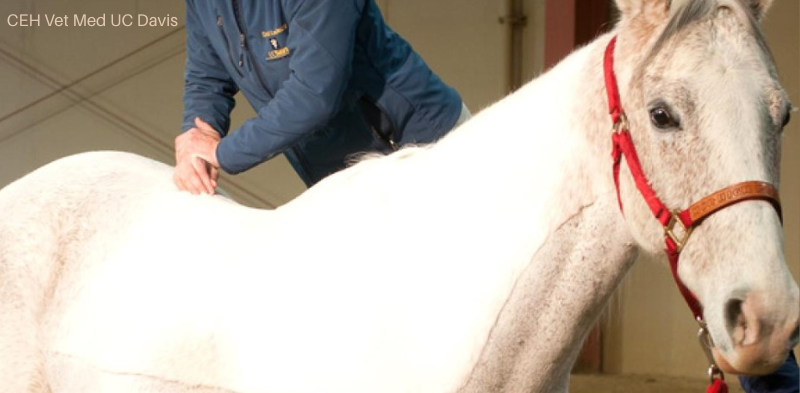
Equine chiropractic is one that’s called an invasive approach. This means it frequently involves the use of high pressure to get results (here’s a good university overview).

And the thing with approaches that use high pressure is that everything is fine – until it isn’t. That one mistake can be catastrophic, because a high-pressure move was applied in the wrong place or at the wrong time on a particular horse. This is very well expressed in this article by a veterinarian.

Note that some non-chiro equine vets are sceptical about the benefits of chiropractic. Some of this comes down to different uses of the word ‘subluxation’ – if you’re interested, holistic vet Dr Madalyn Ward DVM explains this aspect very well.

Questions you can ask a horse chiropractor

The following 10 questions may be helpful if you’re thinking of hiring an equine chiropractor.

Some of the answers may be on their website, so do take a look. If there’s no website, ask when you speak to them.

A qualified professional will not mind being asked at all, although do remember they may be busy. But with non-vet chiros, I’d count an irritated response to being asked as a potential red flag 🚩

By the way, if you’re thinking of hiring a chiropractor who’s a veterinarian, then you can be reassured that there’s a high level of professional regulation in place. This protects your horse and you as a customer. This also applies if you live in a region where all equine therapists are heavily regulated. In such cases, you may not need to ask more questions at all.

Otherwise, here’s where you can start.

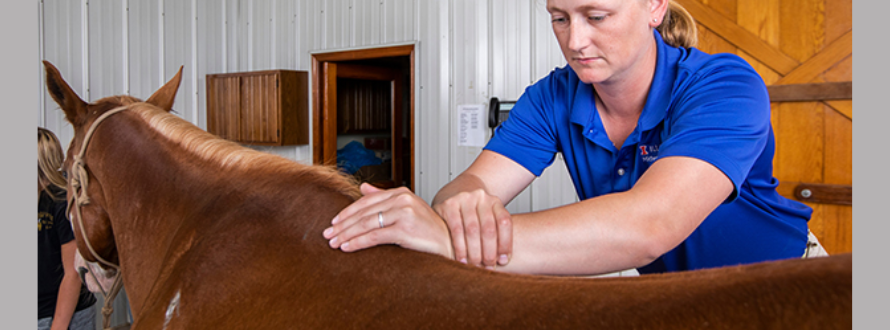
(c) https://vetmed.illinois.edu

1. “What is your qualification?”

The answer to this does not always tell the whole story, but is definitely a good starting point. You’ll most likely find it on the website.

It’s not always true that big qualifications make good practitioners. However, when it comes to invasive practices – i.e. those that use a higher level of pressure, meaning moves will have an impact, come what may – solid qualifications are essential. No qualification is a cause for concern 🚩

2. “Where did you train?”

It follows that their qualification needs to come from a reputable training organisation. Find out the answer (it’s likely to be on the website), and then look it up. Is it accredited? Does it come with approvals from regulatory bodies? If not, 🚩

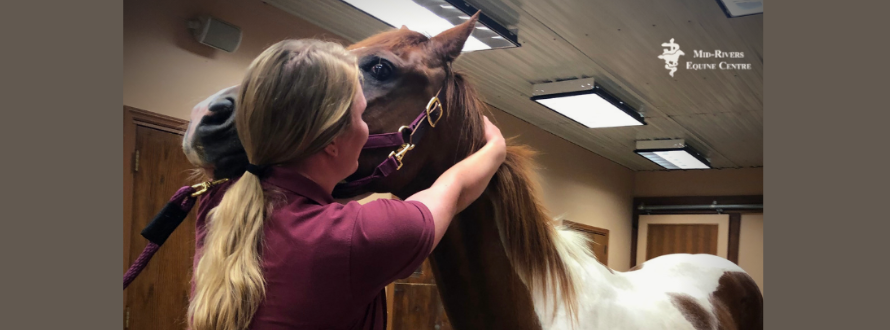
(c) https://www.midriversequine.com

3. “Does your work involve pressure?”

This follow-up question might relate to the practitioner’s understanding of their work and its effect. This is a roundabout way of identifying the possible use of high pressure or force – read this post about Unqualified Equine Chiros for more on this.

If the question can’t be answered, the chiropractor may not even understand what it means, or why it’s important. And if they don’t the answer, how much are they thinking about your horse’s experience of their work? Red flag alert🚩

4. “How exactly do you get results?”

Again, if joints are simply being pushed and pulled, or if the practitioner learned just by watching someone else, this question may be tricky to answer 🚩

On the other hand, if the chiropractor answers articulately, you may not understand what they are on about – anatomy and physiology can certainly be hard to dip into. If you’re not clear, try a follow-up question.

5. “Is there somewhere I can read about that?”

This is a follow-up question if you’re feeling bamboozled by science. Every practitioner should be able to point to a source of information, somewhere, or offer to send a link through later.  A vet may be busy, but they’ll at least mention their professional association’s website. Other qualified professionals will appreciate their customers being interested.

If you’re brushed off or the subject gets changed, take note 🚩

6. “Will you be able to tell me what’s wrong with my horse?”

This question is a bit of a bear trap. Diagnosing is telling you specifically what a condition is and trained professionals should know that only a vet can diagnose. So, if a non-vet chiropractor answers ‘yes’, you may have a red flag answer 🚩

7. “Does your approach always work?”

The answer should be that there’s never a guarantee, that some conditions can’t be helped (although the secondary effects can), that veterinary diagnosis and/or intervention may be required, or that not every approach works best for every horse.

If the practitioner says yes, they are either wearing rose-tinted glasses, don’t know as much as they should do, or are over-selling what they do 🚩

8. “How do horses respond to your work?”

If you care about the experience your horse is being lined up for, this is an important one to ask. “They like it” is not an adequate answer 🚩 You definitely need to hear a bit more about what happens with the horse after the session and what you can expect.

(c) https://www.coretherapiesdvm.com/

9. “Are you insured?”

This one can elicit an interesting answer, given that association membership and up-to-date qualifications are usually required for chiropractic due to its invasive nature (regulations vary by country and region).

I’d recommend that you NEVER hire a chiro who isn’t insured 🚩

10. “How many sessions do you recommend – and why?”

If you hear that all will be sorted out in one session, do not believe them 🚩 If they suggest that your horse should be treated every time they visit the area, hide your horse and padlock your wallet 🚩🚩


To sum up…

Now I realise that not every practitioner is super-articulate. In any group of professionals, there are those who speak well and those who are more introverted.

Hopefully, the information you’re looking for will be readily available on a website if not in conversation.

Yet as with any group of professionals, even with all questions answered positively, there’s no guarantee of high-level skills or ability – or sensitivity to your horses’ responses.

But you will be dramatically lowering the chance of hiring a poorly trained and less knowledgeable chiropractor who could be unwittingly putting your horse at risk.


Filed Under: Bodywork, Viewpoint Tagged With: equine bodywork, equine chiro, equine chiropractic, equine chiropractor, horse bodywork, horse chiro, horse chiropractic, horse chiropractor, vet chiro, veterinary chiropractor

BEMER And Bodywork: What I’m Seeing And Why I’m Hooked

February 26, 2025 by Jane @ THB 6 Comments

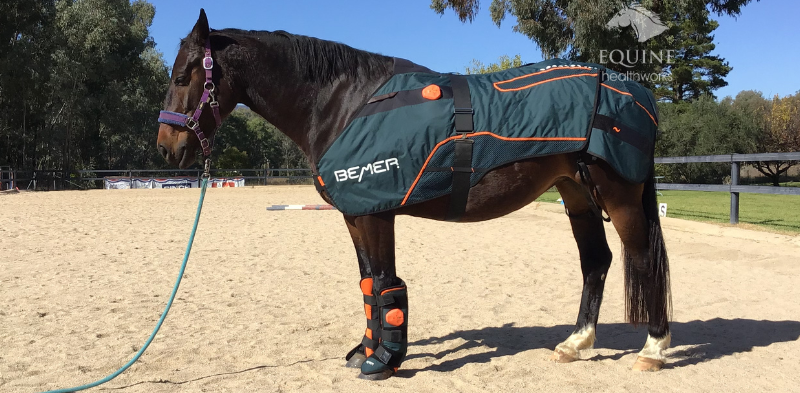
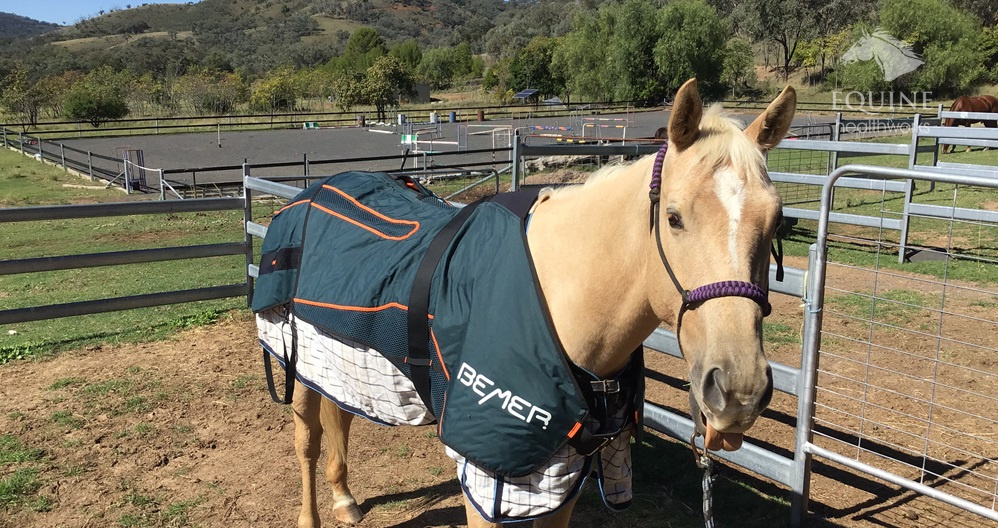
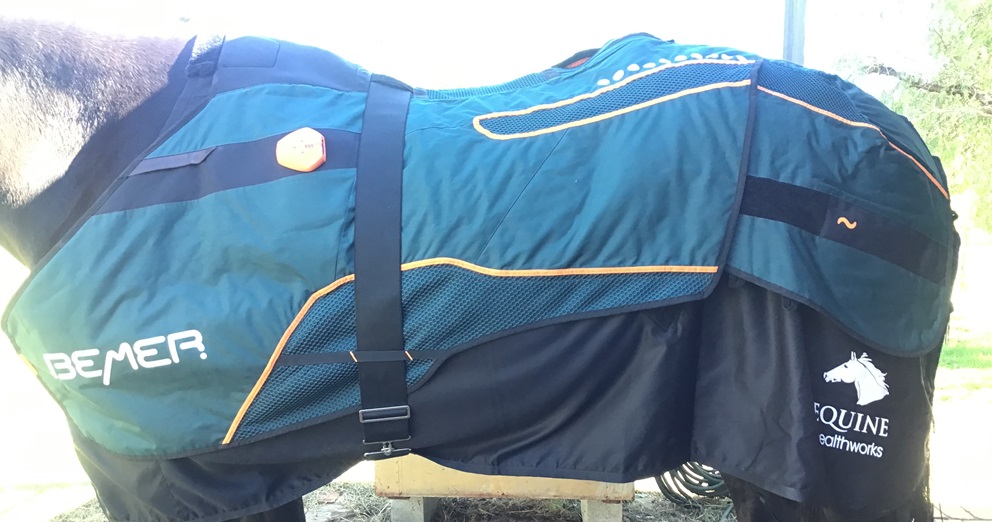
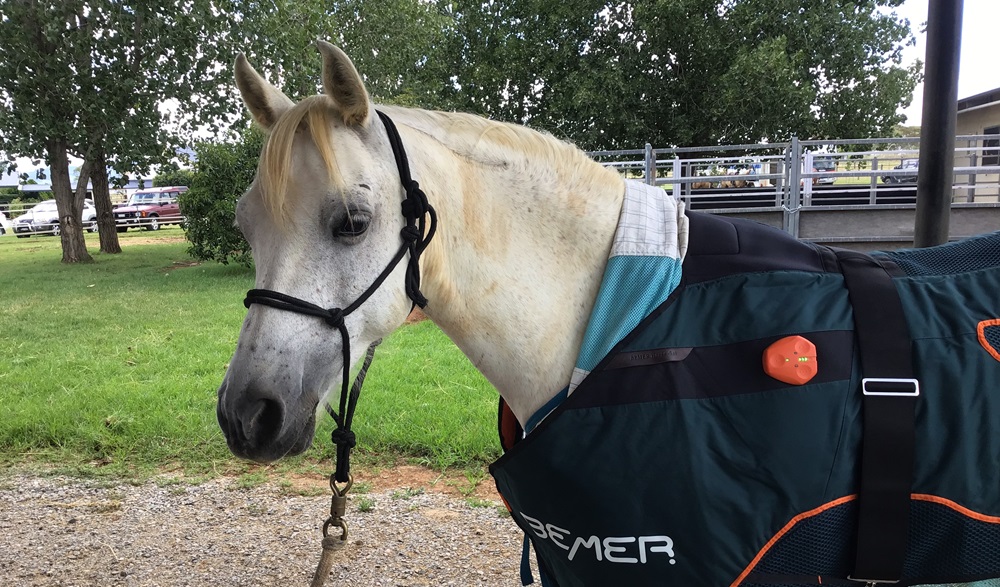
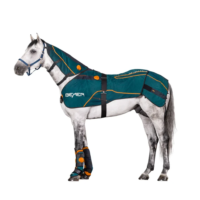
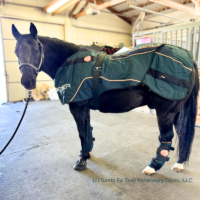
As a bodyworker, I’ve been using hands-on therapies to help horses for nearly 20 years. Only recently, I came across BEMER and decided to add this blanket and leg wraps to my practice, Equine Healthworks.

So how did I come across BEMER, what have I found, and – as a PhD-level critical thinker – what do I make of it?

Here, I explain how and why it fits into my holistic practice. I start with some observable effects in horses, then unpack these as to what might be happening, and finally explain where it sits in my view of how we work with horses.

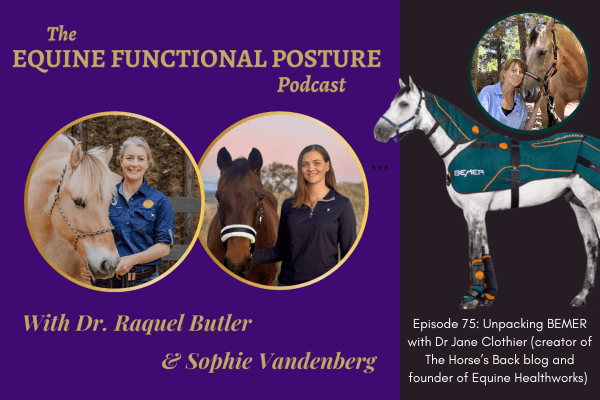
You might also be interested in this episode of Dr Raquel Butler’s Equine Functional Posture podcast (opens in a separate tab). This also reflects my personal experiences. It’s about an hour long.

Functional Posture podcast with Raquel Butler and Sophie Vandenberg

Note: The following content reflects my personal experience and views, and as such are anecdotal in nature. Always consult a veterinarian if you have concerns about your horse’s health. I am a BEMER UK partner presently in Australia and receive no compensation for this piece of writing.

How I was introduced to BEMER

As a rule, I don’t jump onto bandwagons, especially where the-next-great-device is concerned.

I’m the marketer’s nightmare, being a seriously slow uptaker of new technologies. And that’s why I had my heels dug in very firmly when a UK friend first started telling me about BEMER.

But then, after a few years (I’m not kidding), I started to do some reading. I found scientific papers and anecdotal information that were variously good, bad, or on the fence. Much of the good science related to the ‘human’ BEMER forerunner of the equine version.

It was only when a very qualified European colleague offered to hand deliver my own BEMER and, what’s more, give a presentation to my clients AND stay with me and talk BEMER all weekend, that I finally took the plunge.

Since then, I’ve been near-obsessing over how this therapy device is producing such remarkable results in the horses I work with.

My initial observations

What surprised me immediately was the similarity of physiological effects arising from the BEMER and those arising from my bodywork.

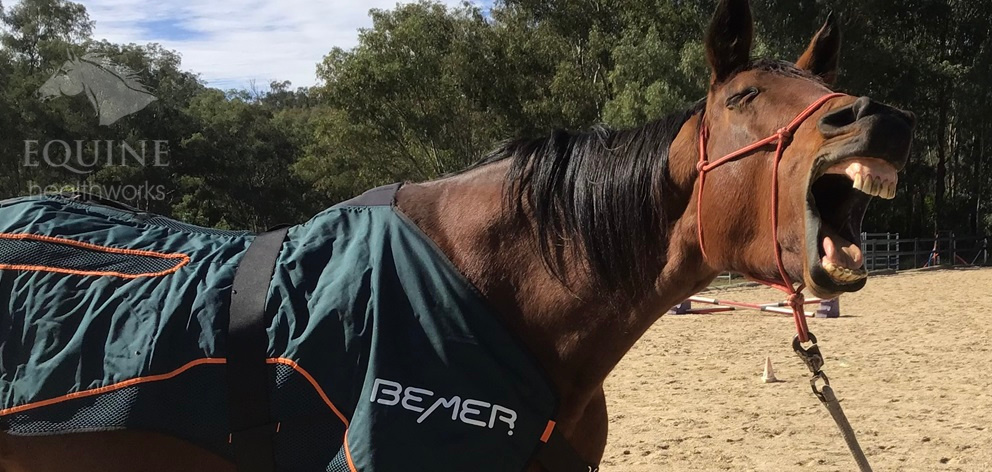
  • Many horses show a response that suggests parasympathetic nervous system activation. There is visible dilation of blood vessels, particularly around the upper limbs. The pulse is visibly raised along the jugular groove. Horses ‘zone out’, with head lowered, eyes shut, and lips drooping. Then there are all the big sighs with licking and chewing… and the gut rumbles (peristalsis).

  • Additionally, sweat patches can appear, and muscle twitches (fasciculation) occur randomly.
  • Some horses don’t respond during the first session, but do so later, once they’re able to mentally ‘let go’. I work on  a second horse and look back to find that the first horse is now zoning and yawning, with the blood vessels raised.
  • And yes, the parasympathic state appears to be just a heartbeat away for the rest of the day and night.

In short, what I saw happening was what I’d been watching for nearly two decades of bodywork practice.

I’m a therapist/healer, yet this technology was producing crossover results – how?

What else have I seen happening?

Using the BEMER with equine clients gives me chance to stand back and watch, before assessing progress over multiple sessions.

  • Musculoskeletal

The horse’s muscles are softer when I start to work, vertebral joints free up more easily, and the ‘hard’ tension is often absent from the thoracolumbar fascia.

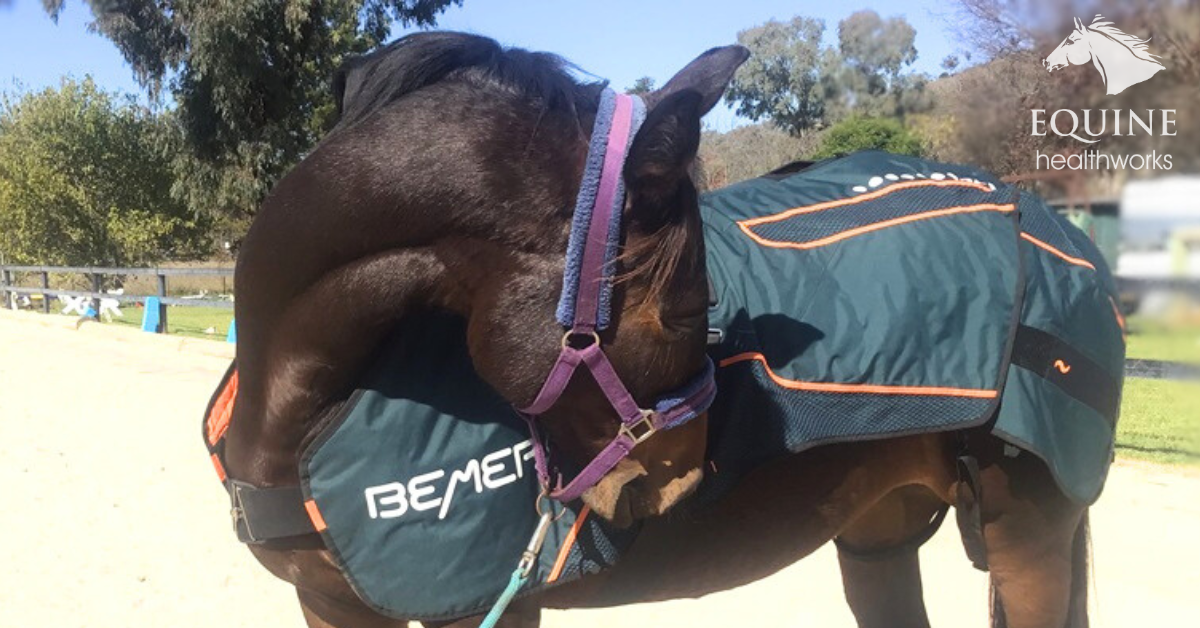
Horses will focus on a problem area as the effect is felt. They turn and look at it, or reach down to nuzzle a knee or foot. I see this as blood flow increasing in a restricted area, causing some form of prickling or tickling (actually, I’ve had personal experience of this with the human BEMER device).

Horse turns to look at problem area.
Horses often focus on areas where heightened sensations are felt, with locations confirmed during the bodywork that follows.

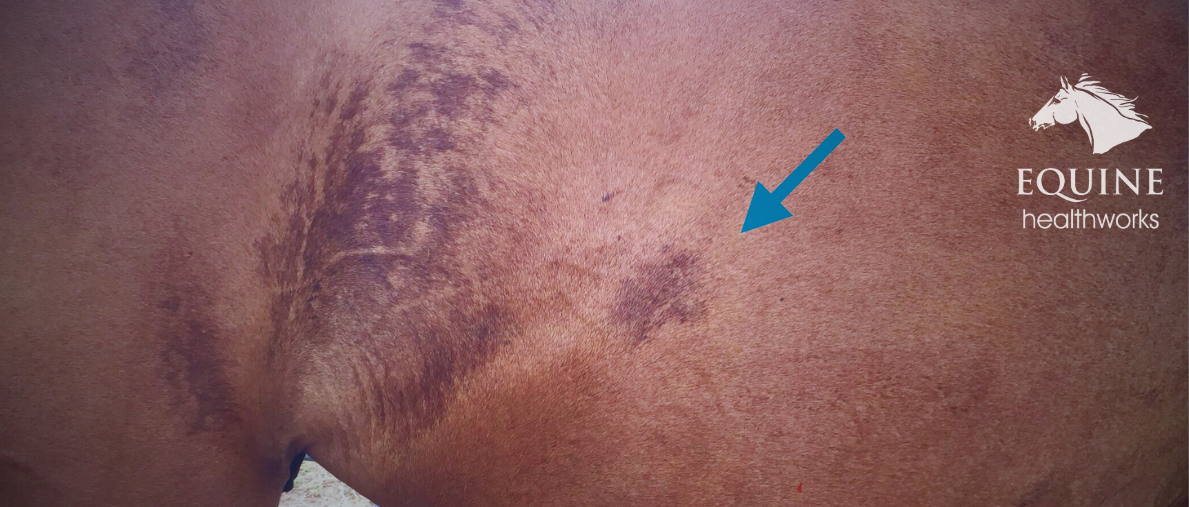
Certain areas of the body may sweat and these often correspond to known problem areas. I put this down to ‘ischemia’, the inward rush of blood to an area where supply has been compromised through injury or lack of use.

Sweat patch at an injury site post-BEMER
After a BEMER session, sweat appears at the location of an injury received a week before. Related ventral odema disappeared by the following morning.
  • Posture

Horses with bad hoof imbalances will shift around a lot. Again, I’m thinking about sensations felt when blood supply improves – and the hooves are certainly subject to a degree of blood perfusion that can be restricted or impaired. (And I hope that current hoof balance allows its restoration…)

This also happens with lumbar spinal and pelvic region issues – the horse shifts weight between the hinds as sensations increase.

Horses shift their weight and square up. I’m certain that there’s also an afferent effect from the signal – proprioceptive awareness increases or is restored.

Horses often shift weight and very deliberately square up during a session.
  • Injury

Bruising doesn’t happen when we might expect it to, for example, post-surgery. I’ve seen this absence (if that makes sense) in a pink-skinned horse – in that instance, the vet expressed surprise at lack of post-surgery bruising and swelling, without knowing BEMER had been used.

Swelling reduces rapidly or even fails to develop at all, as fluid (oedema) is swiftly moved.

  • Circulation

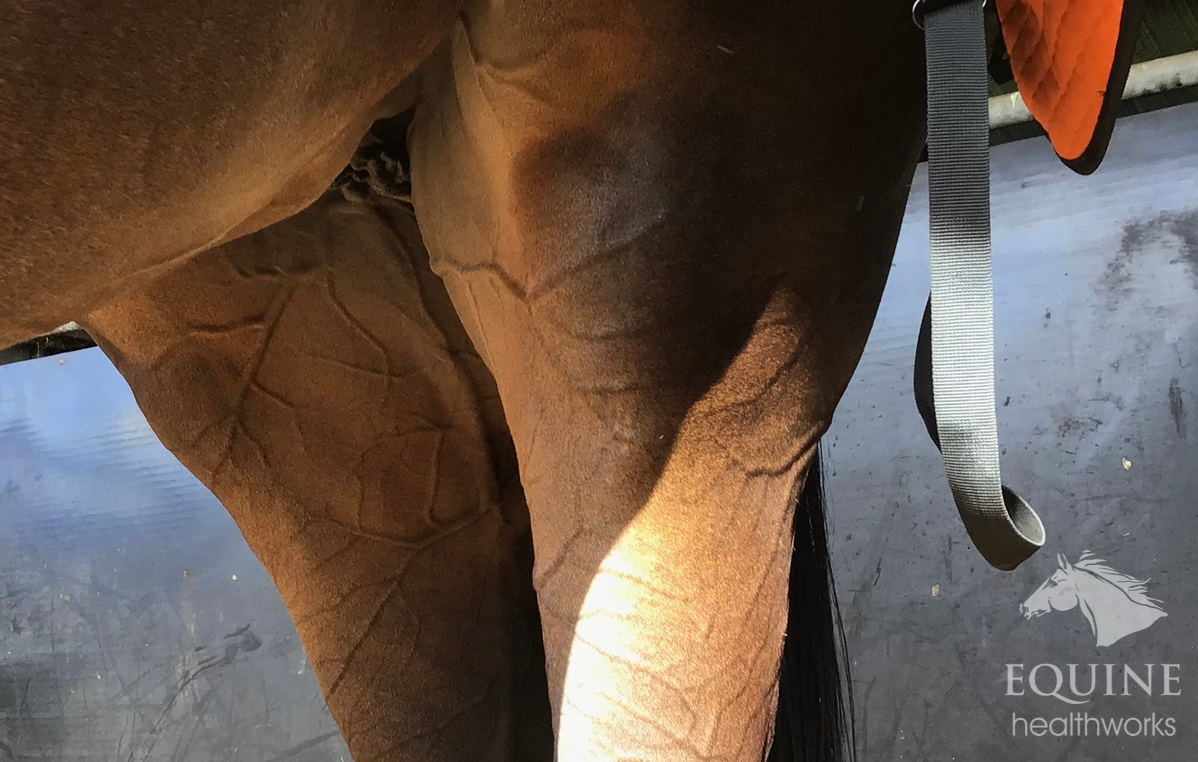
While it’s normal for veins and arteries to become raised under the skin during bodywork, this is even more intense as many tiny vessels also become dilated.

Even smaller blood vessels become dilated and raised
Vasodilation is a frequently seen bodywork effect, but here there has only been a few minutes with the BEMER.

In horses where an immune response is already visible, in the form of overdeveloped lymph nodes, hives, etc., signs can disappear overnight.

Dull horses become bright in the eye again. Horses with either no known or supposedly resolved veterinary issues, suddenly improve after a session or two. Health has been restored to an internal problem that we may have known nothing about and probably never will.

  • Temperament

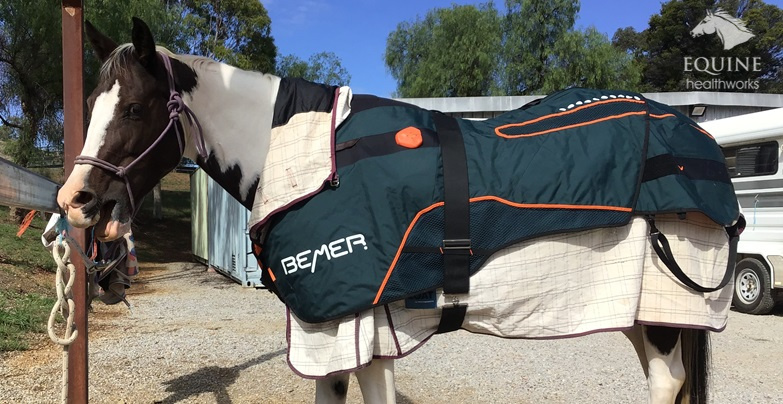
Very anxious horses can respond with parasympathetic activation almost instantly, within the first 1-2 minutes. It is as if their exhausted nervous system is on a knife edge, ready to shift states. These horses appear to be have extreme sensitivity to the blanket, as befits this problem.

Paint mare responding to BEMER
Some stressed horses, like this anxious paint mare, respond within a couple of minutes of the BEMER being activated.

Not strictly bodywork-related but certainly client-horse-related: Performance horses can become more relaxed at events, and therefore more focused in classes. Quality of rest during their overnight stays appears to be improved.

I’ve also seen how separation anxiety at events can be drastically reduced through use of the blanket.

Swifter, more effective warm-ups are valuable for horses at all stages of their careers.

Unpacking these effects

Our appreciation of BEMER’s benefits must rest in understanding HOW and WHY circulation is often compromised, even in small degrees that we’d never usually be aware of.

Because, whether you’re coming to bodywork from the Western or Chinese perspective, adequate blood supply is the touchstone of life.

Some of the physical effects described here can be explained by the (researched and evidenced) fact that BEMER targets microcirculation, moving blood to the areas it needs to reach and where it has been restricted.

Restoring circulation quite clearly doesn’t mean simply warming up muscles – although it does do that. Basically, all the tissues in the body that receive blood are being nourished, something that is essential to the healing process.

As improved bloodflow returns, the horses often focus on an area of their body. I assume they’re experiencing a prickling or ‘pins and needles’ effect (again, I have experienced this directly). They don’t appear to be worried, although they can be distracted. The returning bloodflow also appears to create heat and unusual areas of sweat.

The horse often shows its awareness of where something interesting is happening in the body.

There’s a lymphatic effect too, as interstitial fluids leaked from capillaries are eased away from the tissue to start their journey via lymph vessels back to the heart. I assume the BEMER signal is stimulating this process, via the improved action higher up the circulatory network. Lymph vessels are also able to function more freely at ever level.

There simply has to be an improvement in nutritional uptake after illness. This is due to parasympathetic activation (‘rest and digest’), but another factor is starvation and lack of stimulation of digestive blood flow that’s associated with an low level of digestive processes (due to lack of food).

Blood collects nutrition from the gut to deliver through the body. And if the blood circulation has been depleted and is then stimulated… we are looking at multi-level improvements, at point of collection, transport, and delivery.

Thoroughbred Broodmare
Thoroughbred broodmare receiving some assistance.

When less is more (or different)

This brings me to an important point. Again, it’s solely my personal viewpoint based on observations.

Many people using different modalities have different preferences and not all follow the same lines of thought, which is of course fine!

Yet some will always say that a device needs to run with greater intensity to reach ‘deep enough’ in the horse’s body.

To me, that’s like viewing the body as inert tissue that needs to be physically penetrated in some way.

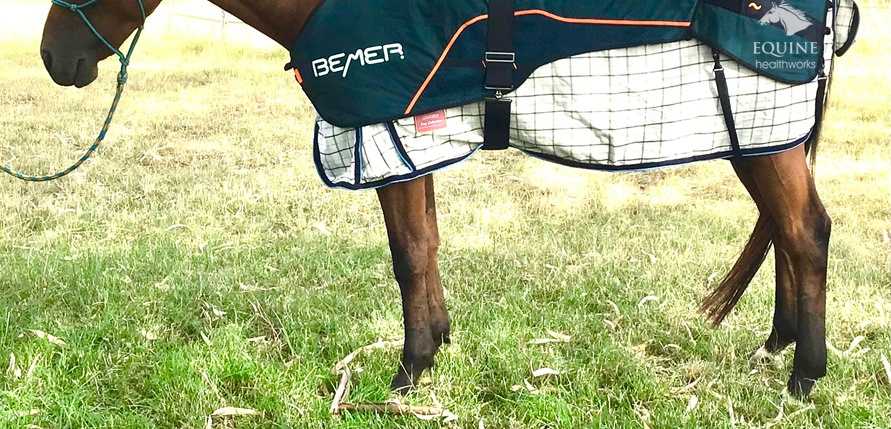
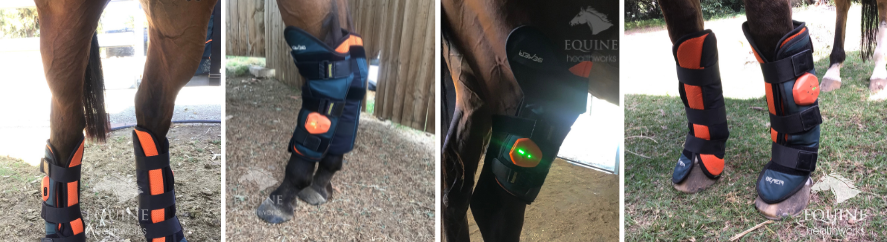
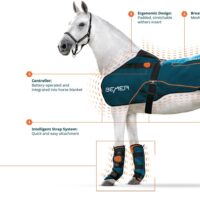
The leg ‘cuffs’ are independent units, which gives scope for further targeted addresses on the limbs after the blanket session.

Devices that have greater strength or intensity work, of course they do. But very often I find that the key difference is not in whether high-powered or low-powered devices are more effective, but in how quickly that effect happens.

Even then, that’s not a hard and fast rule, as horses are individuals and any holistic approach brings different results in different individuals at different speeds.

Talking to the Central Nervous System

Due to my own hands-on work, I’m very aware that there’s no need to go heavy when stimulating change in the body.

My view is that you don’t need a hammer to crack this particular nut. Quite the opposite, in fact.

BEMER’s electrical frequency is tiny, yes. So is its magnetic density. But there’s a number one reason for that: it’s emulating a specific neuronal signal in the body.

And not just any signal: one that’s essential to maintaining the optimal health of all its tissues (more here).

And seeing this as a weakness is to do a serious disservice to the equine peripheral and central nervous system.

Why? Because light contact creates afferent impulses can bring about change.

And what does that mean?

Stimulated by touch, afferent (sensory) signals carry information to the brain, where it is integrated and processed. The brain then coordinates a response via efferent (motor) signals back to the rest of the body (more explanation here).

It’s Also What Feels Right To Me

The way we adopt technology in our work is a choice.

I believe that many tech devices work, but in different ways. I obviously have preferences. I would never have deep tissue massage or high velocity chiropractic for my own body and have no desire to administer anything that impactful to a horse either.

I think we can do better than that now, given what we know.

That’s why, due to the way that BEMER works – gently harmonising with the body to guide its systems back towards homeostasis – this device sits very comfortably within my practice.

And at last, I can understand what my colleagues have been going on about for so many years.


Below: Fresh from the paddock, this driving pony received a full body session and then extra focus on his neck.


BEMER: The World Leading Therapy Rug

BEMER: The World Leading Therapy Rug

How Does The BEMER Blanket Work?

How Does The BEMER Blanket Work?

Vets talk about the results they achieve with BEMER

Vets Discuss The Benefits Of BEMER

The Science to Date

What The Science Says About BEMER

BEMER: The Technical Specifications

BEMER: The Technical Specifications

Store for Your Whole Horse Care

Store for Your Whole Horse Care

BEMER And Bodywork: What I'm Seeing And Why I'm Hooked

BEMER And Bodywork: What I’m Seeing And Why I’m Hooked

Filed Under: Bodywork Tagged With: bemer, BEMER blanket, BEMER Equine, BEMER for horses, BEMER horse blanket, BEMER horse rug, BEMER horse set, BEMER rug, BEMER therapy, buy BEMER Australia, Equine BEMER, PEMF blanket, PEMF for horses, PEMF rug, PEMF therapy devices, PEMF therapy horses, what is pemf therapy

Introducing Common Saddle Fit Problems in Arabian Horses

December 12, 2024 by Jane @ THB 7 Comments

Arabian saddle fitting can be complex

Achieving good saddle fit with Arabian horses can be challenging on account of some breed-typical features that make their backs somewhat complicated. You can correct one issue and run immediatley into another, for there’s often very little wriggle room when it comes to the Arabian back.

Of course, not all horses in a single breed are the same, as there are many variations in conformation and posture. However, saddle fitters usually agree that Arabians can be the trickiest of customers to fit.

This post introduces some commonly seen issues, so you can look at your Arabian’s body with a clearer understanding of what’s happening with a saddle (mis)fit, and what you need to be looking for as you try to move forwards.

The Arabian Horse and Saddle Fit Problems

Here are the conformational points that feed into many Arabian saddle fit issues. Arabians display some or all of these features:

  • Compact and short-coupled
  • Wide flat back
  • Well sprung ribcage
  • Long set back withers
  • High croup

The combination of these features varies between the main strains of Arabians as well as individual breeding lines.

Briefly, strains are breed subgroups, often named after the Sheikhs or tribes that bred them. Each strain has subtle variations in physical features, temperament, and abilities. Some are pictured in this post, purely to help us see the influences on modern conformation more clearly.

To make these features’ interaction in saddle fit easier to understand, I’ve organised these conformation points within three sections in this post.

1. A Short Wide Back

As a breed, Arabians probably come with more legends attached than any other. One of these is usually accepted without question: that the breed has one fewer rib than other breeds.

If you talk to an equine anatomist with decades of experience, you’ll hear that most Arabians have the regular number of thoracic vertebrae (18), but some have fewer lumbar vertebrae (five instead of six).

This does shorten the back overall and brings the last rib closer to the point of hip, creating a short-coupled horse.

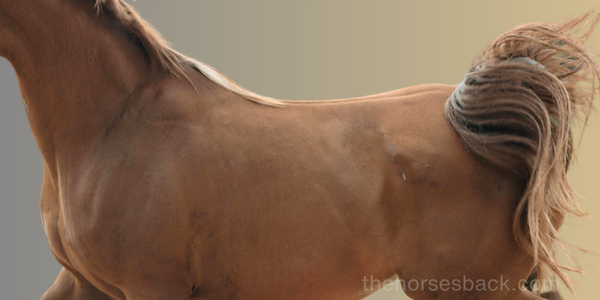
The Arabian back is typically both short and wide. 


How does this affect saddle fit on its own?

First, the round ribcage may lead to the saddle rolling. As it is usually accompanied by a forward girth ‘groove’, choice of girth becomes especially important.

An anatomical girth that clears the elbows and is wider in the centre (for a wide barrelled horse with a flat sternal area) may assist with stabilising the saddle.

A short, well rounded back is evident in these images of the Kuhaylan strain. “Known for strength and a compact build, horses of this strain are considered the classic desert warhorse. They have a reputation for courage and endurance.”


So as well as clearing the wither, the saddle must be wide enough to accommodate the ribcage and well-muscled back in the fit horse.

Western trail saddles recommended for Arabians have shorter skirts with wider gullets, and a bit more curve along the length. English style saddles are usually wide, with wider, flatter and thinner panels.

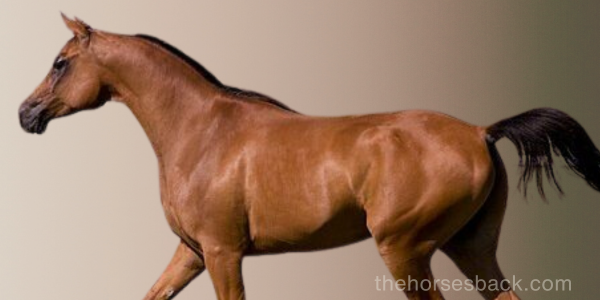
This horse has more back length, yet still presents the long low wither and a forward girth line.

2. Low to Medium Withers

The saddle area is shortened by the long set-back wither, which is an aspect of the deep chest, high set neck, and laid back shoulder.

As well as being long, Arabian withers are frequently low and well-covered, with heavy muscle at their base.

A wide, hoop style tree is often the answer for English style saddles.

Western saddles, as well as being shorter with rounded skirts that won’t impact the point of hip, may have need to have more flare in the bars to accommodate the wide shoulders and scapular movement.

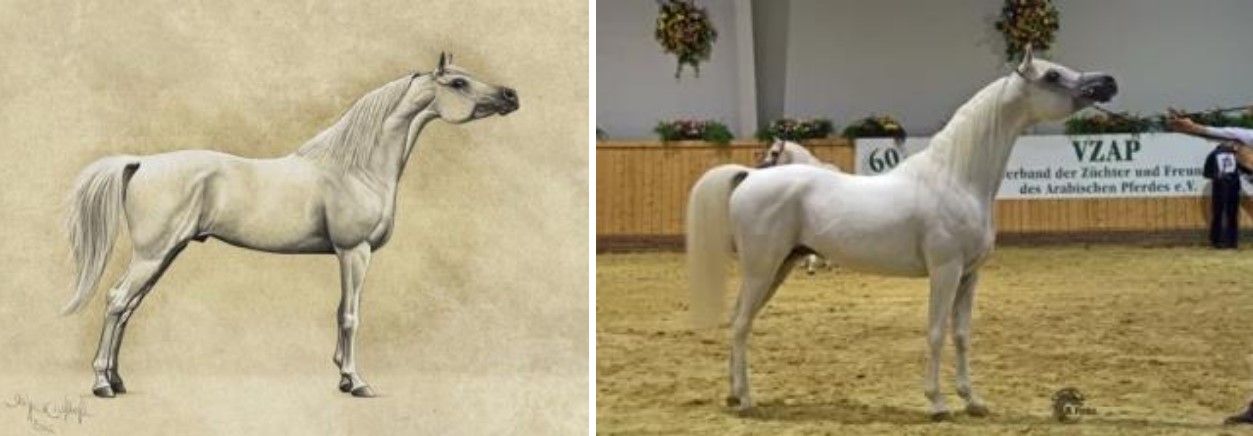
Long substantial withers are visible in The Dahman: “This strain is known for producing horses with a balanced combination of beauty, power, and endurance. Dahman horses are often prized for their strong, athletic build and good temperament.”


Arabians may also have withers of a more middling height, which also widen out into a rounded ribcage. If the horse’s back is fairly flat along the topline, then the tree and panels need to be straighter too.

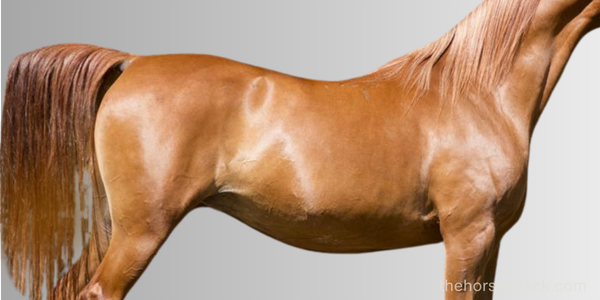
These withers extend well back into the saddle area, with an extremely well-sprung rib cage.


With these horses, the saddle gullet needs to be higher, but still have enough width to accomodate the shoulder and rib cage. (Of course, if the horse is a lot finer, then narrow may be what is needed.)

Fitting around the broad muscle at the base of the neck is not achieved by simply widening a synthetic saddle by swapping gullet plates – doing so will make the saddle more curved along its length, which isn’t suitable for a horse with a straight back. On these horses, the saddle may rock.

3.  Height of Croup

Arabians are known for their relatively long, level croup (top of the hindquarters) and naturally high tail carriage. The height of the pelvis at the sacral tuberosities (the bony peak) may be as high as the withers, or indeed higher. This may be obscured in images where the horse’s hind legs are extended out.

This short-backed Arabian has a level croup that might become higher than the withers once the hind feet come forward.

There is already a potential issue because when the lumbar spine is short, it must sweep up to the pelvis at a steeper angle than with a longer lumbar spine.

Add to this a topline built from full curves – the Arabian’s famous flowing lines – and a definite dip in the thoracic spine (saddle area). The upward sweep to the pelvis is now more accentuated.

A postural issue also comes into play, as a naturally high head carriage dips the spine further (ie. hollowing the back).


The Hamdani strain. “Slightly taller and longer in frame … known for their powerful builds and strong backs, Hamdanis are excellent for endurance.”

Two things can now be happening.

If low broad withers are accompanied by a higher croup, there may be issues with the saddle sliding forwards. The saddle may be unstable and will roll easily on the horse’s rounded body – more so than if the croup is level with the withers.

The bigger issue is that the saddle may bridge between the lumbar muscles and the set back withers and muscles, creating pressure at these points.

If both of the above are happening at once, the saddle may both press into the shoulders and roll from side to side, creating a very uncomfortable and potentially painful experience for the horse, and little stability for the rider.

Away from the show ring and equine sports, extremely high croups can be seen in domestically bred horses. (c) J Clothier


In these cases, saddles may need shorter tree and panels to avoid resting on the upswept lumbar spine.

But it can’t be small: it still needs sufficient width to clear the spine and the withers, and to sit across those wide back muscles with a good, even contact.


The Complex Arabian 

As we can see, the combined issues that can arise with Arabian conformation require us to think about the shape of the saddle tree along every inch of its length and width.

Only once their complicated conformation is understood, can great saddle fit be achieved.


Thankfully, there are many saddles out therem including Arabian-specific models, which are becoming more and more finely tuned.

It has to be said we must thank the world of endurance riding for many of the more innovative solutions, with special designs created to accomodate the conformation and movement of this remarkable breed.


Useful saddle fitting resources

This article introduces the problems, so what about solutions?

The following resources provide more information on getting your saddle fit right (I’ll add more soon!)

Western Saddle Fit – The Basics 67-minute video on DVD or Vimeo streaming from Rod and Denise Nikkel

Western Saddle Fit: Well Beyond the Basics 6 hours for equine professionals from Rod and Denise Nikkel

The Horse’s Pain-Free Back and Saddle-Fit Book eBook from Joyce Harman DVM

The Western Horse’s Pain-Free Back and Saddle-Fit Book Soundness and comfort with back analysis and correct use of saddles and pads, from Joyce Harman DVM

Saddlefit4Life YouTube channel presents numerous educational videos, from Jochen Schleese of Schleese Saddlery.

Filed Under: Saddle Fit Tagged With: arab horses, arab saddle fit, arab saddle fitting, Arabian horses, arabian saddle fitting, GA, saddle fit, saddle fitting

Why Do Horse Owners Keep Hiring Unqualified Equine Chiros?

November 14, 2024 by Jane @ THB 2 Comments

Let’s take a moment to talk about unqualified equine chiropractors.

I’m not talking about veterinary chiropractors, or those who’ve trained with well-regarded institutes. These are professionals who approach a horse with a safe pair of hands and a head full of knowledge.

I’m talking about the ones we could loosely call the whackers and crackers. The ones who lean right in when they’re pushing, and who lean right back when they’re pulling – because that’s how you adjust a great big ol’ horse.

These are the guys – and the majority are male – who do the endless rounds of repeat visits, adjusting the same horses over and over.

And who often deliver on-the-spot diagnoses, despite never having had a day’s veterinary training in their life.

Note: This is the first of two posts. Once you’ve read this, take a look at Hiring an Equine Chiropractor: 10 Crucial Questions You Need to Ask

Right, but my chiro is great

Of course, many people will say yes, they know there are bad chiros out there, but their chiro is great and really helps their horse, so what’s the problem?

The problem is this. When everything’s going right and all is well, the problem won’t be seen. Yet when a mistake is made, the outcome can be disastrous.

This is because chiropractors perform moves that can be invasive. This means that a result is achieved by applying a direct physical pressure that the horse’s body can’t resist or avoid.

Let’s look at how that plays out in practice.

The nature of the chiropractic move

1. Untrained chiropractors

The moves unqualified chiropractors perform are what is called high velocity, non-specific joint adjustments, and they’re usually made with long lever techniques. For example, a leg is moved at high speed to address a series of vertebral joints, or a number of joints in the leg.

These moves may take joints beyond, just beyond or even well beyond their usual range of motion. It all varies according to the level of skill involved. The joints may have different limitations, but the individual assessment isn’t always there.

2. Qualified chiropractors

A highly trained chiropractor who is a vet or who has an accredited qualification performs specific, high velocity and low amplitude (HVLA) adjustments. Here’s one definition of HVLA: it’s “a rapid use of force over a short duration, distance, and/or rotational area within the anatomical range of motion of a joint to engage the restrictive barrier in one or more planes of motion to elicit the release of restriction.” (LaPelusa, 2023.)

Note the word ‘anatomical’ – this is where a healthy joint should be able to move. This is different to the physiological range of motion, which is where a joint is currently able to move, given the issues that might be limiting it.

Why high-level training is important

Sounds complicated? Well, that’s because it is – and so it should be.

When it comes to chiropractic adjustments, the specific location and angle needs to be spot on, as if performed incorrectly, they can cause damage.

If you’re going to go past the physiological to reach the anatomical range of motion, then you need to know exactly where each of those is. You also need to understand the tissue structures and issues that might be limiting the joint’s movement.

Based on that information, there are times when a move shouldn’t be performed at all.

A qualified chiropractor knows exactly where and what the locations and angles are, and understands the tissue damage, conditions and restrictions that mean a move shouldn’t be made (called ‘contraindications’). This involves nerve function as well.

The unqualified chiros, not so much.

This is not something you can just pick up as you go along, because you’ve always been around horses, or heard about it from some bloke you used to work with at the racing stables.

Because get it wrong and force a joint too far at the wrong time, and matters can go south very quickly indeed. The consequences can be minor, but equally they can be disastrous.

It’s a risk many people hiring equine chiropractors don’t even know is there.

10 reasons why unqualified chiros get hired

Let’s be aware of what influences our decisions, including those to hire unqualified chiros. (And I’ll own here that I’ve been impressed by the wrong people at times in the past, so I’ve no intention to judge people who are trying their best.)

So, understanding that many people just want to help their horse, here’s the good, the bad and the ugly of this owner decision.

1. The word-of-mouth recommendation is shaky

A friend mentions a name and describes an experience that sounds positive. However, what if they don’t know quite as much as they appear to know?

2. The practitioner has an innate air of authority

A lot of these chiros are used to walking up to racehorses with a manner that demands obedience and stops any trouble before it starts. It sure works, but confident body language doesn’t only work on horses, it convinces people too.

3. Male horse people often prefer male practitioners

A percentage of men do prefer other men to do the job, and view cracking the horse’s body as a practical, fuss-free approach they can relate to. Not all men, of course, but plenty of them.

4.  It’s seen as a physical job that requires a man

This is the belief that the work requires strength, for instance when lifting a solid back leg up without getting kicked. For those who believe it should be done this way, it can follow that a muscled bloke is preferrable. To a horse owner who believes big horse bodies need to be pushed or pulled into alignment because, well, they’re big, then this sure looks impressive.

5.  Men are still seen by many as experts

Sadly, many horse owners, many of whom are female, still seem to believe that an expert man is more expert than an expert woman. I find the chiro’s words are often repeated with such reverence that you’d think he was up there alongside the equine vet. Please women, let’s change this mindset!

6. Some vets still support these chiros

It’s true. Inexplicably, some vets still informally refer to these practitioners who are 100% qualification-free and never do any update training, and even deliver quasi-diagnoses. Meanwhile, an unsuspecting owner absolutely trusts their vet – who would blame them?

7.  The cracks are impressive

That noise. As we know, it’s carbon dioxide gas bubbles escaping the synovial fluid as a joint moves (‘cavitation’), or a ligament or tendon moving suddenly over bone. Yet for the uninformed owner, both of these are the sound of a joint going ‘back in’ and a problem being resolved.

8.  This method does the job and it’s quick

Yes, but so is tying a loose tooth to a door handle and then slamming the door. Does that make it the best or the right intervention, especially when it comes with risks?

9.  It’s cheap

This is naturally seen as a good thing, and for anyone on a tight budget, it is. However, most chiropractors who’ve spent years in expensive education and training can’t afford to give their work away.

10.  There’s nobody else in the area

I understand. Honestly.

So, what can horse owners do?

When choosing an approach, use imagination and engage empathy to think about how you would like your body to be handled.

Next, asking questions before engaging or hiring a professional is a good way to start assessing the level of training and professionalism in the chiro you’re hiring.

Checking the person’s website and checking professional association lists can go some way towards getting answers – once you know what questions you need answering.

That’s why I’ve written this additional post that should help: Hiring a Horse Chiropractor: 10 Crucial Questions You Need to Ask


Note: The images in this post were all sourced in the public domain on social media and third party websites.


Filed Under: Bodywork, Viewpoint Tagged With: equine bodywork, equine chiro, equine chiropractic, equine chiropractor, horse bodywork, horse chiro, horse chiropractic, horse chiropractor

How to Create Better Before And After Photos of Horses (and Spot Misleading Ones)

February 22, 2024 by Jane @ THB 3 Comments

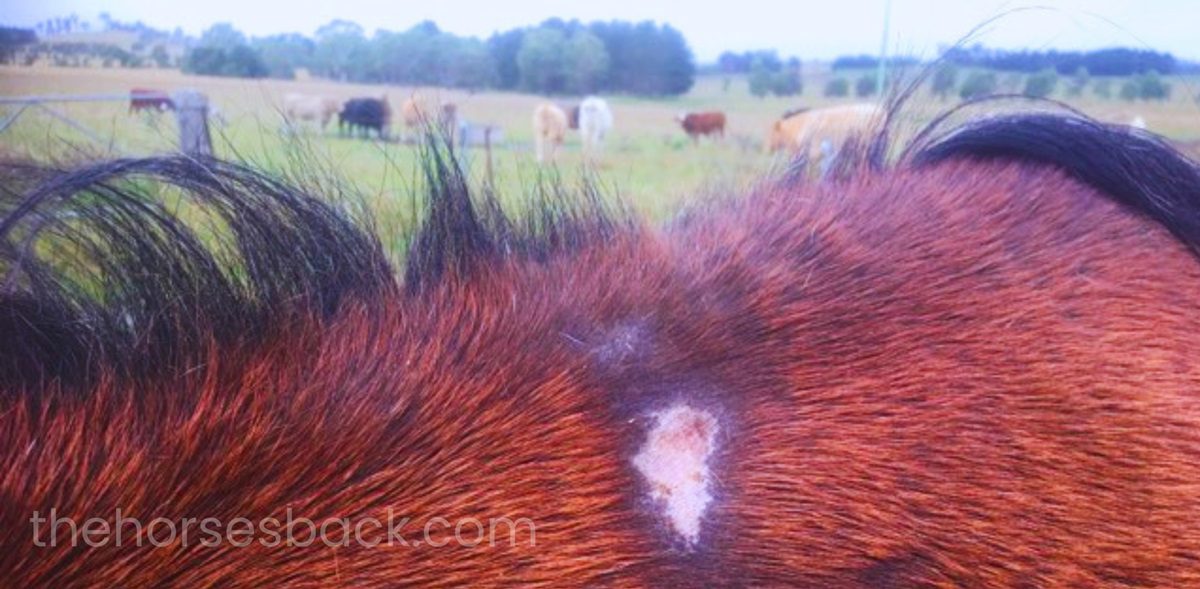
Bodyworkers love before and after photos. Done correctly, they can show great results of our work, making them powerful promotional tools.
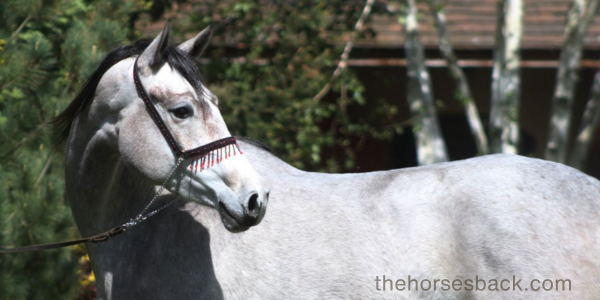
Equally, if done incorrectly, they may say something rather different to what we want. In fact, there are many ways to leave areas of doubt and raise viewer questions. That’s why I rarely use them anymore.
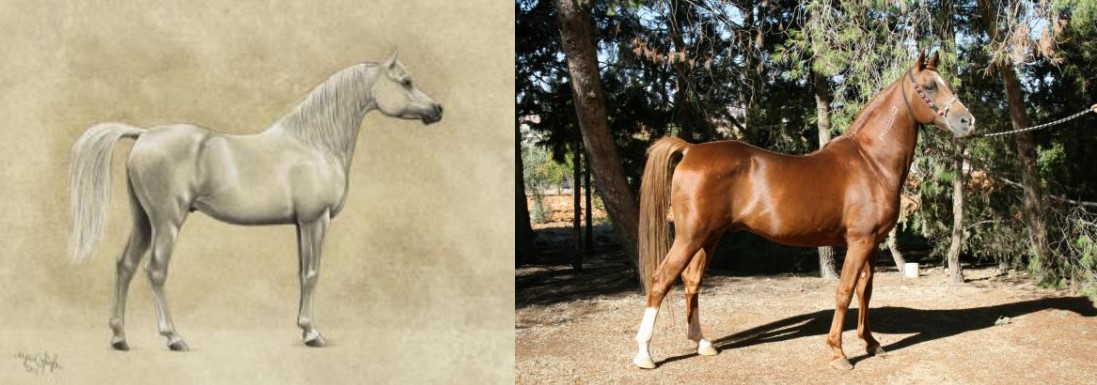
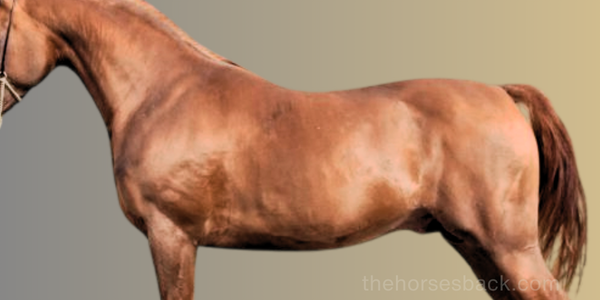
To help you avoid some of the pitfalls, here are some pointers for making your before and after bodywork photos more effective.


1.  Make sure the horse is standing relaxed and in the same position

It sounds obvious, but so many people get this wrong.

In some photos, the horse is actually doing different things, or looks as if it has just paused during eating, stepping forward, looking into the distance, etc.

All of these things can change its posture, just as post-bodywork relaxation can. This is not comparing like with like.

The horse needs to be standing in a settled state. Standing square if possible, or otherwise in its default ‘parked’ position.

Either way, all four feet need to be on the ground, even if standing square isn’t possible.


Example 1: When the horse can’t stand comfortably

This OTTB was unable to stand without resting a hindlimb due to his sacroiliac and lumbosacral issues.

While this is part of his problem, and the owner and I knew that, nobody looking at the photos can be expected to know it. He looks like he’s just having a rest. If it’s not self-evident, it’s not worth using.

OTTB with hoof imbalance (negative plantar angles) and sacroiliac issues. Without appropriate hoofcare over time, his problems would simply persist. (c) thehorsesback.com


2. Use the same lens angle

This must be the second biggest error in before and after photos: One photo is taken with the lens angled slightly downwards, while the other is more level. This can unintentionally change how the horse’s outline looks.

Here’s how you can tell.

  • First, look at how the lens is positioned for good square-on conformational photos. It’s usually somewhere on the girthline, pointing horizontally around halfway up the horse’s body.
  • Now create an imaginary tracking line running in front of and behind each front hoof.
  • The distance between these lines should be roughly the same in both photo (when the horse is standing fairly straight).
  • If there’s a wider space in one photo, then the lens is probably angled downwards.
  • To compare like with like, the distance needs to be the same in both.
The distance between imaginary tracking lines can help show whether the lens angle is the same, or close to it. The horse is standing slightly wider in the first image, but the distances are still similar.


3.  Ensure the lighting direction is the same

This is simple to achieve, but so many people get it wrong.

Changes in lighting can highlight or obscure ribs, bony landmarks, tight muscles, you name it. There can be numerous changes to what we’re seeing.

Yet in some photos, the horse is in a different location, it’s a different time of day, or even indoors in one photo, and outdoors in the other.

To get a true and fair representation of the improvements, ensure the set up is close to identical in each photo, so that lighting changes don’t create a false impression.

Your great results need to shine on their own.


Example 2: Poor set up

These age-old, low res photos from my files were only taken as records over 15 years ago. Afterwards, I certainly wished I’d organised the taking of them better.

Taken at the start of session 1 and session 3, they show a change in coat colour. However, the passage of time and his weight gain can also account for this…

This TB had old fence injuries to the hindlimbs and lumbosacral issues. (c)thehorsesback.com

In this age of Canva, it’s not worth trying to explain changes that can come with other explanations.


4.  Take photos in the same season

All too often we see a before photo taken in winter, and an after photo taken in summer.

So guess what? The horse looks worse when it has a long, dull winter coat.

And it looks vastly improved in the summer, when it has a short, gleaming coat. Even more, it has a bellyful of tucker.

It’s better to avoid such a major difference, as it again only serves to obscure your great results.


Example 3: When it’s OK to break the rules 

The following photos of the paint horse were originally intended for my personal records. 

Shortcomings are clear: the horse is facing a different way; one photo is not fully square-on; horse is looking at camera; standing in a different location in the yard.

The strengths are big ones: same lens height and angle; lighting similar.

As this is about posture and not muscle development, the changes are unmissable. I gave credit to hoof balance improvement as well as bodywork.  

I would never plan to do a before and after in this way – if this horse’s changes had been minor, the photos wouldn’t have worked at all.


5. Include the legs!

It’s very common to see before-and-after photos showing only the horse’s back from a side-on view, or only the hindquarters from the rear.

This is to leave rather a lot of relevant information out of the image.

Why? Because without the limbs and/or head and neck in the image, your viewer can’t assess the horse’s posture.

Instead, they’re asking themselves questions such as: Is the horse standing square? Is it standing under or camped out? Is it angled away from the camera?

Most importantly, the simple matter of foot placement affects how the back and hindquarters appear in your two photos.

A close up image removes all the reference points that help viewers to understand what the image is supposed to show.

The exception is the overhead view down the back, as the legs obviously can’t be seen. In these cases, including the head and neck is helpful, as it says a lot about posture.

Example 4: Including extra information

Here are the full images of the WB used in the header for this post.

Both pics were taken in the same spot, but at different hours of the day. I couldn’t alter that, but it did mean that the sunlight was different and this accentuates the shoulder imbalance in the first picture.

What is important is that a lot is included in the images. This allows us to reference that the hindquarters are square-on and the head and neck position close to the same height.

I always explain that that the owner was also doing in-hand training with the horse, and had instigated hoofcare improvements.


6. Select the same stage in the session

You are not comparing like with like if your before photo is taken at the start of a session, and the after photo is taken at the end of a session. You may indeed be showing a valid change in the horse, BUT…

Many therapeutic approaches have a pain-relieving effect, which is often temporary. Posture can temporarily improve.

Once the effect wears off, the horse returns to experiencing the uncomfortable effects of its pathologies again. At this point, all the improvements may cease to be visible.

It’s a bit like taking a photo when the horse is on pain relief, and saying ‘here, look at this great change’.

A more valid comparison is to show the horse at the beginning of session one and then at the START of a later session.

This shows how the improvement has held once the horse returned to its regular routine.


Example 5: When a sequence works better

This Arabian was experiencing lumbosacral pain. As with the OTTB earlier, this caused him to constantly rest a hindlimb.

A sequence of photos throughout a session can create an engaging story that is interesting in its own right. (c) thehorsesback.com

A straightforward before and after would have been unconvincing.

On the other hand, a sequence of photos (we have both walks and short breaks during a session) shows him adjusting his posture. This reflects my focus on the day.


7.  Tell the whole story

Ahh, now here’s one that many people overlook when putting together before and after photos.

What was the horse doing the day before, or the day before that, or earlier the same day for that matter?

What else has been happening to the horse between visits that may have made a difference?

If the horse had completed a demanding event just before the first photo, then it’s possible that physical tiredness came into play.

If the horse has had rehabilitation in the form of hoofcare, new training or exercise protocols, a change of saddle, etc, between your visits, then that needs to be mentioned.

Hint: veterinary care is also important!


An old, low res image of an Arabian I worked on with fractured withers. The change in shoulder symmetry was due to work on the cervicothoracic spine (deep to withers). (c) thehorsesback.com 

8.  Is there an identifiable change?

Sometimes, before and after photos are almost the same, but for minor changes that could be down to any of the above points.

They may be valuable, but they don’t show up much in images and take some explaining before they can be seen.

While some background information is helpful, if you’re having to write several paragraphs, then something is missing.

If you have to draw lines on the horse to show changed muscle development, then it’s also possible that your photos aren’t too clear.

Oblique body shots are really hard to repeat accurately. In the second image, the lens is further out from the shoulder and in a slightly lower position. This changes everything and detracts from the real improvements seen.

And if you’re doing this, DO draw them correctly. Tracing different outlines or arbitrarily changing a line from straight to curved fools nobody!

Good before and after photos need no explanation, because they create their own impact.


Summary: how to achieve great before and after photos

The best before and after photos are taken:

  • From the same angle.
  • With the same lighting.
  • During the same season.
  • When the horse is standing settled, square if possible.
  • When the horse is not doing anything else.
  • At the same point in the session.
  • After the same work beforehand.
  • When there is a clearly visible change.

This means setting your photos up carefully and being quite technical in your approach. While there’s no need to go full-on scientific, giving a little thought to reducing all the above variables could go a long way to making your photos more effective, both for yourself and other people.

In the end, it’s rarely possible to get everything perfect. What’s important is that enough is correct, so that the images show what can be achieved with bodywork as a vital part of an integrated management approach.

Filed Under: Bodywork, Viewpoint Tagged With: equine bodywork, equine massage, GA

  • Page 1
  • Page 2
  • Page 3
  • Interim pages omitted …
  • Page 8
  • Go to Next Page »

Footer

Contact Me

Send your questions this way…

Get in Touch

  • Store Support
  • Shipping
  • Returns
  • Contact

Copyright © 2026 · Parallax Pro on Genesis Framework · WordPress · Log in