
• Skip to main content
  • Skip to primary sidebar
  • Skip to footer

The Horses Back

Body Talk for Thinking Owners

  • Home
  • Articles
  • BEMER
  • Store
    • Store
    • Shipping
    • Returns
    • Support
  • Equine Healthworks
    • Bodywork for Horses
    • Reviews
    • Leave a Review
  • About & Contact
    • About
    • Contact

Recent Posts

10 Equine Bodywork Responses That Tell Us Heaps About Horses

July 29, 2023 by Jane @ THB 8 Comments

In an equine bodywork session, having a feel for the horse’s mental and emotional state is important.

It helps us to understand where they’re at, why they’re responding the way they do, and how we’re likely to be moving onwards in future sessions. We can then use this understanding to improve our connection and the holistic health outcomes.

Here are 10 of the common responses I see in horses I work with. For ease of communication, I’ve given them names.

It’s not science (and isn’t meant to be), but it is all about listening to the horse.

See any horse you recognise here? Enjoy 😉

(c) Jane Clothier, The Horse’s Back. No reproduction of text or images without permission.


1. The Enthusiast

This horse is the equine bodywork practitioner’s number one fan. If there were a t-shirt, they’d be wearing it.

They nicker at the sight of the therapist, and when led to the yard will often walk alongside their bodyworker instead of their owner. Someone’s made them feel good and THEY LIKE IT.
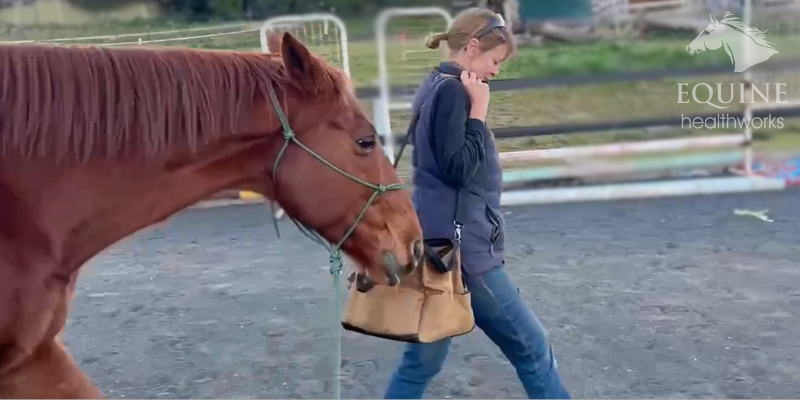
(c) J. Clothier

As a result, they exude huge warmth and give great cuddles and neck hugs.

And let’s just say they look bereft when ‘their’ therapist arrives and works on a different horse. They’ll probably stand nearby to tune into the energy of the session anyway. 

2. The Child

This horse is often but not always young, projecting an air of total innocence.

And it’s genuine: they’re full of wonder for everything good that happens in their world.

And it’s safe to assume that up until now, it has all been good. As a result, they’re curious about everything that happens around them.

They’ve no defences set up and respond to the GOOD FEELS easily, sometimes apparently to their own surprise.
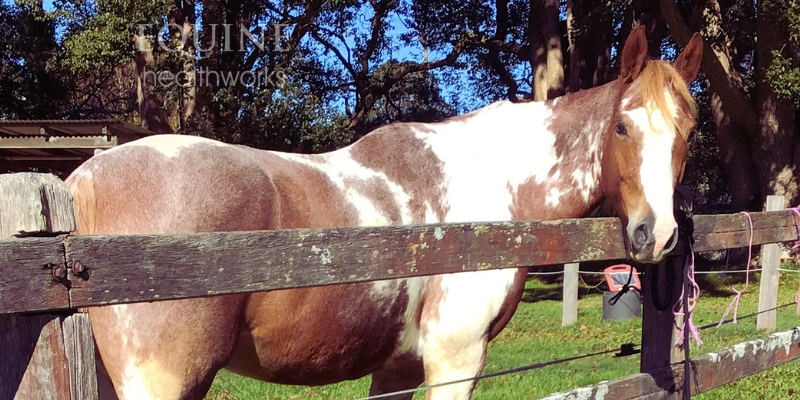
(c) J. Clothier

Their eyes will lock onto the therapist, the source of this remarkable experience.

Then they’ll turn their head from one side to the other, eyes following you as you move around the yard after the session.

‘Who are you? What did you do? Why am I feeling this?’

It’s impossible not to be enchanted by their bright, beautiful curiosity.


3. The Lightweight

This horse is a sensitive flower who has mixed feelings about this whole therapy business.

Their responses come super quickly, for good or for bad. Then they’ll take a huge amount from very little, and that goes both ways, for better or worse.

They can flinch at the unfamiliar nature of touch. If all’s well after that, they’ll often zone out at the first opportunity.
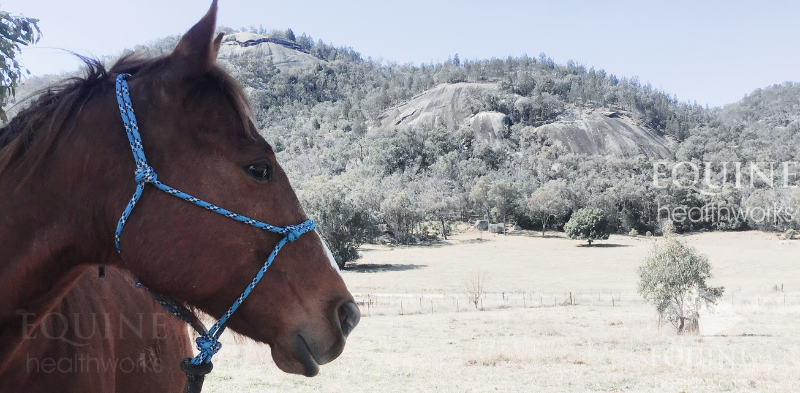
(c) J. Clothier

If you touch a spot with even a tiny problem, be prepared for flattened ears, a swinging head, tail swishing and a raised foot – sometimes all at once.

This horse is often a mare, affectionately known as ‘princess’ by her owner. But some geldings get complimentary membership too.

Once you get it right, don’t expect thanks, but do take heart watching the softness that unfolds before you.

Next time, you’ll be back to the beginning, but not quite, for now you’ll know very well that less is more.

4. The Superior Being

This trouper of a horse is a great competitor. They brush minor issues aside. They’ll often look down on you from a great height, as if at a mildly irritating fly. They don’t care to do anything as weak as going with the flow – yawning, licking and chewing is for losers.
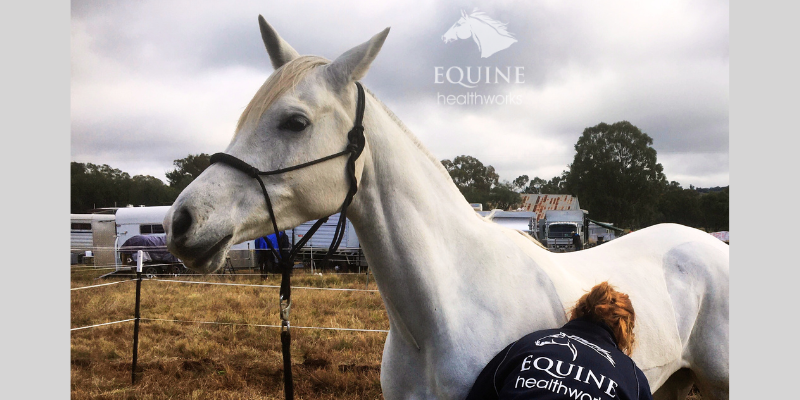
‘Oh, are you still down there?’ …  goes on to win 1st LWT. (c) J Clothier

They occasionally forget themselves and the eyes start to close. It doesn’t last though: they’ll catch themselves and return to consciousness, with a ripple of irritation.

This doesn’t mean they’re not feeling it. They’ll remain tight-lipped until the pesky human is out of sight, then do all of their letting go in private.

Stallions and lead mares often march to this drum too. 

5. The Survivor

This horse shows you very little at all.

They’ve often been through a previous episode of pain that lasted too long. Or, they may have become used to locking down a source of pain, as they still have a chronic issue today.

At the slightest recurrence of pain, they revert to the lock down posture or attitude they had before. It’s what got them through it last time – they’ve survived by gritting their teeth and ploughing on.
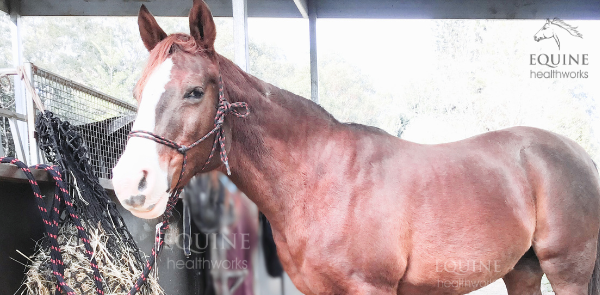
A recent hoof abscess sent this mare back into her old laminitis responses. (c) J Clothier

You can almost hear this horse ignoring you and your hands. When you first work with them, they don’t yield and go with the flow. Instead, they stand with firm lips and a fixed stare.

But unlike the Superior Being, their vibe isn’t a light one.

Any effects happen in their own time, when the halter is off. They may stand in a corner or seek the presence of their closest friend… You’ll only know how well it went on the next visit, when the horse suddenly starts to respond.

6. The Anxious

This is the horse that can’t switch off.

They stand with their head up, always on the lookout, with a giraffe like posture that’s not great for their body and especially not for their neck.

They don’t feel safe and their attention flits around. Their breathing is shallow and/or fast.

Some of them can’t let go. They’ve a nervous system in overdrive and its buzzing signals won’t allow the horse to relax.
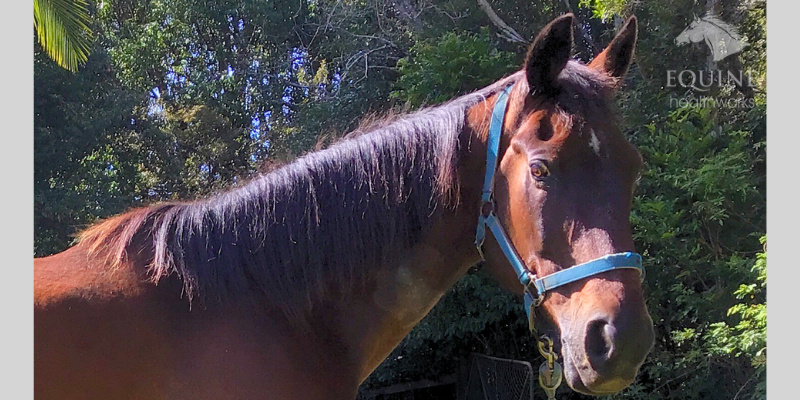
(c) J. Clothier

This is your challenge: to help this horse rediscover a deactivated state.

Pain may well be an issue, particularly in its shoulders and neck (and a headache). Nutrition and environment, too. Oh, and humans.

Initially settle for a horizontal neck, with a slightly closed eye being a bonus. 

7. The Controller

This horse prefers not to let go, even if they show early signs of doing so. They step and move around frequently. Displacement activities include chewing the rope, rubbing their head on the handler, a fence, anything. They can be mouthy.

Although there’s no real hostility, there’s a constant ‘push back’ as you work – and you’ll be aware of it. Don’t expect to feel quickly accepted. Better get used to life outside their bubble – and their tough-guy efforts to keep you there, outside their safety zone.
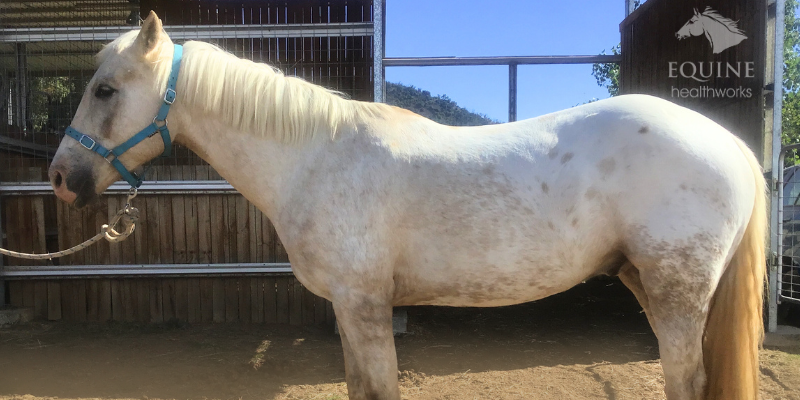
Controlling their space and tuning you out: there’s usually a reason. (c) J Clothier

However, it can all change when you successfully relieve an issue that they never, ever expected to go. Suddenly you’re allowed in and find yourself looking into their huge, deep eyes.

This can be because they’ve been resolutely ignoring an uncomfortable body issue. If so, their fidgeting may have been because you were drawing their focus to exactly that. 

8. The Watcher

This horse may stand in a quiet manner that’s initially encouraging. They may show early signs of relaxation, yet there’s still the feeling that they’re holding something back.

Then whoah! You’re met with a sudden tail swish, a swing of the hindquarters, or a snap of the teeth. You’ve touched a trauma spot and they’re telling you: ‘It’s right there! Watch yourself!’

The horse has some pain and you’ve just committed the cardinal sin of touching it.
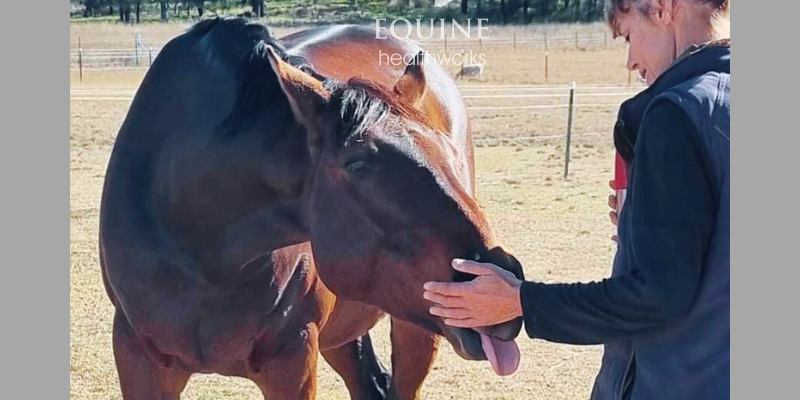
(c) J. Clothier

Some may be alert throughout the session as they wait for you to find that spot. Little do you know that you’re being subject to a test. Better tune up your psychic abilities…

No matter what you do, the horse holds on and won’t let go until that breakthrough moment when you find the problem that’s highest in their awareness.

The painful spot may be an old or newer issue, but one thing is sure: there’s a lot of emotion wrapped around it.

Stay safe.

9. The Over-Trained

This horse stands with resolute obedience, as they know they should. They’ve been taught to wait with statuesque stillness, no matter what happens around them.

Whatever happens, they’re just waiting until it’s over, doing their best not to get in the way. They’ve learned that if they do, there’ll be a reprimand or sometimes heavy correction.

Receiving bodywork, these horses are often in their new home, where more self-expression is allowed.

To the therapist, this horse feels mentally and emotionally absent from their own party.
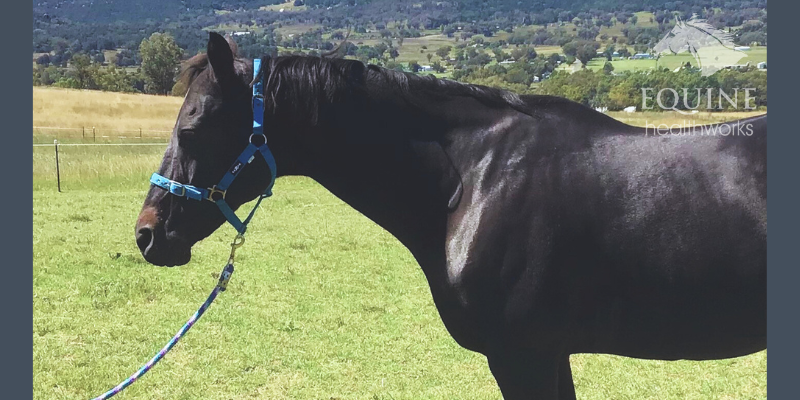
Some horses have been taught that they must remain completely still until asked to move. I find it’s very common with working station horses. (c) J. Clothier

Watch out for this horse’s return to their body, as their responses may be elevated.

They may love you to pieces, or they may shout about a problem that’s been long overlooked. Finally permitted to say what they think, they’ve lost the volume control.

It’s up to you to find a way through this, along with their people.

10. The Depressed

This horse knows it’s not worth even trying to connect or respond, probably because last time they did, it got them nowhere.

Their vibe is a dull one, and their eye contact is minimal or non-existent. They’re not into engaging with you.

They  may stare off into the middle distance, as if disocciating. There’s very little response until the relaxing sensations completely take over – then you may receive a single look, or a tentative touch on the hand.

It’s a start. That has to be enough for now.
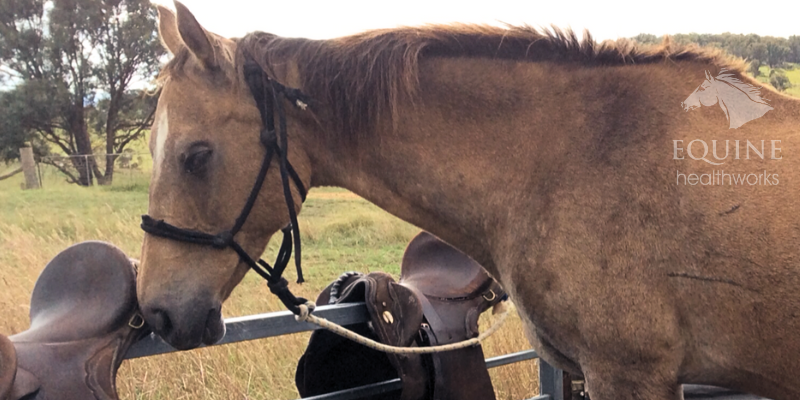
(c) J. Clothier

This horse will hopefully learn from the beneficial after-effects of the work. They will slowly start to feel that life can feel better and that humans have something to give.

With these horses, working with their mind and emotions is even more important. If they’ve had physical stresses forced on them in the past (and they usually have, leading to pain issues), the last thing we want to do is pressure them again.

Negotation is always the best way when we need to move forward, with lots of acceptance and thinking time.


Now I said there’d be ten, but there’s one more to come. I don’t meet too many of these extreme cases, and for that I’m grateful.


11. The Broken

This horse is so badly damaged that there seems to be no way back.

Very often, they’ve had multiple negatives in their lives, on multiple levels. Pain is a huge factor, with the horse having a condition that’s been ignored and frequently overridden (literally… it’s often back pain).

Some are both desperate and furious, having been forced beyond their limits. They can be highly dangerous to work with.

This horse has probably given enough for one lifetime – or had it taken from them.
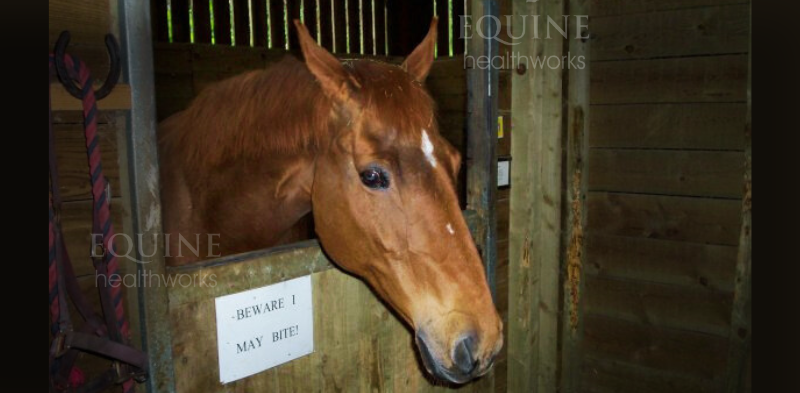
I met this chestnut mare in a UK horse sanctuary. (c) J Clothier

Bodywork is our fleeting gift as we try to help these horses feel better.

By helping to ease their stress, we may to a tiny extent counter the less positive experiences they’ve had at the hands of  other humans.

In return, they take us into a silent place, with depths unknown. Go gently while you’re there.
Filed Under: Bodywork, Viewpoint Tagged With: equine bodywork, equine massage, Equine Massage Therapy, Equine Physio, Equine Sports Massage, equine therapies, Equine Therapist, equine therapy, equine welfare, GA, Horse Health, Horse Massage, horse welfare, Performance Improvement, Physical Therapy, Remedial Massage, Sports Massage Therapist

Swaying Opinion: Can Ataxia Cause Hind Hoof Rings?

May 6, 2023 by Jane @ THB 4 Comments


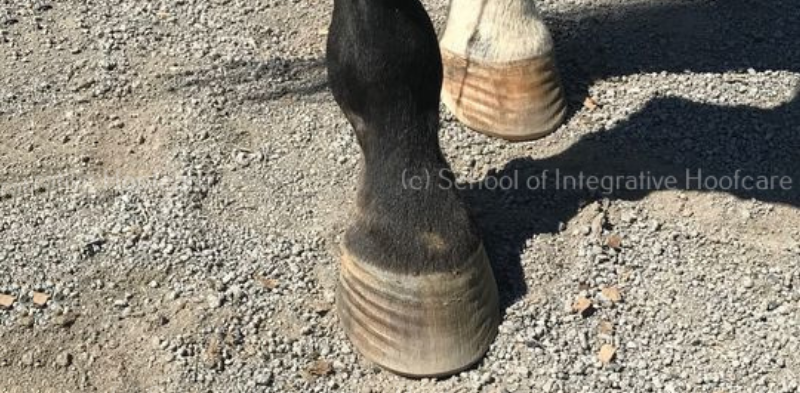
Did laminitis, trauma, nutrition, disease, or something else cause these hind hoof rings?

Recently I came across hoof rehab specialist Daisy Bicking’s view as to an additional cause of these rings. What she said on the subject made me sit up a little – OK, a lot.

Daisy Bicking, School of Integrative Hoofcare (c) Daisy Bicking & Easycare inc

Daisy is an internationally renowned expert of nearly 20 years’ professional standing (see: School of Integrative Hoofcare) who has radiographed hundreds if not thousands of hooves during that time.

Daisy took the picture at the top of this post, and here are her views on what’s happening.

Hind hoof rings and ataxia

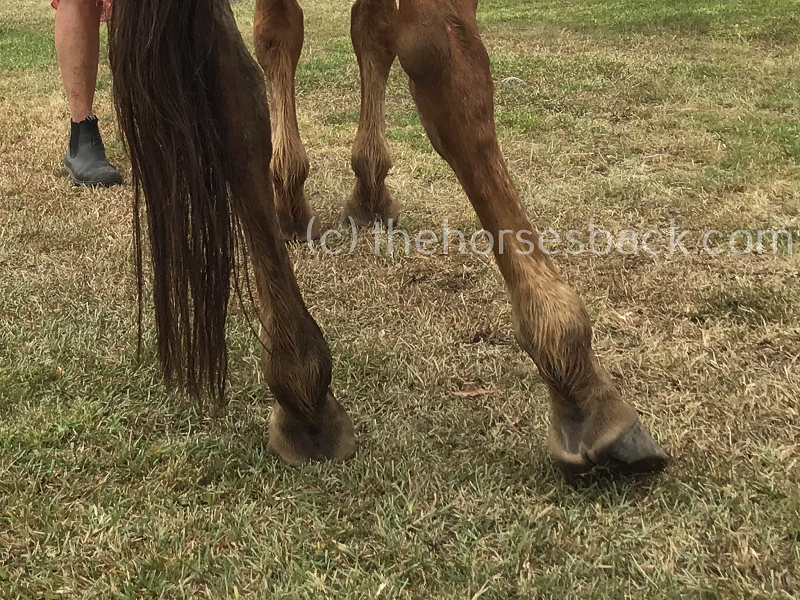
Daisy explains that she has seen a correlation between these deep rings and ataxia.

‘Horses that get these repeated deep rings on their back feet (usually not found on the front feet) have been diagnosed or suspected of having some kind of neurological problem which impacts the stability of the hind end.

‘The waves in the hoof come from the horse’s efforts to stabilize.

‘I work on a large population of horses who have neurological issues. Not every one of them gets these rings.

‘But a high level of correlation leads me to believe that if I see these rings (hind feet, deep, symmetrical, predominantly in the quarters) I suspect some instability in the hind end of the horse.

‘It’s not very common but there’s definitely a correlation with neurological problems when I see them like this.

‘When a horse is ataxic, they spend a lot of their time trying to stabilize. This creates a sway pattern that some horses with neurological issues experience more than others.

‘I see it the most with horses who have permanent ataxia from things like EPM, arthritis in the vertebrae, etc.’

Yowzers.

The fact that I’m writing about this here is because within a month, I was able to apply her thinking to two cases I worked with.

Here’s the first.


The horse who convinced me

Fracture hind limb view rear

Take a look at this Australian Stock Horse mare with a very obvious stability issue. At this point, she was recovering from a pelvic fracture.

I can honestly say that in 18 years, I’ve never worked with a horse less stable.

The photo with the hind legs on an angle? Some days, that was the only way she could stand (and yes, she’s lucky to still be here).

pelvic fracture horse hind hooves
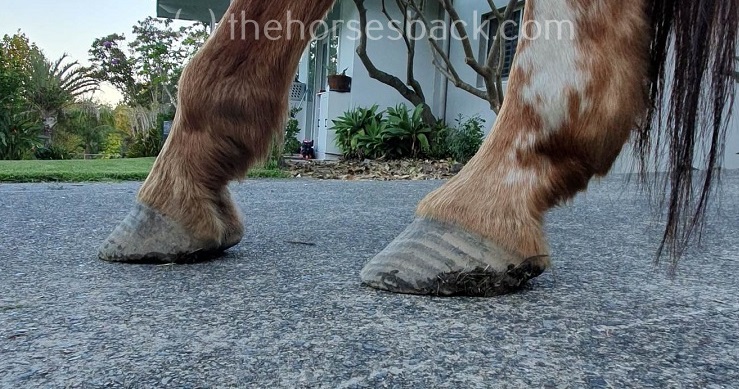
Hind hooves of horse destabilised by pelvic fracture. Photo by Jess.

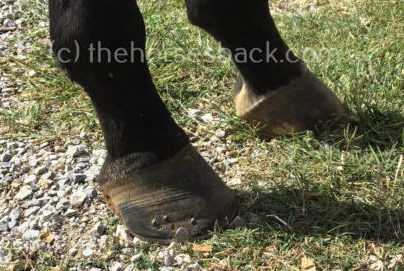
In the hoof pictures, the deep and evenly spaced rings are evident.

Pelvic practure sway front hooves
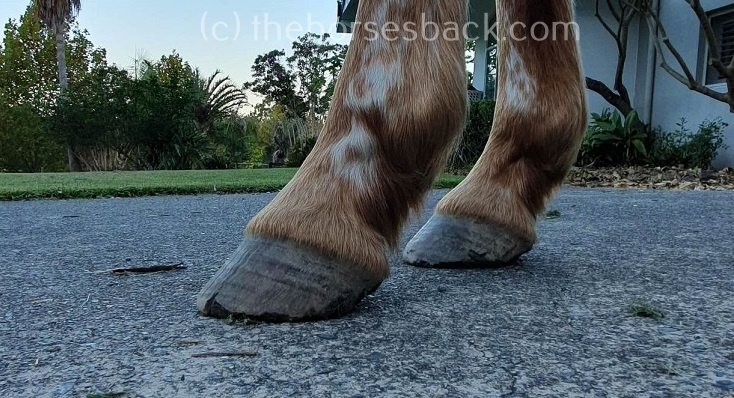
Front hooves of horse destabilised by pelvic fracture. Photo by Jess.

We might say that these are only caused by trauma, but that doesn’t account for the repeated incidence of these rings, or their spacing.

And just look how there’s a difference in the nature of the front and hind hoof rings. The front hoof rings are raised, but the hind hoof rings are also sunken.

What’s more, trauma and ataxia can go hand-in-hand when associated with the same event.

What’s up with these hind hoof rings?

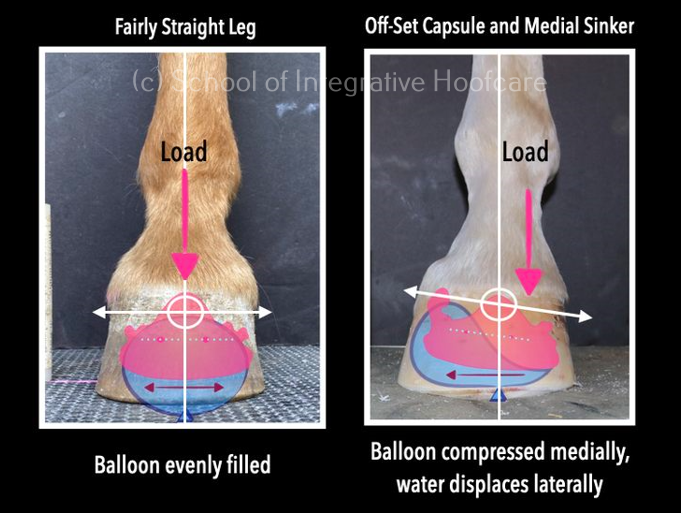
Daisy explains that the mechanism comes down to changes in blood perfusion in the hoof.

‘Think of the blood flow in the foot like a water balloon. How the foot is loaded greatly impacts where/how the fluid perfuses the blood vessels. The more blood flow, the faster growth.

Blood perfusion - the balloon concept.
Blood perfusion – Daisy’s balloon concept. Swaying achieves a similar effect, on a repeated intermittent basis. For more info: https://www.integrativehoofschool.com 

‘The sway creates a variation of load and subsequently blood perfusion that is unique to horses with certain ataxic conditions. Therefore we see these unique rings crop up in the feet.

‘I think where we see them and how long they stay depends on the degree of ataxia the horse is experiencing. If the neurological issues stick around, then they may have them forever.

‘If they are predominantly unsteady on the hind end then we see the rings on the back feet. Versus having ataxia on the front and hind ends, [when] you may see it on all four feet.’

Assessing a horse with hind hoof rings 

Now, here’s an interesting 5-yo OTTB mare.

I’d previously seen this mare dropping out and running / trotting behind during canter, which had made me curious.

Hind hoof rings are significantUpon meeting her, my eyes were soon drawn to her hind hooves.
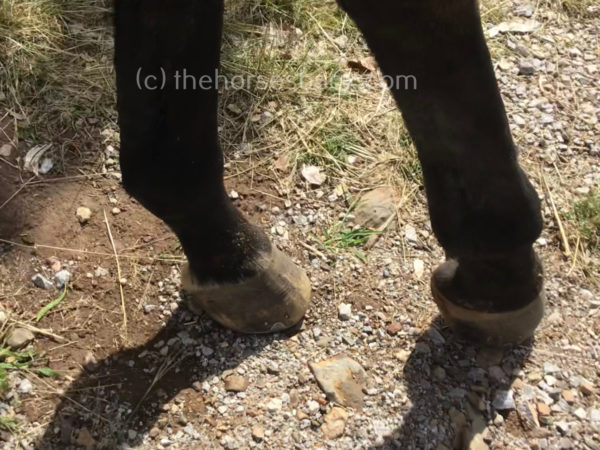
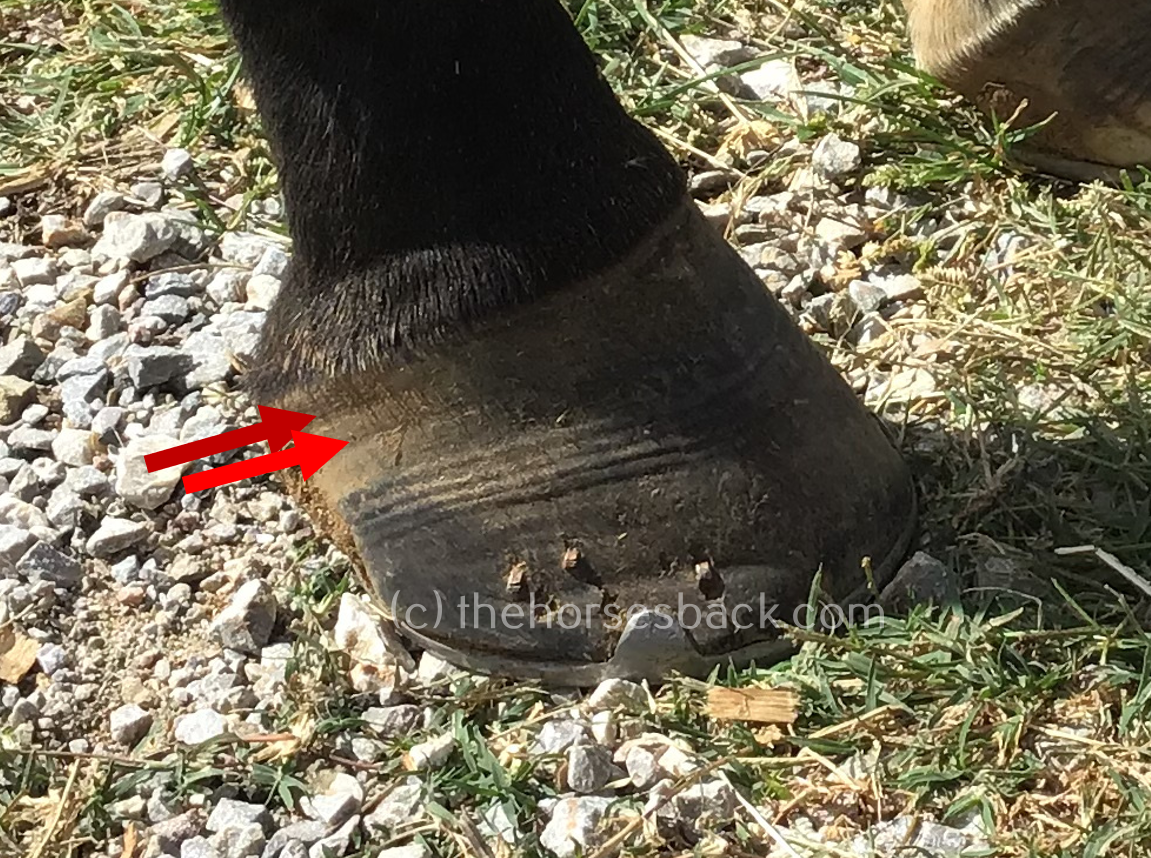
Clearly they’ve plenty of problems, as is the case with many horses off the track. I was anticipating low heels and potential issues with pedal angles. But what caught my attention more was the series of rings.

These aren’t as pronounced as those in the above photos, and they’re in a tight band, but they’re certainly interesting. And they made me think about hind end sway.

In fact, they encouraged me to do a simple test: placing her right hind foot across the midline to rest in front of the other.

Hind hoof ataxia
Failure to replace the crossed over foot can be a sign of  ataxia.

Well, that revealed something: this girl didn’t replace her right foot for a long time. And she didn’t do that twice, because I repeated the test.

The horse not noticing foot placement in this way is a sign of possible neurological issues. They will usually replace it immediately.

Next, I lifted the right hind leg up and found it to be super stiff and heavy. It look real effort to lift it. Same with the left.

That’s not at all what I’d expect with a healthy young TB. And in case you’re wondering, her lumbosacral area was definitely weak – yet with sacroiliac pain, I’d expect a hind foot to be quickly lifted high, either medially or with a lateral ‘be careful’ flick. She did neither of those things.

What about the location of those rings?

Parallel rings are starting to emerge
It’s possible that parallel rings are developing in line with the stability issue.

By their position and general speed of hoof growth, the rings could be backdated to an event about 6 months ago.

This doesn’t change an assessment of instability – quite the opposite, as a fall might have caused ataxia OR it might have resulted from existing ataxia.

And looking closely, it does appear that the some parallel spaced rings are emerging (red arrows). Could this be a developing issue?

And could she be ataxic in front too?

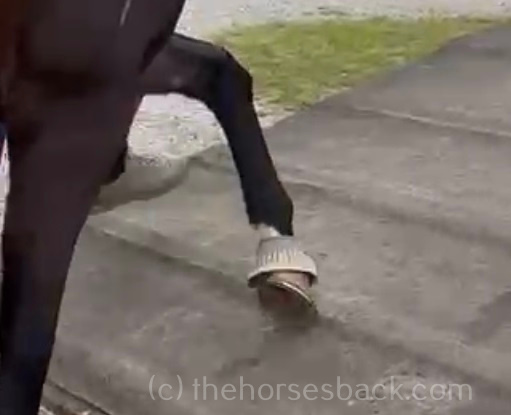
More circumstantial evidence: the mare was unable to place her foot on a ramp while walking freely forwards.

The final images shows what kept happening when she tried placing the foot, without success, before stepping back.

Possible ataxia
A problem placing the foot. If a horse does this over and over, there may be a proprioceptive issue.

This she did several times, getting it wrong each time, despite having loaded on this vehicle before. You’d expect her to quickly figure it out after learning where the slope was.

It appears to be a proprioceptive issue, as her timing and spatial awareness are somewhat off.

If Daisy is right here, we can speculate that the hoof rings are reflecting ataxia that currently affects hindlimbs, but is also affecting the forelimbs to a degree. And there’s more than one known pathology that could be causing this.

Where to next?

I’m finding this exploration interesting and will keep making my own observations. I really believe that it’s worth checking in with a new idea by looking at how it plays out with your own cases. Even then, it’s important to test the idea and consider it as a possibility rather than gospel truth.

That said, one thing I’ve learned through research is that fresh scientific findings frequently begin not only with published literature, but also with strong anecdotal evidence gathered by experienced observers over a period of time. Sometimes, solely so.

As these professionals then research the literature, further context is provided by previous studies – if they exist, that is.

I truly hope that the data Daisy has generated and the insight she has developed through hoof rehabilitation does find its way into the equine scientific literature.

Horses can only benefit from new findings that bring greater understanding to hoof-body relationships in the domestic horse.


Filed Under: Bodywork Tagged With: ataxia, barehoof, c6 c7, daisy bicking, ECVM, equine neurology, GA, hoof rings, hoof trimming, natural hoofcare, neurological issues, Wobbler

10 Tips for the Risk-Free Use of Equine Massage Guns

February 10, 2023 by Jane @ THB Leave a Comment

Wait – you didn’t know there could be risks to your horse when using an equine massage gun? Then you’d best read on.

First, there are certainly benefits to  massage guns. They’re easy to use and time friendly when you’re time-poor.

They retail to suit every budget, and there’s no difference between ‘human’ and ‘horse’ devices.

They can help with pre-work warm-up and post-work relaxation, and may help to reduce post-work soreness.

But, but, but – you do need to switch on your mind at the same time as your gun.

And here’s why.

Note: this page includes some links. At no extra cost to you, if you make a purchase, these links may make a small contribution towards the costs of running this site, including my extensive writing time.

1.  Check the horse with your hands first.

This way, you can see if there are any adverse reactions to touching in certain areas. It’s better to know in advance, rather discover a problem with a device that isn’t giving you feedback.

Remember, these are designed primarily to be used by humans on themselves – humans know where their own spots are, or can tell you, but horses rely on you to be cautious.

2.  Vibration is fantastic for myofascia. 

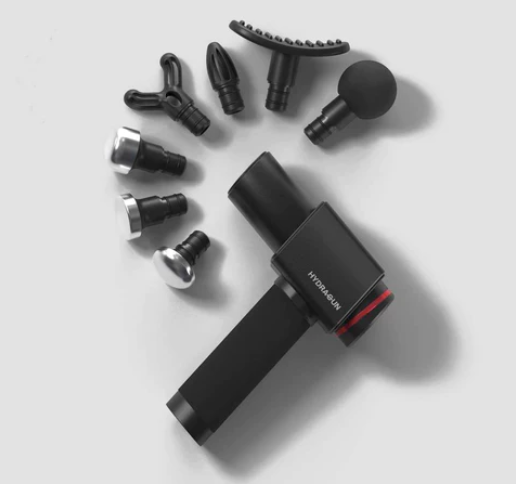
Hydragun with 7 attachments, including 3 flat heads.

Soft tissue generally doesn’t need to be hammered.

Hint 1: using the side of the round massage head will achieve more vibration than percussion.

Hint 2: the less intrusive flat head used gently and flat to the surface also creates more vibration.

Please don’t use the hard pointy applicators, which are so much more likely to hit directly into a painful spot, or worse, penetrate an area of torn fascia.

3.  Go lightly and keep it moving. 

You’re not mashing potatoes here – this is a sensitive body. By minimizing pressure, you’re allowing more of a vibrational effect to happen.

You also don’t risk creating bruises (as can happen in humans, apparently). Your horse can’t tell you until it has already happened.

Don’t work closely over bone – and remember that older horses may have arthritic joints that don’t benefit from heavy percussion.

4.  Little and often is better. 

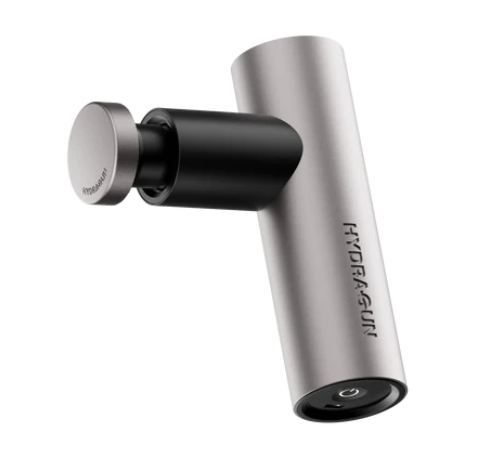
The Mini Atom is travel-sized with USB-C charging

Too much work starts to cancel out the good work that’s already been achieved through a light approach.

Massage guns are best used on small, targeted areas in short bursts.

And a practical conern is that you don’t want to overheat the device – many have an automatic shut-off after 10-15 minutes for this reason.

5.  Check your horse’s responses.

If your horse is showing any signs of tension, stop. The whole point here is relaxation. Tense muscles + percussion = high impact => pain.

If your horse starts leaning into it and groovin’, then fine, turn it up – but only if they say so.

It’s not a goal in itself (question why they’re so tense in that spot – maybe change something in training?). If there’s any flicker of discomfort in their eye, stop right now.

The Mini Atom Gun enables a focused, smooth and effective approach.

6.  Don’t go higher than the base of neck.

Think about it: you’ll be vibrating the skull. Try that on yourself if you’re not sure why it might be unpleasant!

Lots of horses have tension and pain around the poll and the temporomandibular joint (TMJ). It’s always better to do the upper neck with your hands and a whole lot of love.

7.  Ask why some muscles are always sore.

There may be muscles that are always sore, particularly as your horse steps up the work.

Maybe that spot would benefit from a gentle hand rub?

And maybe slow down the work pace down as well, if tension keeps developing?

Don’t be the Cozy Powell of massage gun users – think prevention and therapy, not heavy rock!

8.  Steer well clear of injuries.

If your horse is injured, don’t try to help with your massage gun. Doing so could likely disrupt the healing process.

Wait until the healing process is well under way and then start really lightly and only in adjacent areas. This is the best time to think about vibration rather than percussion.

9.  Take note of fresh pain responses.

If your horse is reactive in an area that was fine yesterday or last time you worked, stop. You may be right above an injury.

Worse, if you’ve been using too much pressure, you may have intensified an issue.

10.  Don’t forget nutrition.

If muscles are always super-tight in spite of careful conditioning and therapeutic work, there may be an imbalance in your horse’s nutritional and mineral intake that’s having a metabolic effect.


Interested in equine massage guns?

How do you know which massage guns for horses present really good options?

I don’t believe in buying on the basis of a label alone, but at the same time, demonstrated reliability is a good thing.

And don’t worry about whether it’s called an equine massage gun or not. They’re all the same technologies, whether marketed for human or horse use.

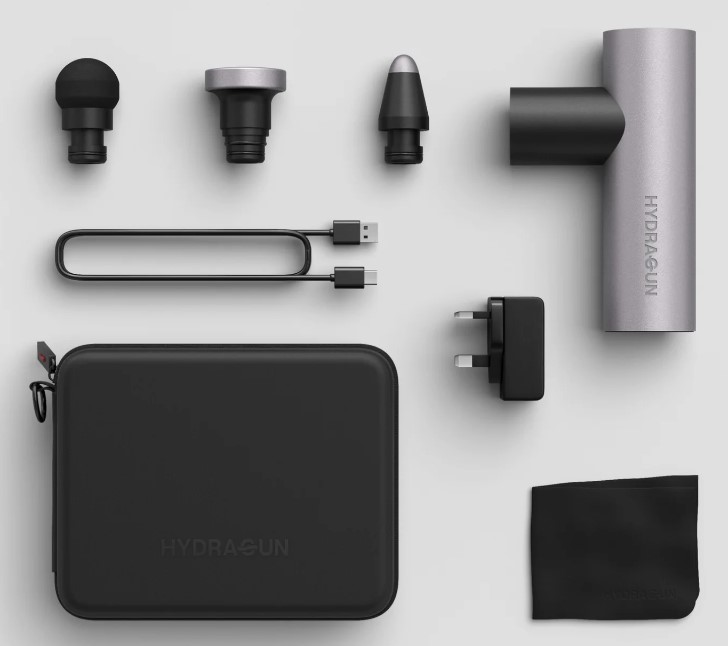
Learn more about the Hydragun’s massage gun and the Atom Mini Massager in The Horse’s Back Store. Renowned for being the quietest devices on the market, these excellent, durable devices are built with smoothly operating components within high-grade aluminimum casing. For the equine bodyworker, they offer a reliable solution that is so lightweight it won’t tax your body.


Filed Under: Bodywork Tagged With: best massage guns for horses, equine bodywork, equine massage, equine massage guns, equine sacroiliac, GA, homedics massage guns, massage guns for horses

Introducing Common Saddle Fit Problems in Quarter Horses

October 24, 2022 by Jane @ THB 7 Comments


Are certain saddle fit problems related to conformation in Quarter Horses?

My goal with this article is to help you look at your Quarter Horse’s body and, if you see these conformation points, know what common saddle fit problems to check for.

Not all horses in the breed are the same shape, for there are many variations in individual conformation and posture – and there are just as many variations in saddles. The subject would fill many books.

This post is for horse owners who, like many of my clients, simply want to know where to start.


The Quarter Horse and saddle fit problems

The conformational points that feed into many Quarter Horse’s saddle fit issues are:

  • Heavy shoulders
  • Low withers
  • Wide flat back with rounded ribcage
  • Downhill conformation
  • ‘Curvy’ topline

Some horses have one or two of these, some have all. Some may have none.

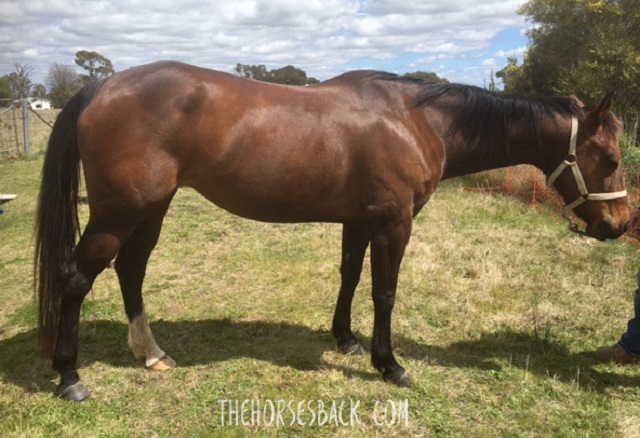
Downhill conformation (c) J Clothier


So, without further ado, here are the problems they can lead to if not taken into account during saddle fitting.

And by the way, if your Paint or Appaloosa (or any breed of horse) has the same type of conformation, then this may help you too.


1. Low withers and wide back with rounded ribcage

Many Quarter Horses have broad ‘table top’ backs, with round ribcages and sometimes, but not always, with low withers that widen into solid shoulders.

These horses need wide trees with contours that match the back. With flush contact along the underside of the tree, weight is distributed evenly and the saddle is more stable.

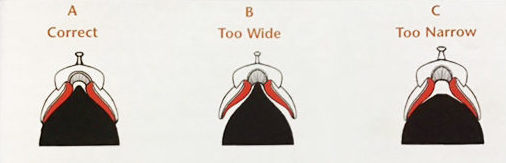
What often happens is that the saddle is large enough to go round the horse, but it doesn’t match the contours of the horse’s back. If too wide at the front, it may fall forward and ‘nosedive’ (that’s not an official saddle fitting term, but hey it’s descriptive). The upper part of the pommel or fork creates pressure, leading to dropped muscle tone and white patches.


Wide saddles create pressure points higher up (c) Joyce Harman

If the saddle is too narrow for that broad back and shoulders, it perches on top, and may also be pinching at the lower points of the tree or fork.

Whether because it’s too wide or too narrow, the saddle that creates pressure in the wither pockets can cause hollowing and/or white patches or white flecking.

White patches show a saddle didn’t work for this Quarter Horse

And when there’s relatively little contact between the tree and the horse, the saddle is also unstable. If perched on top, it can very easily roll to one side or shift around as the horse moves. Likewise if it’s too wide.


2.   Large, well-muscled shoulders

Quarter Horse shoulders are often large, deep and powerful. If the saddle is too narrow at the front, such shoulders may lift it during movement. The saddle is rocked backwards and this creates pressure under the rear of the saddle. When ridden, the rider’s weight is now concentrated at the back of the seat, adding to the problem.

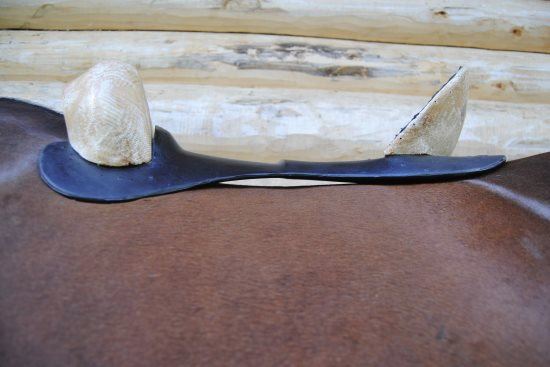
The narrow saddle may also bridge. This is when contact under the center of the saddle (lengthwise) is reduced or even entirely absent. As a result, there will then be four areas of pressure: two at the front and two at the back, on either side of the horse.

Briding saddle tree
A Western saddle tree bridging (c) https://www.rodnikkel.com/content/saddle-tree-blog-from-shop-and-desk/bridging/


With restriction at the front, the horse may have raised, overdeveloped muscles in the lumbar region, behind the saddle area. These may be visually obvious if there’s also weak musculature in front.

Quarter Horse overdeveloped lumbar muscles
Lumbar muscles are overdeveloped, while trapezius muscles either side of withers are underdeveloped. (c) J Clothier

3. Downhill conformation

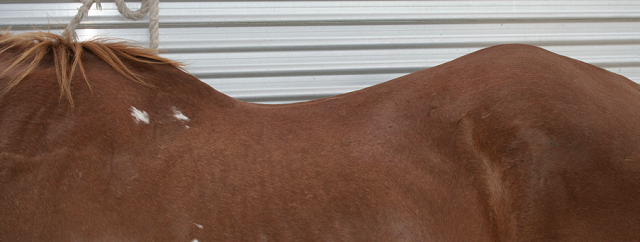
It’s quite common to see Quarter Horses with a downhill conformation. They may be long through the back, with the lumbar spine sweeping up to the croup. The back often also has a deep curve through the saddle area.

Deep curve of the spine in the saddle area contributes to saddle bridging

This does not mean the horse has the back for a long saddle – it’s often quite the opposite, as these horses may need a shorter saddle to prevent bridging. A saddle may also need a more curved profile along the length of the tree to match contours of the back, while still having sufficient width to go around those shoulders.

The upwards sweep creates strong contact at the back of the saddle. With each hind step, the saddle is shifted forwards, especially if it extends over the lumbar muscles.

Sometimes, the lumbar spine becomes ramrod straight between the back of the saddle and the croup. This is caused by the horse’s efforts to both carry weight and stabilize it by bracing upwards – while moving, as asked.

Quarter Horse lumbar spine
The lumbar spine is raised, with no dip to the lumbosacral space (c) J Clothier

When ridden, the horse will often step short behind. At halt, it may consistently park the hind feet out behind.

Not surprisingly, in movement, the saddle is pushed forwards due to the high hindquarter action, as well as the forces of gravity. The shoulders can then become restricted, with hollowing in the wither ‘pockets’ and tense muscles across the shoulder itself.

Tension in the shoulder muscles (c) J Clothier


The horse may also drop through the sternum – this brings the line of the chest down, while the pectoral muscles bulge forwards as they work to stabilize the body.

The horse’s neck may be somewhat ‘upside down’ as compensates for the downward pressure while keeping its head elevated. This is compounded if the horse’s neck is already set low. Tight muscles become visible along the upper line of its neck, or there is a general lack of muscle development.

If the rider is also sat well back, even more pressure is created at the back of the saddle.


Useful saddle fitting resources

This article introduces the problems, so what about solutions?

The following resources provide more information on getting your saddle fit right (I’ll add more soon!)

Western Saddle Fit – The Basics 67-minute video on DVD or Vimeo streaming from Rod and Denise Nikkel

Western Saddle Fit: Well Beyond the Basics 6 hours for equine professionals from Rod and Denise Nikkel

The Horse’s Pain-Free Back and Saddle-Fit Book eBook from Joyce Harman DVM

The Western Horse’s Pain-Free Back and Saddle-Fit Book Soundness and comfort with back analysis and correct use of saddles and pads, from Joyce Harman DVM

Saddlefit4Life YouTube channel presents numerous educational videos, from Jochen Schleese of Schleese Saddlery.

Filed Under: Saddle Fit Tagged With: GA, quarter horse, quarter horse back problems, quarter horse conformation, quarter horse english saddles, quarter horse saddle fit, western horse, western horses, western saddle quarter horses

Learn Equine Osteopathy to Restore Function and Health to Horses

October 20, 2022 by Jane @ THB 3 Comments

This Diploma is open to experienced equine therapists, physiotherapists and chiropractors and animal care professionals such as trainers, vet techs, breeders, trainers, and farriers.

The past decade has seen an explosion in hands-on equine therapies, with an unprecedented number of courses in musculoskeletal therapies appearing.

There are surely more equine bodyworkers than ever before. It’s a competitive world out there for therapists!

Perhaps, like many, you’ve found there’s a ceiling on the level of training you can access.

You may be adept at working with the soft tissue structures of the horse’s body, yet when it comes to addressing deeper structural concerns, you’re sometimes at the limits of your  skills.

Thankfully, there’s now an opportunity to dramatically raise your knowledge and skills, while gaining the professional edge in your mission to help horses.


Introducing The International Diploma in Equine Osteopathy

Receive 45-50 % OFF by using the links on this page and clicking the Horse’s Back when you apply!

International leader in animal osteopathic education, the London College of Animal Osteopathy (LCAO), has recently launched one of the highest levels of training currently available outside universities.

The International Diploma in Equine Osteopathy (Int’l DipEO) is led by LCAO founder and renowned osteopath Professor Stuart McGregror, D.O., who shares the knowledge and techniques he has taught internationally since 1998.


OFFER: 40% Off All Programs 

Equine program regular fee: US $3,800  With 40% off: US $2,280

Download Prospectus

Application Form

Unlock another 5-10% discount by mentioning The Horse’s Back when you apply.

The Osteopathic Knowledge You’ll Gain 

It’s the perfect balance of theory and practice

Drawing on 30 years’ experience of teaching equine osteopathy, Stuart will instruct in the following areas, building your capacity as a therapist.

  • Understand the systemic and functional anatomy, physiology, and biomechanics of the horse.
  • Learn how to perform performing a physical examination using observation, palpation skills, and clinical reasoning skills.
  • Be able to deliver an effective treatment using appropriate osteopathic techniques.
  • Recognize indications and contraindications to osteopathic treatment.
  • Understand your role as an osteopath within today’s animal health care model.
  • Understand the osteopathic philosophy and principles as applied to horses.
  • Understand the osteopathic approach to health and disease based on structure-function models.

OFFER: 40% Off All Programs

Download Prospectus

Application Form

Unlock another 5-10% discount by mentioning The Horse’s Back when you apply.


Helping Horses with Equine Osteopathy

How you can become a more effective practitioner

Stuart will teach you a general osteopathic treatment with its roots deep in classical osteopathy. Called Osteopathic Articular Balancing (OAB), it improves the horse’s function by relieving pain, maximizing movement, and increasing performance.

As a gentle manipulation of the whole body, OAB removes tensions and restrictions, restoring health through the assessment and treatment of muscles, joints, tendons, and ligaments.

“One of the main principles in osteopathic medicine is that treatment should restore health to the local tissues. This involves the restoration of blood supply, nerve supply, and lymphatic drainage. Where any of these are absent, the tissues can only be in poor health.” – Stuart McGregor

Download Prospectus

Application Form

Unlock another 5-10% discount by mentioning The Horse’s Back when you apply.


Learn Better Assessment and Treatment of Horses

Treat with more effective skills

Putting OAB into practice with the horse, you’ll examine the functional anatomy of each joint and its accompanying structures.

You’ll also consider the direct and indirect relationships that extend through the skeletal system, taking in posture, gait assessment, and palpation.

Next, you’ll mobilize associated bones using the ‘functional’ osteopathic techniques taught by Stuart. These are gentle, slow and small controlled movements, as opposed to high velocity, short lever thrusts.

OFFER: 40% Off All Programs

Download Prospectus

Application Form

Unlock another 5-10% discount by mentioning The Horse’s Back when you apply.


Learn a Truly Holistic Approach…

Explore the many factors affecting horses’ bodies

Besides treating the horse’s whole body with equine osteopathy, you’ll learn how to bring other considerations and assessments into your treatment approach. You’ll be learning about:

  • The effect of gravity and rider weight on the vertebral column and pelvis.
  • Pathologies associated with specific sports.
  • The differences in the functions of hindlimbs and forelimbs.
  • A range of congenital and developmental conditions.
  • Various health issues.
  • Incorrect riding.
  • Poorly fitting tack.
  • Inferior hoof balance.
  • Dental issues.
  • Behavior.


My Personal Experience

I only write posts on this blog about subjects I believe in. I have personal experience of Prof McGregor’s equine osteopathy training, having organised his first course for equine therapists in Australia – this program includes techniques that I use with every horse I see.

In fact, I used these techniques when first assessing the lateral cartilages explored in this article: Beyond Sidebone: Pastern Pain and the Lateral Cartilage.

Prof McGregor is also very supportive of this blog. For these reasons, we’re offering an extremely generous discount to anyone who books via this page.

These links will save you up to 50% (seriously!), while this blog receives a benefit that helps to cover my considerable writing time and publication costs.


Are You Ready for 1,000 Hours of Equine Osteopathy Training?

It’s fascinating and deeply rewarding!

This training will help you to develop as an effective practitioner with the knowledge and skills to truly help horses.

To qualify, you’ll need to complete at least 1,000 hours of core knowledge and clinical learning. You’ll submit written and video asssessments, and a thesis, and take an elective class in advanced clinical skills – available in Europe, the US or Australia.

As an equine professional, you’ll expand your practice and develop treatment styles relevant to your current practice, through:

  • Pre-clinical studies to build your core knowledge (500 hours).
  • Clinical studies, guiding you through osteopathic research (500 hours).
  • Advanced masterclass, with hands-on clinical training in advanced modalities such as cranial osteopathy, short lever and functional techniques.
  • Individual tutoring sessions.
  • Open group discussions.

OFFER: 40% Off All Programs

Download Prospectus

Application Form

Unlock another 5-10% discount by mentioning The Horse’s Back when you apply.


Education That Suits Your Lifestyle

Benefit from this flexible program

You can study for the International Diploma in Equine Osteopathy in a way that suits you.

Most of the content is delivered through recorded lectures, video tutorials, downloadable presentations, digital textbooks, and additional readings.

This means you can work at your own pace, at times of the day that work for you.

But you’re never alone with your study, for you can constantly connect with your course instructor and student forum.

This means that you can complete in your own time and, best of all, benefit from lifetime access to the online resources.

The LCAO uses a best practice model derived from the academic programs of higher education institutes, with an eLearning platform powered by Moodle software.

Download Prospectus

Application Form


Who Can Apply?

The International Diploma of Equine Osteopathy is open only to approved therapists and animal care professionals

As not everyone can take this qualification, you need to apply to be admitted. The LCAO will consider applications from:

  • DVMs, VMDs, animal physiotherapists and chiropractors
  • Osteopaths and osteoapthic manual therapists (OMTs)
  • Registered MSK practitioners, ie massage therapists, osteopathic manual therapists
  • Veterinary technicians, nurses and assistants
  • Equine bodywork therapists with 7+ years of experience
  • Equine professionals with 7+ years of experience, eg trainers, breeders, farriers, equine massage therapists and bodyworkers, yard managers
  • Graduates and students of animal science degree programs

Download the prospectus to learn more, or apply straightaway.

Download Prospectus

Application Form


More About Prof Stuart McGregor, D.O.

Stuart McGregor has taught hundreds of animal osteopaths over a period of some 30 years.

He graduated from the UK’s European School of Osteopathy in 1984, having completed his dissertation on The Principles of Osteopathy Applied to the Horse. This was the first known work about osteopathy for horses.

He soon began treating horses and dogs, and it was not long before he set up the Osteopathy Centre for Animals in Oxfordshire, England.

Other osteopaths and veterinarians soon came across his work and were keen to learn more, so in 1998 he began to teach. Since that time he has refined his methods and instruction, leading to the training that he practices and teaches today.

“In our treatment, there is something we call ‘intent’. This is where we apply the techniques intending to enable healing. We imagine ourselves inside the tissues being treated and then bring about positive change.” – Stuart McGregor


OFFER: 40% Off All Programs

Equine program regular fee: US $3,800  With 40% off: US $2,280

Download Prospectus

Application Form

Unlock another 5-10% discount by mentioning The Horse’s Back when you apply.


Treat Horses and Dogs with the LCAO

If you’re keen to expand your practice to include both horses and dogs, you may be interested in the Animal Osteopathy qualifications, which address both species.

  • International Diploma in Equine Osteopathy (Int’l DipEO)
  • International Diploma in Animal Osteopathy (Int’l DipAO)
  • International Diploma in Canine Osteopathy (Int’l DipCO)

For licensed veterinarians (DVM/VMD) and final year students of veterinary programs, LCAO also offers the following postgrad programs:

  • International Diploma in Equine Osteopathy (PGDipEO)
  • Postgraduate Diploma in Animal Osteopathy (PGDipAO)
  • Postgraduate Diploma in Canine Osteopathy (PGDipCO)


Filed Under: Bodywork Tagged With: diploma in equine osteopathy, equine osteopathy, GA, international diploma in equine osteopathy, london college of animal osteopathy

  • « Go to Previous Page
  • Page 1
  • Page 2
  • Page 3
  • Page 4
  • Page 5
  • Interim pages omitted …
  • Page 10
  • Go to Next Page »

Primary Sidebar

Where therapy meets comfort - BEMER in Australia

From the author of this blog…

Click to view the eBook: All You Need to Know About Neck Threadworms and Your Itchy Horse

Support This Site!

Has an article on this site helped you to help your horse? If so, please consider making a small donation to help with the monthly costs of keeping this site live.

Bodywork Articles

  • How Early Intervention Can Help Straighten Your Foal’s Crooked Legs April 5, 2026
  • Hiring an Equine Chiropractor: 10 Crucial Questions You Need to Ask June 28, 2025
  • BEMER And Bodywork: What I’m Seeing And Why I’m Hooked February 26, 2025
  • Why Do Horse Owners Keep Hiring Unqualified Equine Chiros? November 14, 2024
  • Physio at Feed Time: Using Food to Mobilize Your Horse’s Body October 18, 2024
  • How to Create Better Before And After Photos of Horses (and Spot Misleading Ones) February 22, 2024
  • All About That White Lacing On Your Horse’s Back January 8, 2024
  • More Than a Blemish: How a Knocked Down Hip Can Affect Horses August 2, 2023
  • 10 Equine Bodywork Responses That Tell Us Heaps About Horses July 29, 2023
  • Swaying Opinion: Can Ataxia Cause Hind Hoof Rings? May 6, 2023
  • 10 Tips for the Risk-Free Use of Equine Massage Guns February 10, 2023
  • Learn Equine Osteopathy to Restore Function and Health to Horses October 20, 2022
  • Beyond Sidebone: Pastern Pain and the Lateral Cartilage May 31, 2022
  • Here’s a Round Up of My Premature and Dysmature Foal Research May 26, 2022
  • Yes, We Can Image for Transitional Vertebrae in Horses September 23, 2021
  • 10 Rehab Tips for Horses with High-Low or Upright Hooves January 1, 2021
  • A Pelvic Blow Out? The Widened Pubic Symphysis in Horses November 15, 2020
  • All About Crooked Legs: Angular Limb Deformities in Horses and Foals April 5, 2020
  • ‘The Size of a Walnut’ – Does Equine Brain Size Matter? November 5, 2019
  • Not Quite Classical… Better Lungeing for the Rest of Us July 14, 2019

Saddle Fit Articles

  • Introducing Common Saddle Fit Problems in Arabian Horses December 12, 2024
  • When Half Breed Saddles Fit The Rider But Not The Horse November 14, 2023
  • Introducing Common Saddle Fit Problems in Quarter Horses October 24, 2022
  • The Crazy Logic of Saddle Fitting That You Probably Haven’t Thought About August 12, 2019
  • How Much Do You CAIR What’s In Your Saddle? March 26, 2017
  • 5 Ways Your Seat Can Screw Up Your Horse Without You Even Noticing January 26, 2017
  • Meet Spinalis, the Forgotten Muscle in Saddle Fitting December 20, 2016
  • Debunked: The Lie That’s Told About Adjustable Gullet Saddles May 19, 2014
  • 10 Ways to Seriously Mess Up When Buying a New Saddle October 5, 2013

Parasite Articles

  • The Disturbing Truth About Neck Threadworms and Your Itchy Horse June 12, 2013
  • How to Fight the Big Fight against Neck Threadworms October 2, 2013
  • Why Thinking About Neck Threadworms Still Leaves Us Scratching Our Heads April 20, 2014
  • All You Need to Know About the New Biological War on Worms July 7, 2018

Footer

Contact Me

Send your questions this way…

Get in Touch

  • Store Support
  • Shipping
  • Returns
  • Contact

Copyright © 2026 · Parallax Pro on Genesis Framework · WordPress · Log in