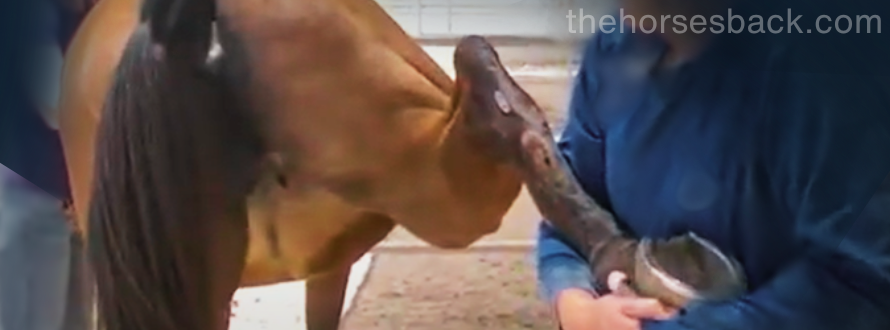
Let’s take a moment to talk about unqualified equine chiropractors.
I’m not talking about veterinary chiropractors, or those who’ve trained with well-regarded institutes. These are professionals who approach a horse with a safe pair of hands and a head full of knowledge.
I’m talking about the ones we could loosely call the whackers and crackers. The ones who lean right in when they’re pushing, and who lean right back when they’re pulling – because that’s how you adjust a great big ol’ horse.
These are the guys – and the majority are male – who do the endless rounds of repeat visits, adjusting the same horses over and over.
And who often deliver on-the-spot diagnoses, despite never having had a day’s veterinary training in their life.
Note: This is the first of two posts. Once you’ve read this, take a look at Hiring an Equine Chiropractor: 10 Crucial Questions You Need to Ask

Right, but my chiro is great
Of course, many people will say yes, they know there are bad chiros out there, but their chiro is great and really helps their horse, so what’s the problem?
The problem is this. When everything’s going right and all is well, the problem won’t be seen. Yet when a mistake is made, the outcome can be disastrous.
This is because chiropractors perform moves that can be invasive. This means that a result is achieved by applying a direct physical pressure that the horse’s body can’t resist or avoid.
Let’s look at how that plays out in practice.
The nature of the chiropractic move
1. Untrained chiropractors
The moves unqualified chiropractors perform are what is called high velocity, non-specific joint adjustments, and they’re usually made with long lever techniques. For example, a leg is moved at high speed to address a series of vertebral joints, or a number of joints in the leg.
These moves may take joints beyond, just beyond or even well beyond their usual range of motion. It all varies according to the level of skill involved. The joints may have different limitations, but the individual assessment isn’t always there.
2. Qualified chiropractors
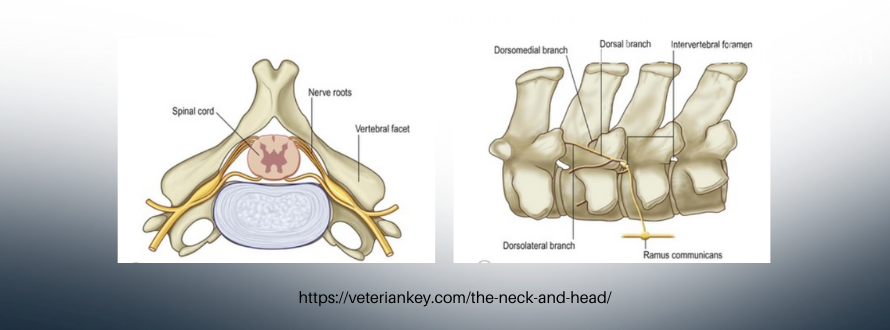
A highly trained chiropractor who is a vet or who has an accredited qualification performs specific, high velocity and low amplitude (HVLA) adjustments. Here’s one definition of HVLA: it’s “a rapid use of force over a short duration, distance, and/or rotational area within the anatomical range of motion of a joint to engage the restrictive barrier in one or more planes of motion to elicit the release of restriction.” (LaPelusa, 2023.)
Note the word ‘anatomical’ – this is where a healthy joint should be able to move. This is different to the physiological range of motion, which is where a joint is currently able to move, given the issues that might be limiting it.
Why high-level training is important
Sounds complicated? Well, that’s because it is – and so it should be.
When it comes to chiropractic adjustments, the specific location and angle needs to be spot on, as if performed incorrectly, they can cause damage.
If you’re going to go past the physiological to reach the anatomical range of motion, then you need to know exactly where each of those is. You also need to understand the tissue structures and issues that might be limiting the joint’s movement.
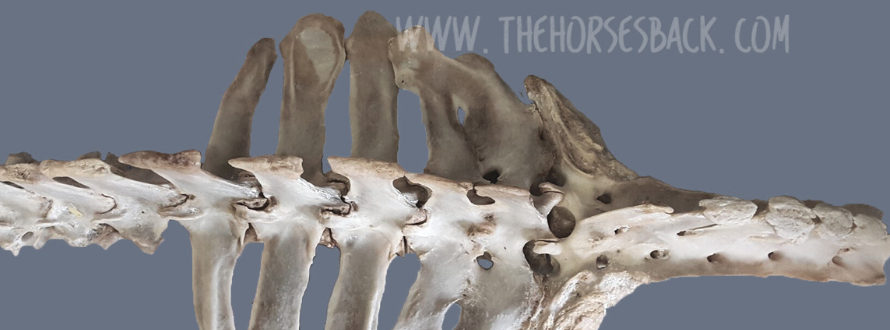
Based on that information, there are times when a move shouldn’t be performed at all.
A qualified chiropractor knows exactly where and what the locations and angles are, and understands the tissue damage, conditions and restrictions that mean a move shouldn’t be made (called ‘contraindications’). This involves nerve function as well.
The unqualified chiros, not so much.
This is not something you can just pick up as you go along, because you’ve always been around horses, or heard about it from some bloke you used to work with at the racing stables.
Because get it wrong and force a joint too far at the wrong time, and matters can go south very quickly indeed. The consequences can be minor, but equally they can be disastrous.
It’s a risk many people hiring equine chiropractors don’t even know is there.
10 reasons why unqualified chiros get hired
Let’s be aware of what influences our decisions, including those to hire unqualified chiros. (And I’ll own here that I’ve been impressed by the wrong people at times in the past, so I’ve no intention to judge people who are trying their best.)
So, understanding that many people just want to help their horse, here’s the good, the bad and the ugly of this owner decision.
1. The word-of-mouth recommendation is shaky
A friend mentions a name and describes an experience that sounds positive. However, what if they don’t know quite as much as they appear to know?
2. The practitioner has an innate air of authority
A lot of these chiros are used to walking up to racehorses with a manner that demands obedience and stops any trouble before it starts. It sure works, but confident body language doesn’t only work on horses, it convinces people too.
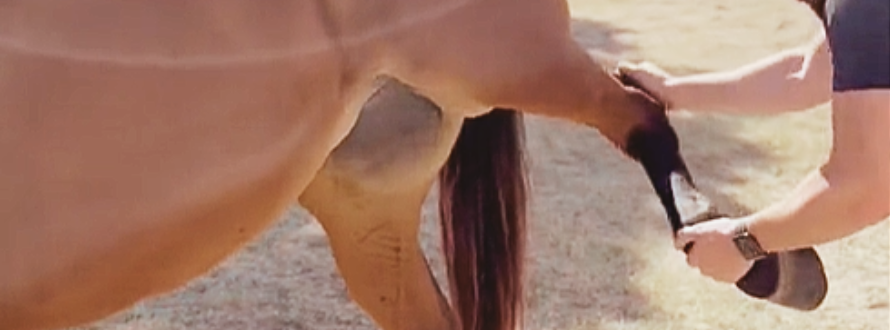
3. Male horse people often prefer male practitioners
A percentage of men do prefer other men to do the job, and view cracking the horse’s body as a practical, fuss-free approach they can relate to. Not all men, of course, but plenty of them.
4. It’s seen as a physical job that requires a man
This is the belief that the work requires strength, for instance when lifting a solid back leg up without getting kicked. For those who believe it should be done this way, it can follow that a muscled bloke is preferrable. To a horse owner who believes big horse bodies need to be pushed or pulled into alignment because, well, they’re big, then this sure looks impressive.
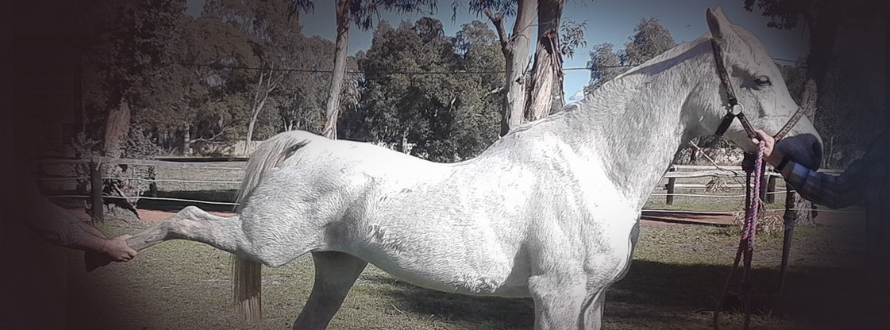
5. Men are still seen by many as experts
Sadly, many horse owners, many of whom are female, still seem to believe that an expert man is more expert than an expert woman. I find the chiro’s words are often repeated with such reverence that you’d think he was up there alongside the equine vet. Please women, let’s change this mindset!
6. Some vets still support these chiros
It’s true. Inexplicably, some vets still informally refer to these practitioners who are 100% qualification-free and never do any update training, and even deliver quasi-diagnoses. Meanwhile, an unsuspecting owner absolutely trusts their vet – who would blame them?
7. The cracks are impressive
That noise. As we know, it’s carbon dioxide gas bubbles escaping the synovial fluid as a joint moves (‘cavitation’), or a ligament or tendon moving suddenly over bone. Yet for the uninformed owner, both of these are the sound of a joint going ‘back in’ and a problem being resolved.
8. This method does the job and it’s quick
Yes, but so is tying a loose tooth to a door handle and then slamming the door. Does that make it the best or the right intervention, especially when it comes with risks?
9. It’s cheap
This is naturally seen as a good thing, and for anyone on a tight budget, it is. However, most chiropractors who’ve spent years in expensive education and training can’t afford to give their work away.
10. There’s nobody else in the area
I understand. Honestly.
So, what can horse owners do?
When choosing an approach, use imagination and engage empathy to think about how you would like your body to be handled.
Next, asking questions before engaging or hiring a professional is a good way to start assessing the level of training and professionalism in the chiro you’re hiring.
Checking the person’s website and checking professional association lists can go some way towards getting answers – once you know what questions you need answering.
That’s why I’ve written this additional post that should help: Hiring a Horse Chiropractor: 10 Crucial Questions You Need to Ask
Note: The images in this post were all sourced in the public domain on social media and third party websites.





Majority of guys are female in France , the gender is not the essential criteria of bad practice
Thank you for this perspective, which I appreciate. Are you referring to chiropractic, osteopathy or another modality?