• Skip to main content
  • Skip to footer

The Horses Back

Body Talk for Thinking Owners

  • Home
  • Articles
  • BEMER
  • Store
    • Store
    • Shipping
    • Returns
    • Support
  • Equine Healthworks
    • Bodywork for Horses
    • Reviews
    • Leave a Review
  • About & Contact
    • About
    • Contact

horse chiropractic

Hiring an Equine Chiropractor: 10 Crucial Questions You Need to Ask

June 28, 2025 by Jane @ THB Leave a Comment

When you’re hiring an equine chiropractor, it’s really important to ask some questions first. And I don’t mean just the usual ‘what do you charge’ and ‘do you work on Saturdays’, although you can obviously ask those too.

You see, there are chiros and then there are chiros. One group consists of equine chiropractors who are genuinely qualified and skilled, while the other includes chiropractors who are not.

Unfortunately, when it comes to hiring a correctly trained chiropractor, word of mouth recommendation isn’t always enough. (I look at some of the issues in an earlier post, Why Do Horse Owners Keep Hiring Unqualified Equine Chiros?)

And unfortunately, it’s often hard for horse owners to ask the right questions of professionals, because the fact is that many of us don’t know enough to know what to ask.

Why does this matter?

Equine chiropractic is one that’s called an invasive approach. This means it frequently involves the use of high pressure to get results (here’s a good university overview).

And the thing with approaches that use high pressure is that everything is fine – until it isn’t. That one mistake can be catastrophic, because a high-pressure move was applied in the wrong place or at the wrong time on a particular horse. This is very well expressed in this article by a veterinarian.

Note that some non-chiro equine vets are sceptical about the benefits of chiropractic. Some of this comes down to different uses of the word ‘subluxation’ – if you’re interested, holistic vet Dr Madalyn Ward DVM explains this aspect very well.
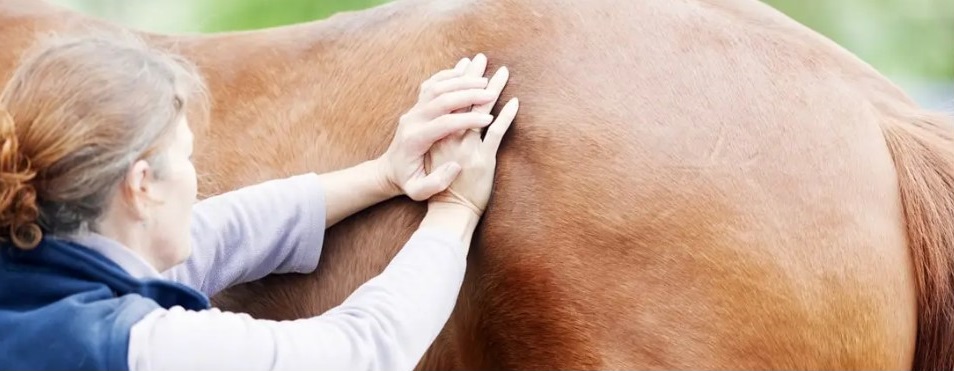
Questions you can ask a horse chiropractor

The following 10 questions may be helpful if you’re thinking of hiring an equine chiropractor.

Some of the answers may be on their website, so do take a look. If there’s no website, ask when you speak to them.

A qualified professional will not mind being asked at all, although do remember they may be busy. But with non-vet chiros, I’d count an irritated response to being asked as a potential red flag 🚩

By the way, if you’re thinking of hiring a chiropractor who’s a veterinarian, then you can be reassured that there’s a high level of professional regulation in place. This protects your horse and you as a customer. This also applies if you live in a region where all equine therapists are heavily regulated. In such cases, you may not need to ask more questions at all.

Otherwise, here’s where you can start.
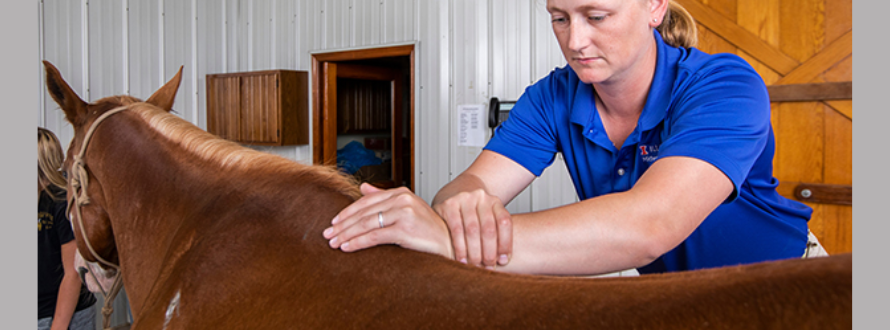
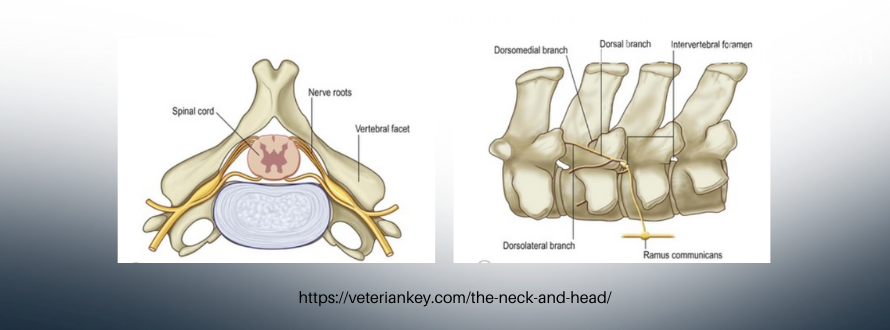
(c) https://vetmed.illinois.edu

1. “What is your qualification?”

The answer to this does not always tell the whole story, but is definitely a good starting point. You’ll most likely find it on the website.

It’s not always true that big qualifications make good practitioners. However, when it comes to invasive practices – i.e. those that use a higher level of pressure, meaning moves will have an impact, come what may – solid qualifications are essential. No qualification is a cause for concern 🚩

2. “Where did you train?”

It follows that their qualification needs to come from a reputable training organisation. Find out the answer (it’s likely to be on the website), and then look it up. Is it accredited? Does it come with approvals from regulatory bodies? If not, 🚩
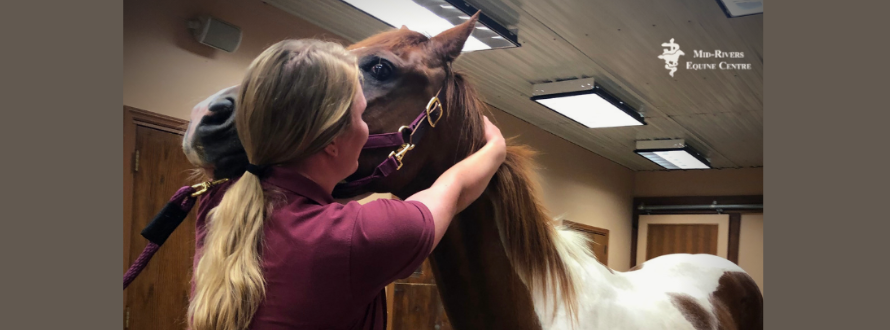
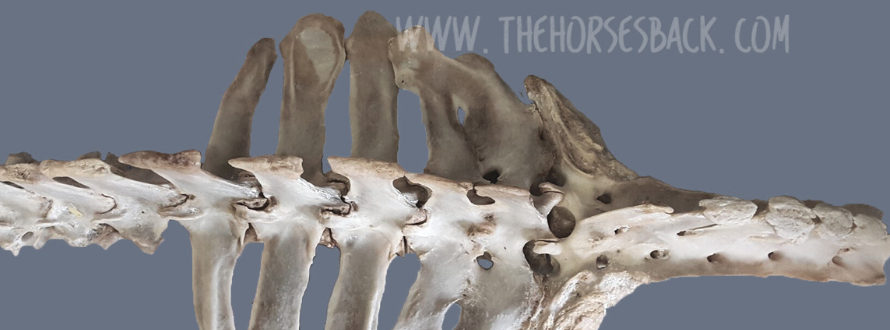
(c) https://www.midriversequine.com

3. “Does your work involve pressure?”

This follow-up question might relate to the practitioner’s understanding of their work and its effect. This is a roundabout way of identifying the possible use of high pressure or force – read this post about Unqualified Equine Chiros for more on this.

If the question can’t be answered, the chiropractor may not even understand what it means, or why it’s important. And if they don’t the answer, how much are they thinking about your horse’s experience of their work? Red flag alert🚩

4. “How exactly do you get results?”

Again, if joints are simply being pushed and pulled, or if the practitioner learned just by watching someone else, this question may be tricky to answer 🚩

On the other hand, if the chiropractor answers articulately, you may not understand what they are on about – anatomy and physiology can certainly be hard to dip into. If you’re not clear, try a follow-up question.

5. “Is there somewhere I can read about that?”

This is a follow-up question if you’re feeling bamboozled by science. Every practitioner should be able to point to a source of information, somewhere, or offer to send a link through later.  A vet may be busy, but they’ll at least mention their professional association’s website. Other qualified professionals will appreciate their customers being interested.

If you’re brushed off or the subject gets changed, take note 🚩
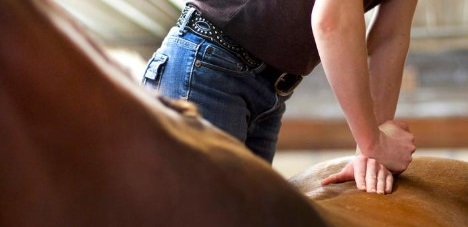
6. “Will you be able to tell me what’s wrong with my horse?”

This question is a bit of a bear trap. Diagnosing is telling you specifically what a condition is and trained professionals should know that only a vet can diagnose. So, if a non-vet chiropractor answers ‘yes’, you may have a red flag answer 🚩

7. “Does your approach always work?”

The answer should be that there’s never a guarantee, that some conditions can’t be helped (although the secondary effects can), that veterinary diagnosis and/or intervention may be required, or that not every approach works best for every horse.

If the practitioner says yes, they are either wearing rose-tinted glasses, don’t know as much as they should do, or are over-selling what they do 🚩

8. “How do horses respond to your work?”

If you care about the experience your horse is being lined up for, this is an important one to ask. “They like it” is not an adequate answer 🚩 You definitely need to hear a bit more about what happens with the horse after the session and what you can expect.

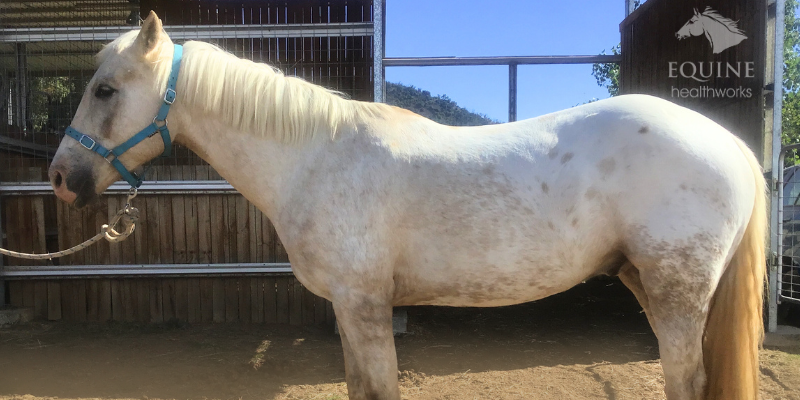
(c) https://www.coretherapiesdvm.com/

9. “Are you insured?”

This one can elicit an interesting answer, given that association membership and up-to-date qualifications are usually required for chiropractic due to its invasive nature (regulations vary by country and region).

I’d recommend that you NEVER hire a chiro who isn’t insured 🚩

10. “How many sessions do you recommend – and why?”

If you hear that all will be sorted out in one session, do not believe them 🚩 If they suggest that your horse should be treated every time they visit the area, hide your horse and padlock your wallet 🚩🚩
 

To sum up…

Now I realise that not every practitioner is super-articulate. In any group of professionals, there are those who speak well and those who are more introverted.

Hopefully, the information you’re looking for will be readily available on a website if not in conversation.

Yet as with any group of professionals, even with all questions answered positively, there’s no guarantee of high-level skills or ability – or sensitivity to your horses’ responses.

But you will be dramatically lowering the chance of hiring a poorly trained and less knowledgeable chiropractor who could be unwittingly putting your horse at risk.


 

Filed Under: Bodywork, Viewpoint Tagged With: equine bodywork, equine chiro, equine chiropractic, equine chiropractor, horse bodywork, horse chiro, horse chiropractic, horse chiropractor, vet chiro, veterinary chiropractor

Why Do Horse Owners Keep Hiring Unqualified Equine Chiros?

November 14, 2024 by Jane @ THB 2 Comments

Let’s take a moment to talk about unqualified equine chiropractors.

I’m not talking about veterinary chiropractors, or those who’ve trained with well-regarded institutes. These are professionals who approach a horse with a safe pair of hands and a head full of knowledge.

I’m talking about the ones we could loosely call the whackers and crackers. The ones who lean right in when they’re pushing, and who lean right back when they’re pulling – because that’s how you adjust a great big ol’ horse.

These are the guys – and the majority are male – who do the endless rounds of repeat visits, adjusting the same horses over and over.

And who often deliver on-the-spot diagnoses, despite never having had a day’s veterinary training in their life.

Note: This is the first of two posts. Once you’ve read this, take a look at Hiring an Equine Chiropractor: 10 Crucial Questions You Need to Ask

Right, but my chiro is great

Of course, many people will say yes, they know there are bad chiros out there, but their chiro is great and really helps their horse, so what’s the problem?

The problem is this. When everything’s going right and all is well, the problem won’t be seen. Yet when a mistake is made, the outcome can be disastrous.

This is because chiropractors perform moves that can be invasive. This means that a result is achieved by applying a direct physical pressure that the horse’s body can’t resist or avoid.

Let’s look at how that plays out in practice.

The nature of the chiropractic move

1. Untrained chiropractors

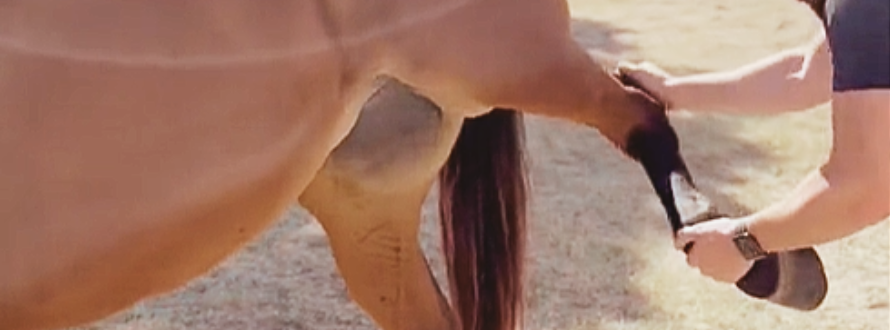
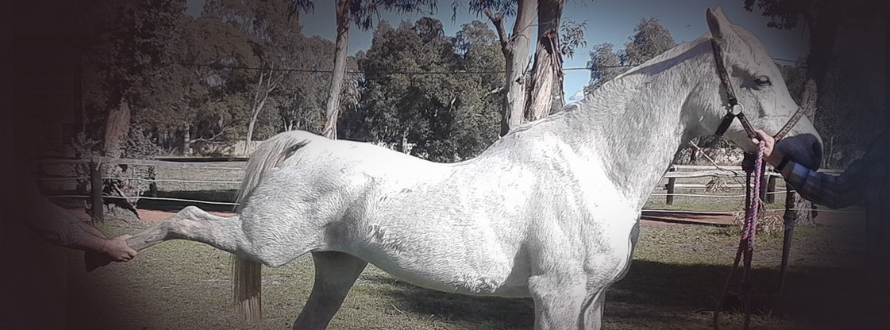
The moves unqualified chiropractors perform are what is called high velocity, non-specific joint adjustments, and they’re usually made with long lever techniques. For example, a leg is moved at high speed to address a series of vertebral joints, or a number of joints in the leg.

These moves may take joints beyond, just beyond or even well beyond their usual range of motion. It all varies according to the level of skill involved. The joints may have different limitations, but the individual assessment isn’t always there.

2. Qualified chiropractors

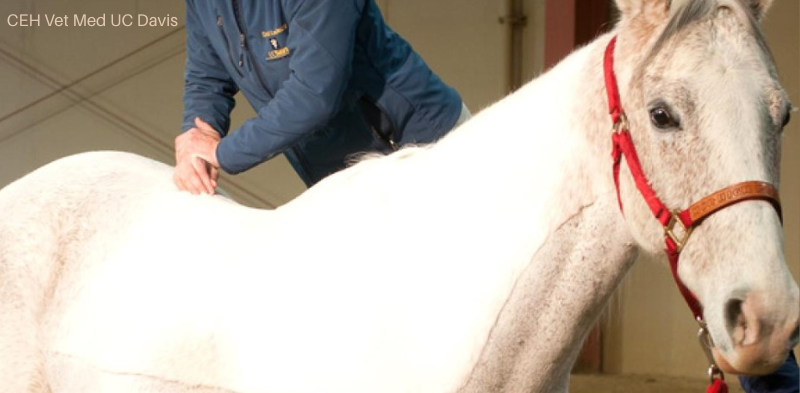
A highly trained chiropractor who is a vet or who has an accredited qualification performs specific, high velocity and low amplitude (HVLA) adjustments. Here’s one definition of HVLA: it’s “a rapid use of force over a short duration, distance, and/or rotational area within the anatomical range of motion of a joint to engage the restrictive barrier in one or more planes of motion to elicit the release of restriction.” (LaPelusa, 2023.)

Note the word ‘anatomical’ – this is where a healthy joint should be able to move. This is different to the physiological range of motion, which is where a joint is currently able to move, given the issues that might be limiting it.

Why high-level training is important

Sounds complicated? Well, that’s because it is – and so it should be.

When it comes to chiropractic adjustments, the specific location and angle needs to be spot on, as if performed incorrectly, they can cause damage.

If you’re going to go past the physiological to reach the anatomical range of motion, then you need to know exactly where each of those is. You also need to understand the tissue structures and issues that might be limiting the joint’s movement.

Based on that information, there are times when a move shouldn’t be performed at all.

A qualified chiropractor knows exactly where and what the locations and angles are, and understands the tissue damage, conditions and restrictions that mean a move shouldn’t be made (called ‘contraindications’). This involves nerve function as well.

The unqualified chiros, not so much.

This is not something you can just pick up as you go along, because you’ve always been around horses, or heard about it from some bloke you used to work with at the racing stables.

Because get it wrong and force a joint too far at the wrong time, and matters can go south very quickly indeed. The consequences can be minor, but equally they can be disastrous.

It’s a risk many people hiring equine chiropractors don’t even know is there.

10 reasons why unqualified chiros get hired

Let’s be aware of what influences our decisions, including those to hire unqualified chiros. (And I’ll own here that I’ve been impressed by the wrong people at times in the past, so I’ve no intention to judge people who are trying their best.)

So, understanding that many people just want to help their horse, here’s the good, the bad and the ugly of this owner decision.

1. The word-of-mouth recommendation is shaky

A friend mentions a name and describes an experience that sounds positive. However, what if they don’t know quite as much as they appear to know?

2. The practitioner has an innate air of authority

A lot of these chiros are used to walking up to racehorses with a manner that demands obedience and stops any trouble before it starts. It sure works, but confident body language doesn’t only work on horses, it convinces people too.

3. Male horse people often prefer male practitioners

A percentage of men do prefer other men to do the job, and view cracking the horse’s body as a practical, fuss-free approach they can relate to. Not all men, of course, but plenty of them.

4.  It’s seen as a physical job that requires a man

This is the belief that the work requires strength, for instance when lifting a solid back leg up without getting kicked. For those who believe it should be done this way, it can follow that a muscled bloke is preferrable. To a horse owner who believes big horse bodies need to be pushed or pulled into alignment because, well, they’re big, then this sure looks impressive.

5.  Men are still seen by many as experts

Sadly, many horse owners, many of whom are female, still seem to believe that an expert man is more expert than an expert woman. I find the chiro’s words are often repeated with such reverence that you’d think he was up there alongside the equine vet. Please women, let’s change this mindset!

6. Some vets still support these chiros

It’s true. Inexplicably, some vets still informally refer to these practitioners who are 100% qualification-free and never do any update training, and even deliver quasi-diagnoses. Meanwhile, an unsuspecting owner absolutely trusts their vet – who would blame them?

7.  The cracks are impressive

That noise. As we know, it’s carbon dioxide gas bubbles escaping the synovial fluid as a joint moves (‘cavitation’), or a ligament or tendon moving suddenly over bone. Yet for the uninformed owner, both of these are the sound of a joint going ‘back in’ and a problem being resolved.

8.  This method does the job and it’s quick

Yes, but so is tying a loose tooth to a door handle and then slamming the door. Does that make it the best or the right intervention, especially when it comes with risks?

9.  It’s cheap

This is naturally seen as a good thing, and for anyone on a tight budget, it is. However, most chiropractors who’ve spent years in expensive education and training can’t afford to give their work away.

10.  There’s nobody else in the area

I understand. Honestly.

So, what can horse owners do?

When choosing an approach, use imagination and engage empathy to think about how you would like your body to be handled.

Next, asking questions before engaging or hiring a professional is a good way to start assessing the level of training and professionalism in the chiro you’re hiring.

Checking the person’s website and checking professional association lists can go some way towards getting answers – once you know what questions you need answering.

That’s why I’ve written this additional post that should help: Hiring a Horse Chiropractor: 10 Crucial Questions You Need to Ask


Note: The images in this post were all sourced in the public domain on social media and third party websites.


Filed Under: Bodywork, Viewpoint Tagged With: equine bodywork, equine chiro, equine chiropractic, equine chiropractor, horse bodywork, horse chiro, horse chiropractic, horse chiropractor

Footer

Contact Me

Send your questions this way…

Get in Touch

  • Store Support
  • Shipping
  • Returns
  • Contact

Copyright © 2026 · Parallax Pro on Genesis Framework · WordPress · Log in