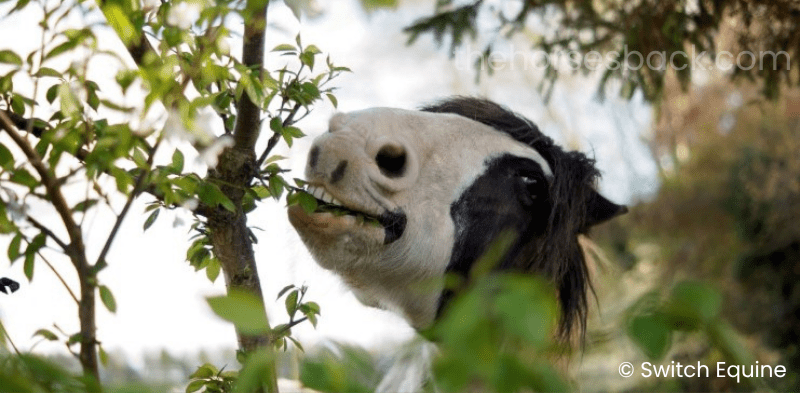
The importance of land management in the horse paddock, and its close relationship to horse health, is explored in this guest post by Chartered Environmentalist, Laura Hobbs of Switch Equine. Based in the UK, Switch Equine helps horse owners and professionals create thriving environments for horses. Here, Laura introduces the SWITCH framework, a system offering a way to understand the challenges and solutions involved.
Laura writes:
We spend so much time trying to do right by our horses. We adjust feed, tweak routines, try new supplements, manage turnout, and consult professionals.
Yet many of the issues we face – weight gain, hoof weakness, parasite pressure, behavioral tension, metabolic instability, skin problems – keep returning. They appear in different seasons, in different horses, under different management styles. They seem unrelated.
But they are not unrelated. They are environmental.
To help owners see these patterns, I created the SWITCH framework – a simple way to think about and understand how land and horse health are intertwined. It’s not a method or a product, but a way of thinking.
The Horse Paddock and the Evolved Horse
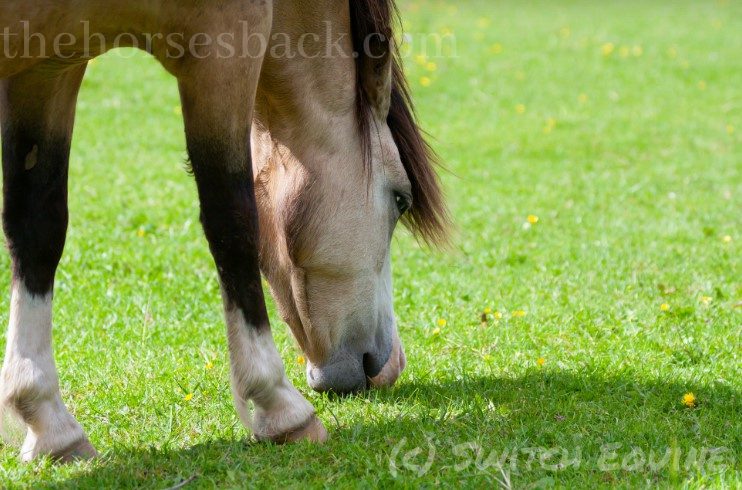
When we step back far enough, using a systems‑thinking lens, a different picture emerges: our horses are intrinsically linked to the environment that shaped them over 55 million years of evolution.
Their physiology, behavior, metabolism, hooves, and immune systems remain remarkably similar to their ancient ancestors. What has changed – dramatically – is the environment we keep them in.
The question is no longer ‘How do we fix this individual problem?’ The question is: ‘Do our management systems support the environments horses evolved to depend on?’
Why the Horse Paddock is a System
Horses live in systems, not management categories. Modern equine care tends to break things into parts: nutrition, behavior, hoof care, grazing, stabling, parasites, etc. But horses don’t experience their lives in categories. They experience them as a whole, interconnected system.
A systems‑thinking approach recognizes that:
- Soil influences forage.
- Forage influences metabolism.
- Water influences movement, mud, and microbial balance.
- Terrain influences hooves and posture.
- Integration influences behavior and emotional wellbeing.
- Climate influences comfort and seasonal rhythms.
- Management decisions influence all of it.
When we look at the horse through this wider lens, many of the conditions we treat as isolated problems begin to make sense as environmental signals.
Environmental Signals Affect Horse Health
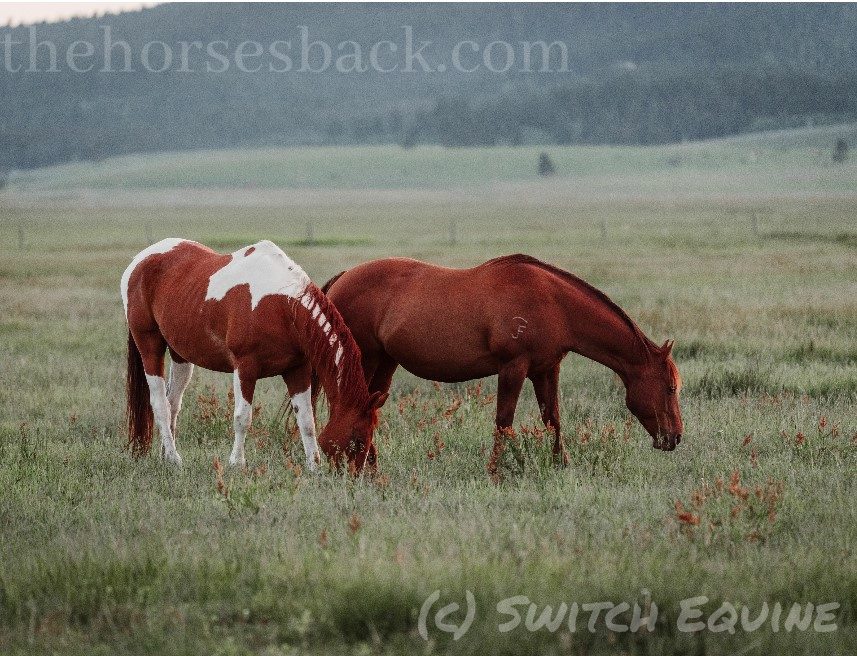
We need to look not at isolated conditions, but at environmental signals.
Liver Health
Consider forage quality and liver health. Horses grazing on low‑diversity, overgrazed, or waterlogged pastures are exposed to plants and fungi that produce secondary metabolites, endophytes, and mycotoxins. These compounds are not dramatic poisons – they are natural stress responses in plants and soil microbes.
But when soil structure is poor, biodiversity is low, or water sits on the surface, these compounds accumulate. The horse’s liver becomes the buffer for an ecological imbalance happening beneath their feet.
What looks like ‘mystery liver disease’ is often the body absorbing the consequences of stressed land.
Hoof Health
Consider hoof quality. Weak walls, cracks, thrush, and white line disease are often treated as hoof management issues, yet they are strongly influenced by terrain, moisture cycles, microbial balance, and movement.
Hooves reflect the ground they meet. Flat, compacted, or chronically wet land produces very different hooves from varied, textured, well‑drained terrain.
This is not a trimming problem. It is a landscape problem.
Parasite Pressure
Parasite pressure is another clear example. Eggs and larvae thrive in specific moisture and temperature conditions. Soil structure, grazing patterns, and water movement determine whether parasites disperse or concentrate.
Modern guidance now emphasizes targeted worming, not blanket treatments, because the real driver of parasite load is how we graze, not how often we dose.
Overgrazed or repeatedly grazed areas create parasite ‘hotspots’, while well‑designed grazing systems dilute pressure naturally. Parasite management is not a chemical issue – it is a soil-water-integration issue.
Laminitis Risk
Yes, even laminitis – often framed as a purely nutritional or metabolic condition – has clear environmental dimensions.
People know about spring and autumn flushes – that isn’t new. What is less widely understood is that stressed, overgrazed grass can contain higher concentrations of sugars per mouthful. This is because plants under stress (drought, cold nights, overgrazing, compaction) accumulate non‑structural carbohydrates faster than they can use them.
This means that a short, sparse, ‘safe‑looking’ paddock can deliver a higher metabolic load than a longer, more diverse sward. Laminitis is not simply a feeding mistake. It is a soil-plant-stress interaction showing up in the horse’s feet.
Across all these examples, the pattern is the same: the horse’s body is responding to the environment.
SWITCH: A New Approach to Paddock Management
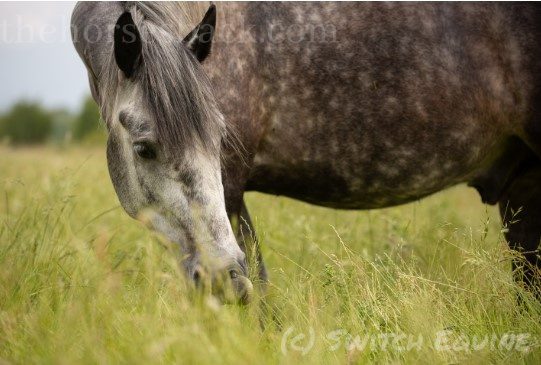
To help owners see these patterns, I created the SWITCH framework – a simple way to understand how land and horse health are intertwined. It’s not a method or a product. It’s a clear, useable lens for understanding and seeing the whole system.
S – Soil
Soil influences forage quality, mineral balance, and metabolic resilience. Healthy soils grow balanced plants; stressed soils grow stressed forage.
W – Water
Water shapes movement, mud, and parasite pressure. How water flows determines hoof health, skin health, and grazing safety.
I – Integration
Integration shapes behavior, movement, and emotional wellbeing. Horses need space, choice, and social interaction – all influenced by land design.
T – Terrain
Terrain shapes posture, proprioception, and hoof conditioning. Working with the landscape, not against it, builds strong, adaptable bodies.
C – Climate
Climate shapes comfort, hydration, and seasonal needs. Observing seasonal shifts – and building resilience through soil structure, plant diversity, and canopy layers – buffers horses from extremes.
H – Holistic management
Holistic management shapes everything. It is the overview that brings all these elements together. It is being proactive rather than reactive, adaptable rather than rigid, and responsive to the land rather than imposing a fixed plan upon it.
SWITCH helps us understand the horse’s whole life – from the soil beneath its feet to the systems that shape its health. It shows us not just what is happening, but why, and how to support resilience from the ground up.
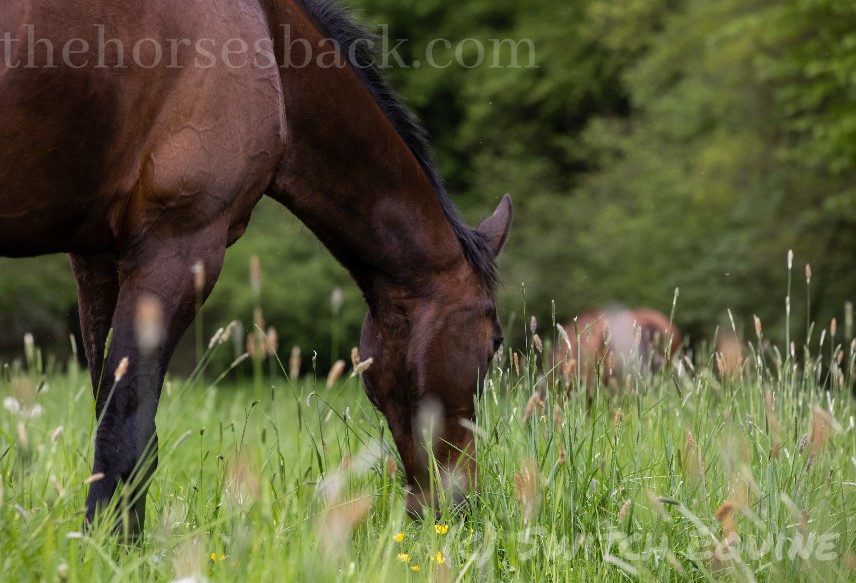
Why the Environment is Central to Equine Welfare
To take this further: welfare is not a checklist, but a living system. The environment shapes welfare through:
Choice and agency: Land design determines whether horses can express natural behaviors.
Movement and exploration: Tracks, terrain, and grazing patterns influence how horses move, play, and interact.
Forage diversity and nutritional stability: Diverse plants support metabolic balance, gut health, and emotional regulation.
Immune function: Healthy soils and biodiverse environments support microbial exposure and resilience.
Proprioception and physical development: Varied terrain builds strong, adaptable bodies and confident movement.
Emotional regulation: Space, shelter, and social integration reduce stress and support calm behavior.
Metabolic balance: Forage quality, water flow, and soil health all influence metabolic load.
When we restore ecological function, we restore welfare. And when we work with nature, we support the whole horse – physically, emotionally, and behaviorally.





Leave a Reply